
RatingLab news
Search news
The Rating Lab team's new research paper, "Psychological factors and the hierarchy of stressors in the environment of modern teenagers: family patterns, bullying, digital support," has been published in the Journal of Modern Psychology (No. 2, 2026). The researchers built a hierarchy of the factors most strongly associated with teenage stress and separately tested what helps teenagers cope with it.
The work is based on a survey of 1,572 teenagers aged 10–18 and 959 of their parents (2,531 respondents in total), conducted by Rating Group in October 2025 using the Family 360° family survey technology. The results can be used to develop programs aimed at improving child-parent relationships and preventing emotional burnout among teenagers.
Key insights
The strongest predictors of teenage stress are strict parenting approaches and bullying among peers, especially when both involve ignoring the child.
- Stress can increase even from the mere fear of becoming a victim of bullying.
- Teenagers who have hobbies and who feel that adults (teachers) respond to bullying have lower stress levels.
- Teenagers with higher stress more often seek emotional support from artificial intelligence. The authors link this to a lack of trust within the family: digital support can compensate for a lack of real contact, but does not replace it.
- Cluster analysis identified three teenager profiles. Two of them are high-stress.
- The "High stress with external support-seeking" profile (stress level – 4.14 out of 5), where two-thirds are girls (67%), most often turns to AI and has the fewest friends.
- The "High stress in the context of interpersonal risks" profile (3.99 out of 5) most often faces bullying and parental punishment.
- The "Resourceful" profile has the lowest stress (3.23 out of 5), the highest level of trust in parents, and most often feels calm and interest.
- Transgenerational effect: parents of teenagers with high stress levels (profiles 1 and 2) themselves more often experienced abuse, threats, and neglect in childhood.
About the article
- Article title: Psychological factors and the hierarchy of stressors in the environment of modern teenagers: family patterns, bullying, digital support
- Authors:
- Marianna Tkalych, Doctor of Psychological Sciences, Professor, Professor at the Department of Psychology, Zaporizhzhia National University, CEO of Rating Lab
- Hanna Chatchenko, Master of Psychology, Taras Shevchenko National University of Kyiv, Senior Analyst at Rating Lab
- Yevhen Krotevych, postgraduate student at the Department of Sociology, National University of Kyiv-Mohyla Academy, Head of Analytics at the Experimental Research Department of Rating Group
- Artem Shevchenko, Master's student at Taras Shevchenko National University of Kyiv, Analyst at the Experimental Research Department of Rating Group
- Journal: Journal of Modern Psychology, No. 2, 2026, pp. 123–132
- Publication date: May 28, 2026
- DOI:https://doi.org/10.26661/2786-7471/2026-2-15
- Keywords: stress, psychological resilience, teenagers, parenting, bullying, artificial intelligence, digital support, cluster analysis, transgenerational patterns
How to cite:
Tkalych, M. H., Chatchenko, H. M., Krotevych, Y. V., & Shevchenko, A. A. (2026). Psychological factors and hierarchy of stress genicity of the environment of modern adolescents: family patterns, bullying, digital support. Journal of Modern Psychology, (2), 123-132. https://doi.org/10.26661/2786-7471/2026-2-15
Rating Group is one of Ukraine's largest research institutions, operating since 2008. The company is registered in Ukraine and has extensive experience conducting sociological surveys in Ukraine and abroad. The group includes the Rating Sociological Group, the Rating Lab research laboratory, the Rating Online platform, and the Rating Call Center.

CEO Rating Lab, Prof. Mariana Tkalych, received a Certificate of Honor from the Cabinet of Ministers of Ukraine for her significant contribution to "Carpathian Change" — a project for the mental and physical recovery of children from Ukraine's front-line regions.
"Carpathian Change" is a joint initiative of the Office of the President of Ukraine, the Ukrainian Association of Football, and regional military administrations. In June, as part of the pilot project in the Zakarpattia, Lviv, Ivano-Frankivsk, and Chernivtsi regions, 1,700 children aged 9–12 from front-line regions (including children of service members, veterans, and fallen defenders, children of law enforcement officers, and children whose families were significantly affected by shelling, among others) took part in camps featuring team sports, group activities, and socialization, with the involvement of representatives of Ukrainian football.

At the Forum on the project's implementation on July 9, 2026, its interim results were discussed. Participants included Minister of Social Policy, Family, and Unity Denys Uliutin, Deputy Head of the Office of the President Viktor Mykyta, representatives of host communities, regional military administrations, and camp coordinators.
Rating Lab's research became the analytical basis for "Carpathian Change"
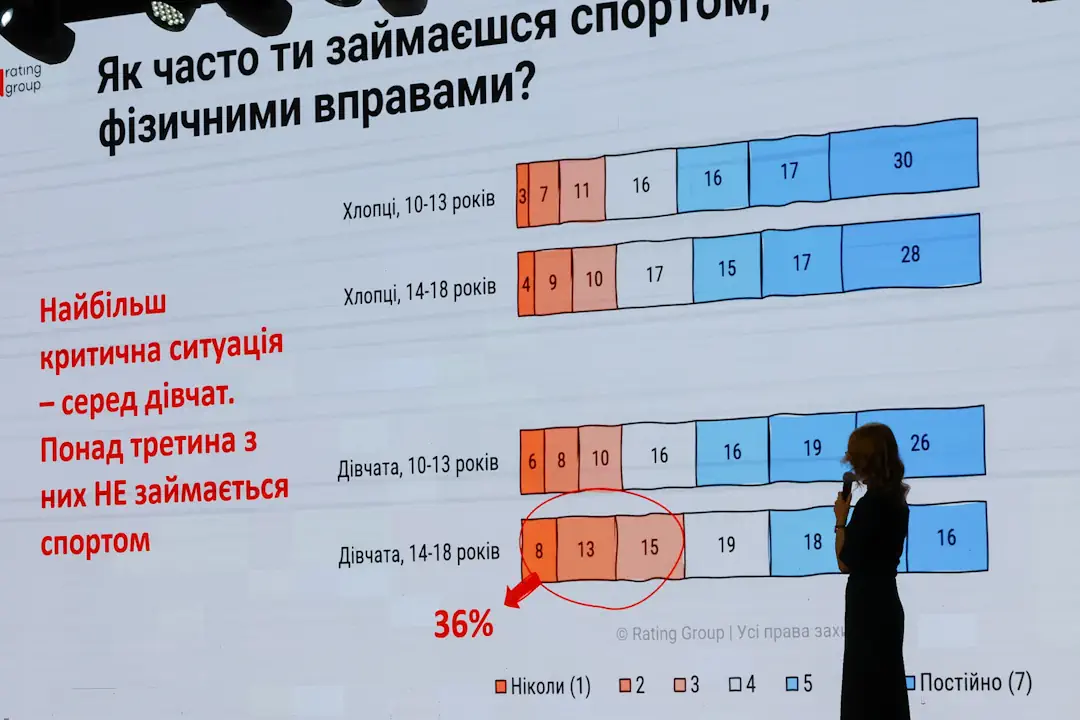
According to earlier research by Rating Lab (Rating Group's research laboratory), the level of stress among teenagers in Ukraine rose from 28% to 37% between 2024 and 2025. Our research shows that playing sports and having a favorite hobby or pastime noticeably reduce stress, yet a significant share of children practically never play sports (the most difficult situation is among girls aged 14–18, where 36% practically never play sports).
These findings became the impetus and basis for developing the important "Carpathian Change" camp project. The idea was to support the mental and physical health of children from front-line regions through a safe environment, interaction with peers, sports, a cultural program, and other activities.
Project results
At the forum, Mariana Tkalych presented the main results of a survey of the children who took part in the camps:
- The overwhelming majority of children liked "Carpathian Change" — 80% rated their camp experience positively.
- Most children spoke warmly of their interactions with peers and with "Carpathian Change" coaches and instructors.
- 73% of participants said that during their time at the camp, their emotional state generally improved.
The study's results indicate that the project has the potential to grow into a full-fledged program and to help improve mental health for a larger number of children affected by the war.
Rating Group is one of Ukraine's largest research institutions, operating since 2008. The company is registered in Ukraine and has extensive experience conducting sociological surveys in Ukraine and abroad. The group includes the Rating Sociological Group, the Rating Lab research laboratory, the Rating Online platform, and the Rating Call Center.

KYIV, UKRAINE – On May 19, at UNIT.City, the teams of Rating Lab and Sociological Group "Rating" (Rating Group) participated in the presentation of "Carpathian Shift," a project aimed at restoring the mental and physical health of children from frontline regions. Ihor Tyshchenko, founder of Rating Group and Rating Lab, and Marianna Tkalyk, CEO of Rating Lab, who presented the research results on changes in children's mental health and well-being during wartime, attended the event.
The "Carpathian Shift" project is organized by regional military administrations and the Ukrainian Association of Football with the support of the President of Ukraine. In June, 1,700 children aged 9–12 from Zakarpattia, Lviv, Ivano-Frankivsk, and Chernivtsi regions will participate in camps featuring team sports, group activities, and socialization, with the involvement of Ukrainian football representatives.
The analytical basis for the project was a study by Rating Lab / Rating Group – its results were presented at the event by Marianna Tkalyk, CEO of Rating Lab and Doctor of Psychological Sciences, Marianna Tkalyk.
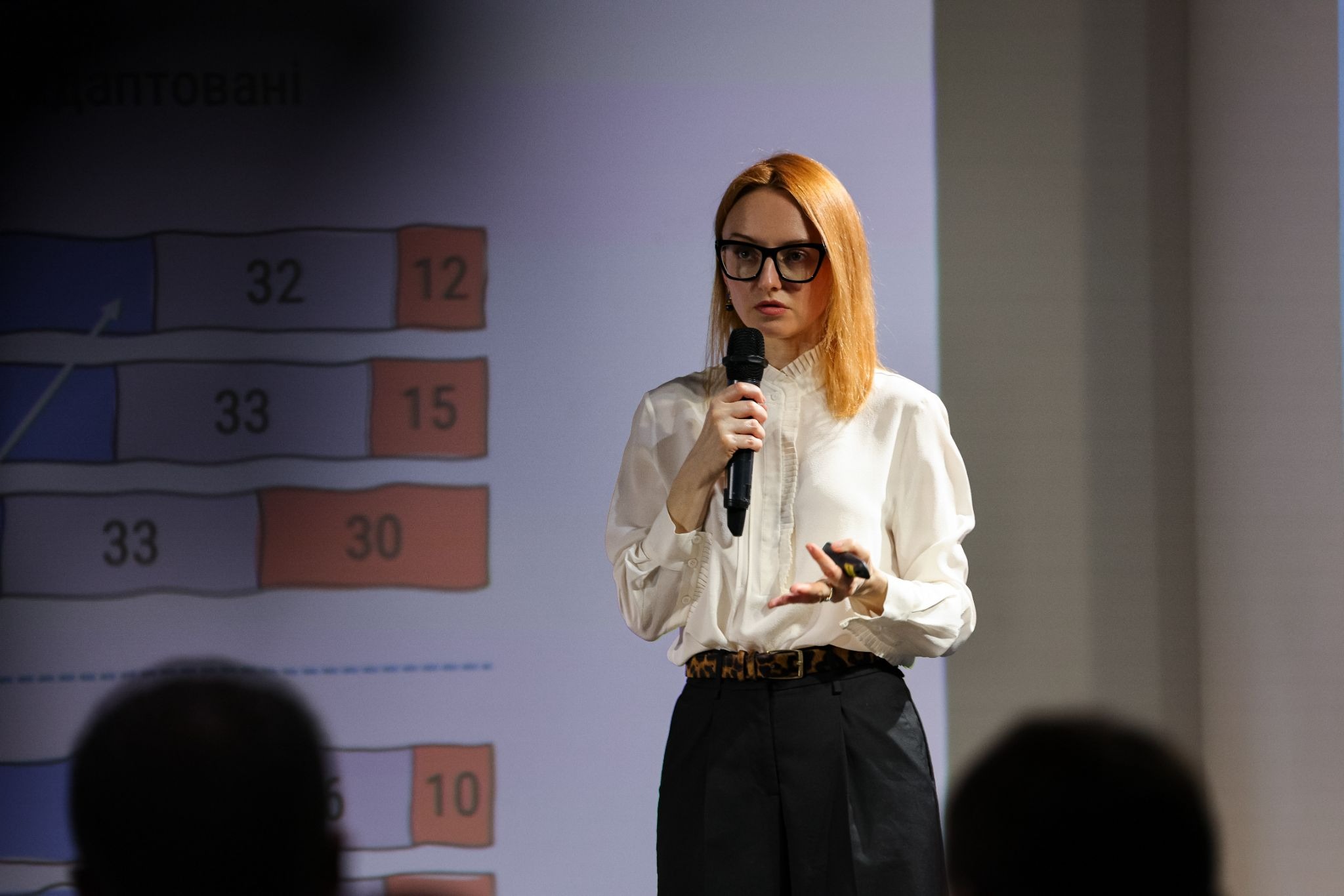
The research data show that while 28% of children experienced elevated or high stress levels in 2024, this figure is projected to reach 37% by the end of 2025. Physical activity combined with communication and group formats is one of the important resources for supporting mental health, reducing stress, and building resilience in children. However, a challenge exists: one in four children hardly engages in sports.
“We are very pleased that the research results have become the foundation for developing such an important program as "Carpathian Shift." We hope that as many children as possible from frontline regions will be able to participate, as this will foster stress resilience, contribute to their mental well-being, and support their physical development,” - Marianna Tkalyk, CEO Rating Lab
During the panel discussion, the Deputy Head of the Office of the President of Ukraine Viktor Mykyta and the President of the Ukrainian Association of Football Andriy Shevchenko emphasized the importance of the research results for developing practical solutions at national and regional levels.
“This is a very important study, containing many specific messages and points that are crucial for communities to hear and understand. For example, we think we know how children think and feel. But that's a mistake – children perceive all of this differently [...] Our task is to understand what children truly think and to create developmental programs for them. High intellect and education are one direction. But there's also a second direction, because everything starts with movement; it's the foundation for our [health],” – Viktor Mykyta, Deputy Head of the Office of the President of Ukraine
“From the research, we see that sport is a stress reliever for both children and adults; for boys and for girls. [...] It is very important to unite efforts not only within the context of this project – it is crucial to collectively build sports infrastructure comprehensively,” – Andriy Shevchenko, President of UAF

Today our social research laboratory Rating Lab celebrates its 5th anniversary! 🎂
When you are a scientist, sometimes you want to step outside the academic bubble. And when you work in applied sociology, sometimes you want to understand the world more deeply.
That is why in 2021, Rating Group founder Ihor Tyshchenko and Professor, Doctor of Psychological Sciences Marianna Tkalych established a research laboratory designed to combine “the best of both worlds” and strengthen Ukrainian science:
💙 the speed and resources of applied sociological research provided by Rating Group
💙 the academic depth and expertise of the social sciences
Over these five years, Rating Lab has become a driver of a series of bold social research projects and methodological developments:
- the Family 360° family research technology, which compares the responses of children and their parents
- a comprehensive study of well-being and mental health among adolescents and their parents, conducted with leading child and family psychologist Svitlana Roiz
- a unique mine safety study among adolescents and their parents for UNICEF Ukraine, the results of which were used in educational campaigns by the State Emergency Service of Ukraine and by the developers of S.T.A.L.K.E.R. 2
- “Mind Frames”, a study of mental health and resilience among adolescents, parents, and youth conducted together with UNICEF and the “How Are You?” (Ty Yak?) initiative
- the Regional Well-being Index rankings for 2023 and 2024
- a study of perceptions of gender stereotypes and family models, which will be released very soon
And there are also several unique developments related to audience segmentation within Ukrainian society, which we are not yet ready to discuss publicly. Often, the most interesting work remains behind the scenes.
Today we are proud of this team and of the synergy between Academia × Business. Congratulations to our colleagues, and thank you to everyone who has been part of this journey!

Rating Group and Institute of Sociology of the National Academy of Sciences of Ukraine officially launch ISSP Ukraine!
In 2025, Ukraine became the 45th participating country of the ISSP (International Social Survey Programme). It is one of the oldest and largest sociology programs in the world. Rating Group and Institute of Sociology of the National Academy of Sciences of Ukraine are the official representatives of Ukraine in ISSP. Funding, collection and analysis of data is carried out by Rating Group, and scientific support is provided by the Institute of Sociology. Also, for the first time, a special site has been opened for Ukrainian researchers: ISSP Ukraine.
In the spring of 2025, we implemented the first research module “Digital Societies”, and here on December 4, ISSP representatives officially confirmed:
Rating Group data meets international quality standards and will be published within ISSP - ISSP Methodology Committee
Also, the ISSP team recognized our experimental author's methodology for data collection and gave the green light to the implementation of the second module - “Work Orientations”, which we plan to complete in the first half of 2026.
The leader and coordinator of the project from Rating Group is Yevhen Krotevych, Head of the Department of Analytics (Department of Experimental Research). We owe Yevhen the success of this project — from the ambitious initiative of representing Ukraine in the ISSP community, organizing data collection and preparation to communication with the ISSP Methodology Committee on approval of the Rating Group methodology.
About the special technique
The Rating Group proposed to the ISSP Methodology Committee an experimental application of the combined approach of CATI and CAWI for the survey on the module “Digital Societies” in Ukraine.
A feature of the proposed methodology is the division of the survey into two stages: CATI and CAWI.
On CATI stage, the survey begins with the generation of a random phone number to contact a potential respondent. After establishing the contact, the operators introduce the respondent to the topic of the survey, ask a few socio-demographic questions, and also ask their consent to participate in the second stage — the CAWI survey. Next, two scenarios are possible:
- Respondents who do not have a smartphone or do not use the Internet are offered to take the survey by phone. In case of consent, the interviewer continues the survey within CATI.
- Respondents who have a smartphone and agreed to take the survey online receive an SMS or a message in the messenger with an individual link to the survey on the online platform Rating Online. Switching to the link opens access to the CAWI stage (self-filling of the questionnaire at a convenient time for the respondent and in any place).
This allows to ensure random selection of respondents and comfortable participation in the survey.
When will it be possible to use the dataset?
The "Digital Societies" module data array should be publicly available in spring 2026 (preliminary). It can be used by all willing researchers, students, teachers and other interested parties.
Rating Group thanks the project coordinators from the Institute of Sociology of the National Academy of Sciences of Ukraine for their cooperation Olena Symonchuk (Doctor of Sociological Sciences, Head of the Department of Social Structures) and Svitlana Oksamytna (Doctor of Sociological Sciences, Leading Researcher of the Department of Social Structures of the National Academy of Sciences)!
On the related note: November 21, the ISSP Ukraine team previewed presented the first results of ISSP 2024 in Ukraine and announced the launch of the project website.