
News
Search news
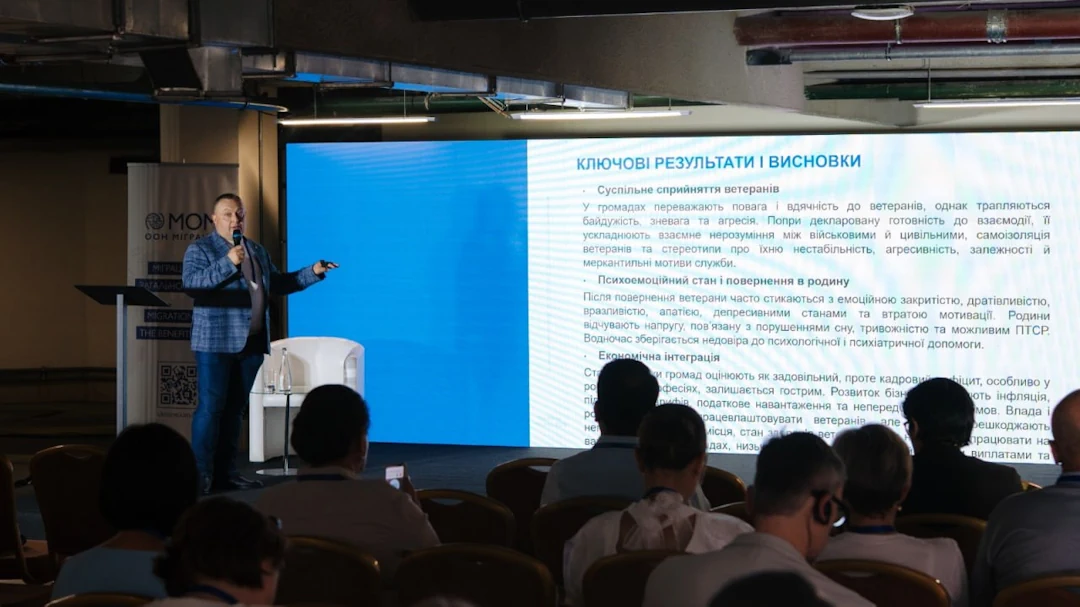
CEO Rating Group Олексій Антипович представив результати дослідження «Оцінка стану готовності громад до реінтеграції ветеранів» під час підсумкового заходу дворічного проєкту Міжнародної організації з міграції (МОМ, IOM Ukraine) «Соціальне згуртування та реінтеграція ветеранів в Україні», що реалізовувався за фінансової підтримки Європейського Союзу.
Захід об’єднав представників МОМ, Європейського Союзу, Міністерства у справах ветеранів України, органів державної та місцевої влади, ветеранської спільноти, громадських організацій і партнерів проєкту. У такому експертному колі учасники підбили підсумки дворічної роботи та обговорили подальші рішення для реінтеграції ветеранів і ветеранок у громадах.
Дослідження Rating Group було проведене у співпраці з МОМ та Міністерством у справах ветеранів України. Воно охопило населення громад, членів ветеранських родин і ветеранів та дозволило оцінити готовність громад до реінтеграції ветеранів за ключовими напрямами
Загальна оцінка готовності громад до реінтеграції становить 3,2 бала з 5 серед населення громад і 3,1 бала серед членів ветеранських родин та ветеранів, які проживають із ними.
Найсильнішими сторонами є соціальна підтримка ветеранів і переважно безконфліктна побутова взаємодія, тоді як найслабшими – безбар’єрність, працевлаштування та умови для ведення бізнесу.
Ця робота продовжує історію співпраці Rating Group та МОМ у дослідженні ветеранської тематики. Раніше команди спільно вивчали доступність та ефективність соціальних пільг і послуг для ветеранів війни, бар’єри у взаємодії з системою підтримки та практичні виклики реінтеграції.
Rating Group — одна з найбільших дослідницьких інституцій України, яка на ринку з 2008 року. Компанія зареєстрована в Україні та має значний досвід проведення соціологічних опитувань в Україні та за кордоном. До групи входять: Соціологічна група Рейтинг, дослідницька лабораторія Rating Lab, платформа Rating Online та Rating CATI Center.
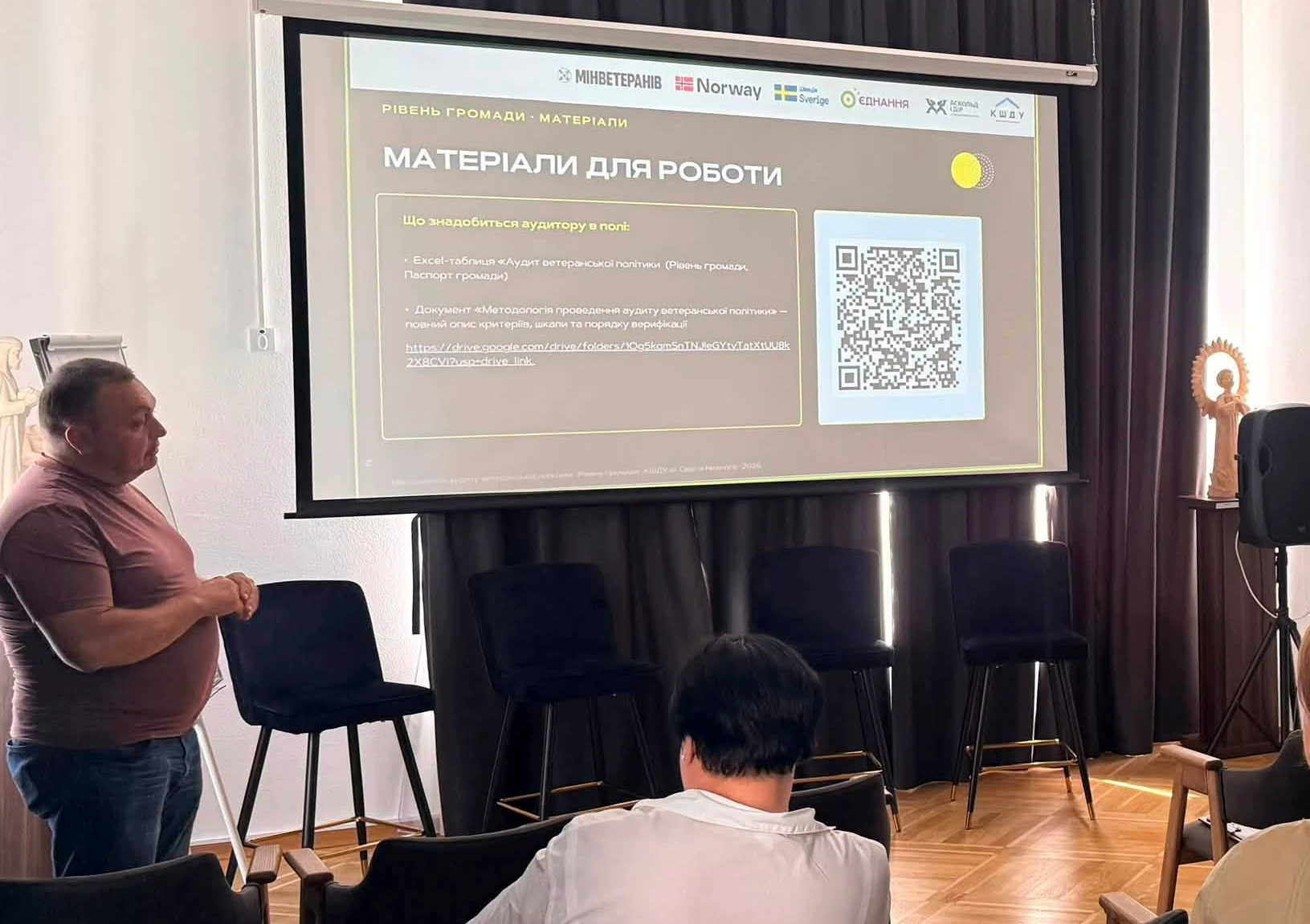
CEO Rating Group Олексій Антипович долучився до обговорення «Методології аудиту ветеранської політики та оцінки спроможності громад», розроблена Київською школою державного управління імені Сергія Нижного спільно з Міністерством у справах ветеранів України. Методологія має допомогти оцінювати, наскільки ветеранська політика на місцевому рівні відповідає реальним потребам ветеранів, ветеранок та їхніх родин.
Серед учасників-експертів - представники Мінветеранів, IOM Ukraine, Програми розвитку Організації Об’єднаних Націй в Україні , Офіс Омбудсмана України, громадської організації «Український інститут майбутнього», GIZ Ukraine
Для Rating Group участь у такому експертному колі є продовженням системної роботи з ветеранською тематикою. Протягом останніх років команда проводить дослідження потреб ветеранів і ветеранок, їхньої адаптації до цивільного життя, доступу до соціальних послуг, освіти та досвіду стигматизації – у партнерстві з Українським ветеранським фондом Міністерства у справах ветеранів України, Міжнародною організацією з міграції, Консультативною місією ЄС та іншими партнерами.
За результатами обговорення експерти відзначили про важливість подальшого розвитку підходу оцінювання й формування ветеранських політик, рішень і рекомендацій на основі даних.
Rating Group — одна з найбільших дослідницьких інституцій України, яка на ринку з 2008 року. Компанія зареєстрована в Україні та має значний досвід проведення соціологічних опитувань в Україні та за кордоном. До групи входять: Соціологічна група Рейтинг, дослідницька лабораторія Rating Lab, платформа Rating Online та Rating CATI Center.

Останнім часом в Україні зростає кількість випадків телефонного шахрайства. На жаль, є також і випадки, коли шахраї під виглядом Соціологічної групи "Рейтинг" (Rating Group) випитують особисту інформацію в громадян: паспортні дані, адресу проживання тощо.
Пам'ятайте: Rating Group ніколи не запитує особисті дані в респондентів. Ми працюємо за міжнародними стандартами соціологічних досліджень (ICC/ESOMAR, WAPOR й ін.) і цінуємо довіру громадян. Для нас дуже важливо, щоби респонденти почувалися безпечно та комфортно.
Тому відтепер на сайті є спеціальна електронна форма, яка перевіряє, чи справді респонденту дзвонить Rating Group
Якщо Вам задзвонили та представилися Рейтингом, введіть у форму номер, з якого був дзвінок: вона одразу покаже, чи дійсно це наш номер телефону.
Більше про те, як убезпечити себе від шахрайства, дивіться на сторінці "Протидія шахрайству".
Rating Group — одна з найбільших дослідницьких інституцій України, яка на ринку з 2008 року. Компанія зареєстрована в Україні та має значний досвід проведення соціологічних опитувань в Україні та за кордоном. До групи входять: Соціологічна група Рейтинг, дослідницька лабораторія Rating Lab, платформа Rating Online та Rating CATI Center.
"Жінки у бізнесі: економіка та тренди підприємництва в Україні" - спільне аналітичне дослідження агенції візуальних комунікацій Top Lead і Rating Group (Соціологічної групи "Рейтинг") у співпраці з Міністерством економіки України та YouControl.
Rating Group виступила Генеральним партнером та профінансувала опитування, яке увійшло в основу дослідження. У березні 2026 ми дізналися думки, плани, бачення 602 жінок-підприємиць і 300 потенційних підприємиць в Україні.
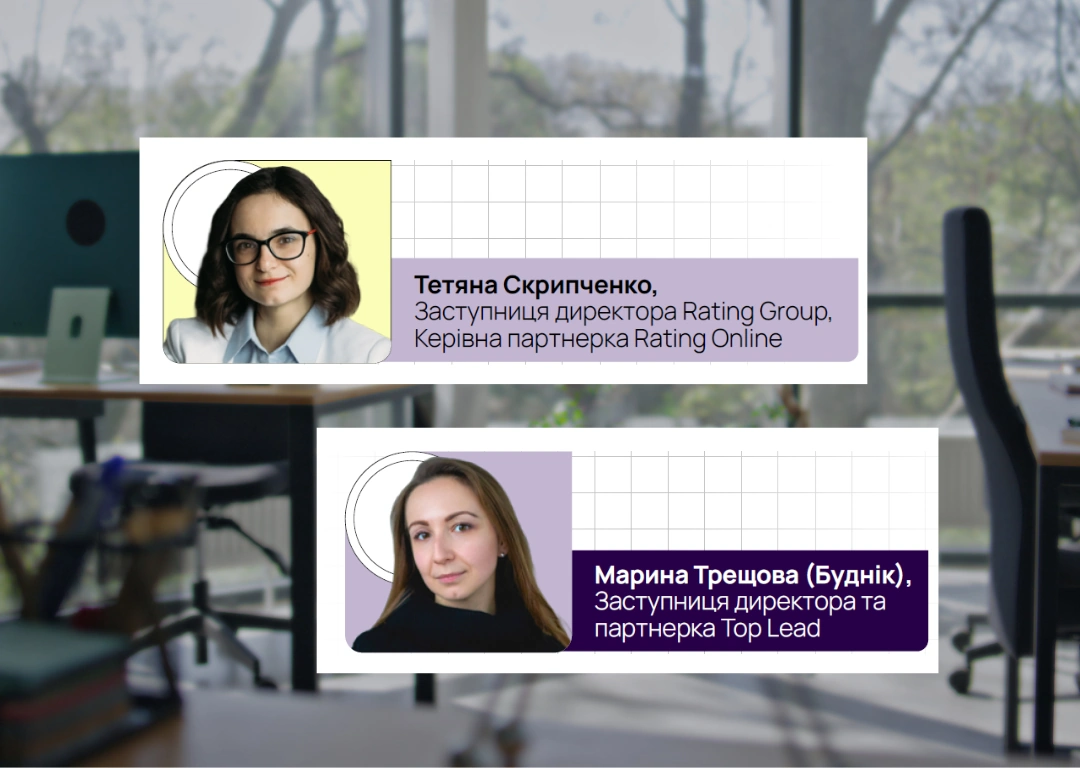
Нижче - вступне слово від Тетяни Скрипченко, заступниці директора Rating Group, керівної партнерки Rating Online і Марини Трещової (Буднік), заступниці директора та партнерки Top Lead.
Повний звіт читайте на сайті Rating Group або на платформі від Top Lead
Тетяна Скрипченко, заступниця директора Rating Group, керівна партнерка Rating Online
"Ми в Rating Group віримо, що кожна людина здатна знайти шлях до втілення своїх задумів. Тому разом із Top Lead ми провели дослідження й зібрали ключові інсайти від чинних і майбутніх підприємиць. Важливі наскрізні ідеї:
«Бізнес — це свобода»
Ця думка об’єднує і чинних, і потенційних підприємиць. Опитані кажуть: бізнес — це фінансова безпека, але гроші не єдина мета. Для багатьох це можливість реалізувати себе й втілювати власні ідеї.
«Сміливі завжди мають щастя» (цитуючи Багряного)
Найчастіші поради від підприємиць тим, хто лише мріє про свою справу: «вір у себе», «не здавайся», «ризикуй». Бар’єри на старті неминучі, тому вирішальною стає сміливість зробити перший крок. Наші дані показують, що підприємиці ціннісно менш консервативні, більше відкриті до нового й орієнтовані на успіх.
Жіночий бізнес досі стикається з упередженістю —
особливо у взаємодії з клієнтами, хоча сприйняття жінок у бізнесі поступово змінюється.
Підприємиці кажуть, що бізнес дає можливість поєднувати професійне й особисте. Водночас дані також фіксують високу ціну такого поєднання: втрати фізичного й ментального здоров’я.
Навіть найуспішніші потребують підтримки, адже вони одночасно розвивають себе, свої родини та країну. Сподіваємося, що цей спільний проєкт із Top Lead допоможе жінкам краще побачити свої можливості та впевненіше рухатися вперед"
Марина Трещова (Буднік), заступниця директора та партнерка Top Lead
"За останні п’ять років українська економіка пройшла через пекло, яке зруйнувало б будь-яку іншу систему. Шок 2022-го, втрачені активи, розірвані логістичні артерії. Але замість повної зупинки ми побачили диво адаптації. І в центрі цього титанічного опору опинилися жінки. Ті, хто не просто закривав тил, а став новою опорою для країни.
Суха статистика фіксує падіння ВВП та торговельні дисбаланси. Проте цифри нічого не говорять про безсонні ночі, відвагу релокації та сміливість починати з нуля.
Жіноче підприємництво сьогодні — це не про красиві тренди. Це про виживання країни.
Це про бізнес, який відкривається всупереч обставинам, створює робочі місця та дає надію громадам.
Ця книга — портрет сучасної української підприємниці, створений мовою даних.
Вона про те, як 32% жінок, попри обстріли й блекаути, готуються запустити власну справу прямо зараз.
Про те, як 65,6% з них відчайдушно шукають фінансування, долаючи брак ресурсів та управлінського досвіду.
Це дослідження — наш маніфест віри в їхню силу.
Адже підтримувати жінку в бізнесі сьогодні — це найрозумніша інвестиція у наше спільне завтра.
Дякую кожній, хто не зупиняється. Надихайтеся!"

Соціологічна група "Рейтинг" (Rating Group), Міністерство освіти і науки України (МОН) і UNICEF Ukraine (ЮНІСЕФ Україна) поділилися результатами спільного дослідження "Ставлення та залученість батьків і опікунів до дошкільної освіти та розвитку дітей в Україні".
Для цього в лютому 2026 Rating Group провела в Україні опитування серед 2500 батьків/опікунів діток віком до 6 років.
"Ми раді продовженню історії плідної співпраці Rating Group з UNICEF і МОН. Такі проєкти дають ґрунт для доказових управлінських рішень задля добробуту дітей. Власне це опитування дає фахівцям підказки, як можна розвивати інфраструктуру дитячих садочків, враховуючи уявлення батьків. Наприклад, батькам важливо переконатися в безпечності простору, наявності укриттів тощо, це основа. Але також бачимо значний запит на розвиток сучасної технологічної бази, щоби діти могли буквально помацати науку й технології, познайомитися з ними через гру", - Олексій Антипович, співзасновник і CEO Rating Group
Результати дослідження свідчать, що одні з головних очікувань батьків від дитячих садочків - це спілкування дитини з однолітками (77%) і сприяння ранньому розвитку (49%). Крім того, три чверті батьків дітей віком 0-6, які відвідують садочок або записані в нього, кажуть про переважно позитивні зміни в дитині після початку відвідування садочка.
"Перші роки життя є визначальними для розвитку дитини, а якісна дошкільна освіта - це найкраща інвестиція в її майбутнє. Те, що дедалі більше батьків бачать у дитячому садку простір розвитку і відзначають позитивні зміни в дитини, є важливим сигналом. Водночас кожна дитина в Україні має отримати доступ до безпечних, якісних і інклюзивних дошкільних послуг, незалежно від місця її проживання чи життєвих обставин", - Шамеза Абдулла, заступниця голови Представництва ЮНІСЕФ в Україні
Значним бар'єром для запису дитини до садочка є передусім безпекова ситуація (про неї безпосередньо зазначила третина батьків дітей віком 0-6 років, а ще 13% вказали про відсутність укриття).
"Попри всі виклики війни, батьки дедалі частіше сприймають садочки як важливий простір для розвитку дитини. Показово, що за результатами опитування вони високо оцінюють якість дошкільної освіти: 96% задоволені турботою про дітей, взаємодією із сім’ями та роботою педагогів. Водночас результати дослідження демонструють, що сьогодні одним із ключових викликів для системи дошкільної освіти є формування безпечного освітнього середовища. Саме тому підтримка громад у створенні та облаштуванні укриттів залишається одним із пріоритетів міністерства", - Анастасія Коновалова, заступниця міністра освіти і науки України з питань дошкільної освіти
Rating Group — одна з найбільших дослідницьких інституцій України, яка на ринку з 2008 року. Компанія зареєстрована в Україні та має значний досвід проведення соціологічних опитувань в Україні та за кордоном. До групи входять: Соціологічна група Рейтинг, дослідницька лабораторія Rating Lab, платформа Rating Online та Rating Call Center.
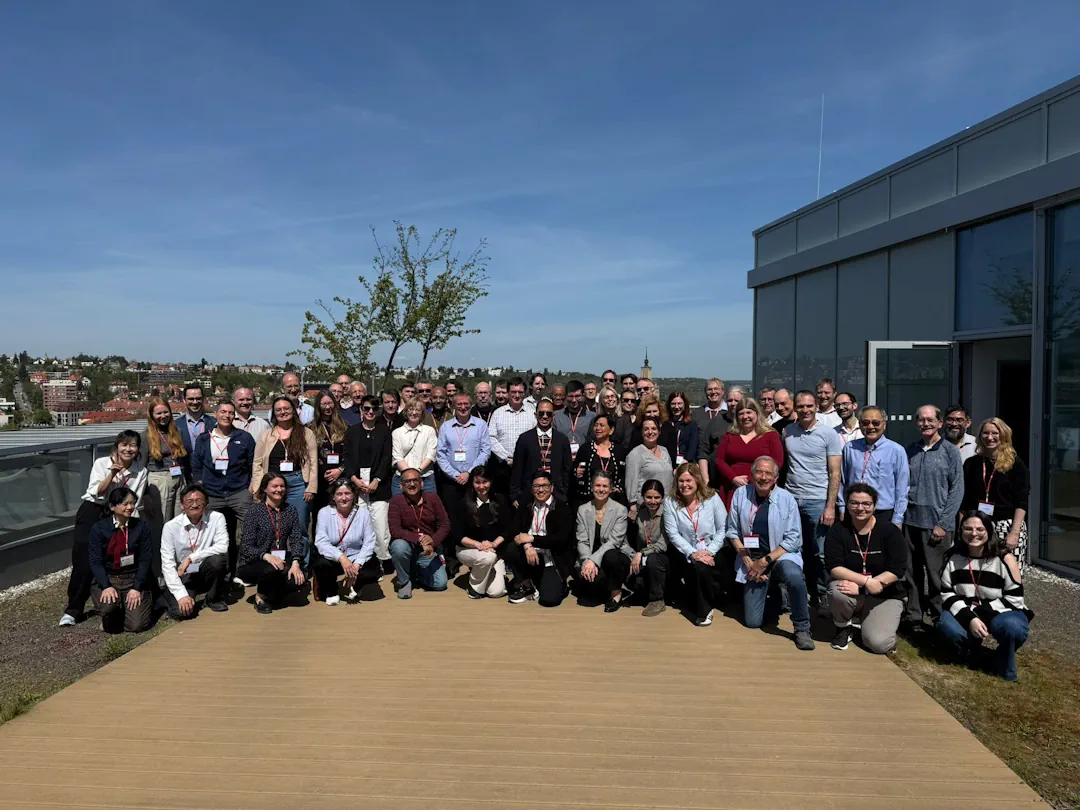
The ISSP Ukraine team — representatives of Rating Group and the Institute of Sociology of the National Academy of Sciences of Ukraine — took part in the General Meeting of the International Social Survey Programme (ISSP), held in Prague on 25–29 April 2026.
The event brought together researchers from 33 countries to discuss future ISSP thematic modules, methodological approaches, and the development of international cooperation in the field of comparative social research.
As a reminder, in February 2025, Ukraine — represented through the partnership between Rating Group and the Institute of Sociology of the National Academy of Sciences of Ukraine — became the 45th member country of the ISSP. In the same year, Ukraine conducted a survey under the “Digital Societies” module. The results were presented at the 5th Congress of the Sociological Association of Ukraine in November 2025.
Ukraine was represented at the General Meeting by ISSP Ukraine co-coordinators Igor Tyshchenko, founder of Rating Group; Yevhen Krotevych, Head of Analytics at Rating Group; and Yelena Kovalska, PhD in Sociology, Senior Research Fellow at the Department of Social Structures of the Institute of Sociology of the National Academy of Sciences of Ukraine.
“Representing Ukraine at the ISSP General Meeting is the result our team has been working towards for two years. It is not only about formally securing Ukraine’s membership in the ISSP community, but also about creating opportunities for cooperation with leading sociologists from the global academic community” - Yevhen Krotevych, Head of Analytics at Rating Group and ISSP Ukraine co-coordinator.
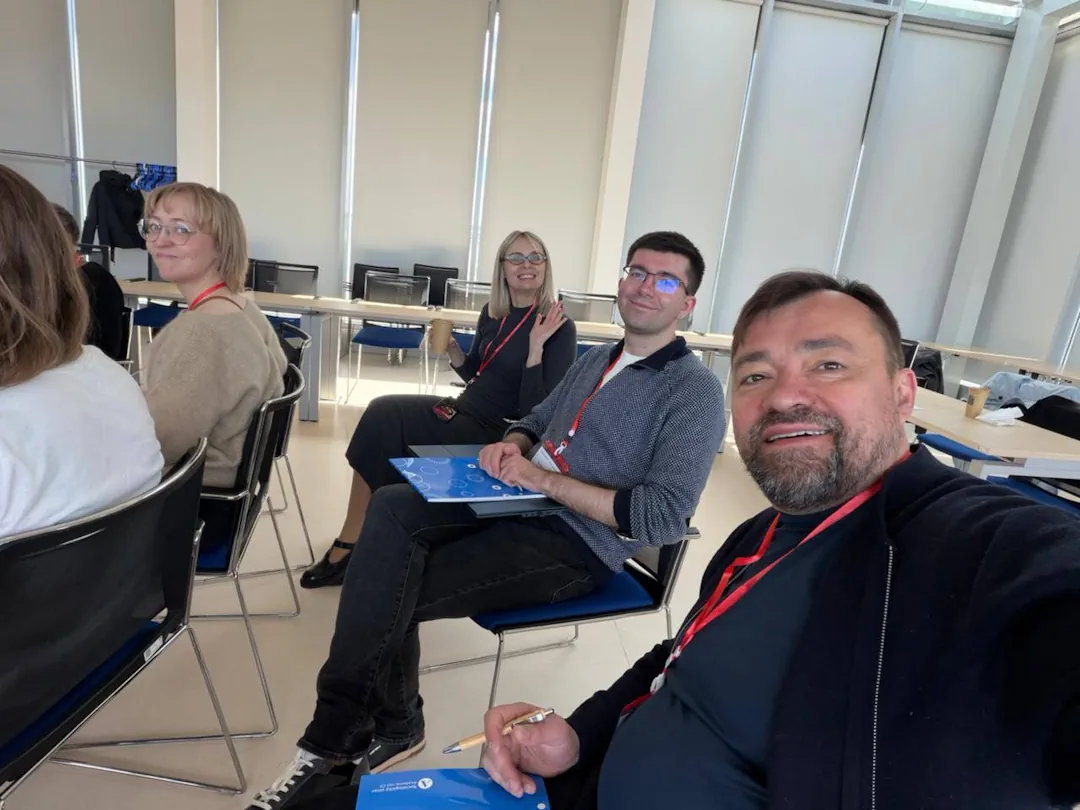
Preparations for the General Meeting were carried out in close cooperation with the entire ISSP Ukraine team, including ISSP Ukraine co-coordinator Olena Symonchuk, Doctor of Sociological Sciences, Head of the Department of Social Structures at the Institute of Sociology of the National Academy of Sciences of Ukraine; Svitlana Oksamytna, Doctor of Sociological Sciences, Leading Research Fellow at the Department of Social Structures of the Institute of Sociology of the National Academy of Sciences of Ukraine; Tetiana Skrypchenko, Deputy Director of Rating Group; and other colleagues.
“For Ukraine, participation in the ISSP General Meeting is not only a symbolic return to the research community of this international project, but also a practical opportunity to contribute to shaping the future agenda of comparative social research. It is important that, in the first year after renewing its membership, the Ukrainian team not only conducted two surveys based on international modules, but also joined professional discussions on methodology, data quality, and new challenges for sociology. For us, this is also a way to make the Ukrainian experience — including the experience of conducting surveys in wartime — visible to the international research community” - Olena Symonchuk, Head of the Department of Social Structures at the Institute of Sociology of the National Academy of Sciences of Ukraine and ISSP Ukraine co-coordinator.
During the General Meeting, representatives of ISSP Ukraine took part in discussions on the results of international social surveys, shared their experience of data collection in wartime, and discussed methodological challenges with colleagues from other countries.
- The Ukrainian team contributed to the discussion and voting on future ISSP modules: Social Networks and Social Resources 2027, Religion 2028, and Social Inequality 2029.
- Special attention was paid to methodological issues, the improvement of data collection documentation, the analysis of quantitative studies, and the use of AI for coding occupations according to the international ISCO classification.
- In addition, the ISSP Ukraine team shared its experience of adapting sociological research to wartime conditions, in particular through the use of CATI RDD methods, and received valuable feedback from colleagues.
After returning to Kyiv, the Rating Group and Institute of Sociology of the National Academy of Sciences of Ukraine teams continued working on the finalisation of the dataset from the recent ISSP “Work Orientations” 2025 survey.
.webp)
On April 30, 2026, Kyiv hosted the graduation ceremony for the second cohort of the "Community Recovery School" – an educational initiative aimed at strengthening the capacity of communities in Ukraine's recovery process.
During the event, Oleksii Antypovych, CEO of Rating Group, presented an analytical block dedicated to migration sentiments and the challenges of preserving human capital. He commented on what can be done to retain human capital in Ukraine, based on the results of Rating Group surveys.
"The main motivations for going abroad are economic well-being and wages, as well as higher living standards abroad. Therefore, the economic development of communities and the creation of opportunities for personal growth will be the factors that can retain human capital in Ukraine," noted Oleksii Antypovych.
.webp)
Rating Group's analytical contribution became part of a broader discussion on recovery strategies in Ukraine. The event brought together representatives of the government, parliament, local self-government, international organizations, and think tanks.
Rating Group's participation in the event underscores the role of analytical research in Ukraine's recovery process, particularly in understanding public sentiment, migration processes, and factors influencing the preservation of human potential.
Rating Group is one of Ukraine's largest research institutions, operating since 2008. The company is registered in Ukraine and has extensive experience in conducting sociological surveys both within Ukraine and abroad. The group includes: Sociological Group Rating, Rating Lab research laboratory, Rating Online platform, and Rating Call Center.

KYIV, UKRAINE - On April 28, 2026, Sociological Group "Rating" (Rating Group), together with NACP and with the support of the OSCE Support Programme for Ukraine, presented the results of the study «Corruption in Ukraine 2025: Expert Views and Assessments».
The study covers assessments by the expert community regarding the prevalence of corruption in Ukraine generally and in specific areas, as well as the perception of the effectiveness of the state's anti-corruption policy.
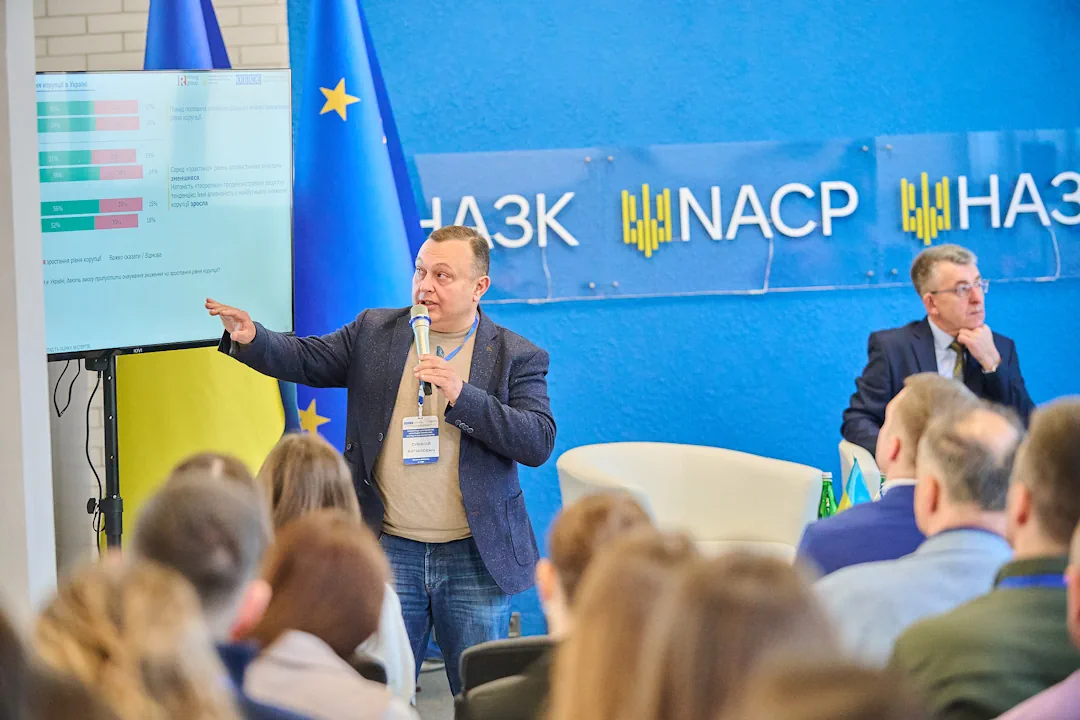
According to Oleksii Antypovych, CEO of Rating Group, the results of the study are an important tool for understanding how the expert community assesses anti-corruption policy and how the situation changes over time.
"We asked how the level of corruption in Ukraine has changed over the past 12 months. 33% of experts responded that it increased, 41% said it remained unchanged, and 20% said it decreased. Among the population, the assessment is significantly more pessimistic: 66% of surveyed Ukrainians reported an increase in corruption. This indicates the media prominence of the topic of corruption: the more it is discussed, the higher its perceived level appears to be." - Oleksii Antypovych, CEO of Rating Group
The presentation and discussion brought together representatives of the NACP, the OSCE, the expert community, and civil society organizations. Participants included Viktor Pavlushchyk, Dmytro Kalmykov, Mykola Davydiuk, and Anastasiia Mazurok. The event was moderated by journalist and editor Andrii Kulykov.
Importantly, the study was conducted by Rating Group in accordance with the approved recommendations of the NACP. This allows its findings to be used as part of the state monitoring system for evaluating the effectiveness of anti-corruption policy.
More materials:
- Video of the study presentation
- Press release of the study
Rating Group is one of the largest research institutions in Ukraine, operating in the market since 2008. The company is registered in Ukraine and has significant experience in conducting sociological surveys both in Ukraine and abroad. The group includes: Sociological Group Rating, research laboratory Rating Lab, platform Rating Online, and Rating Call Center.
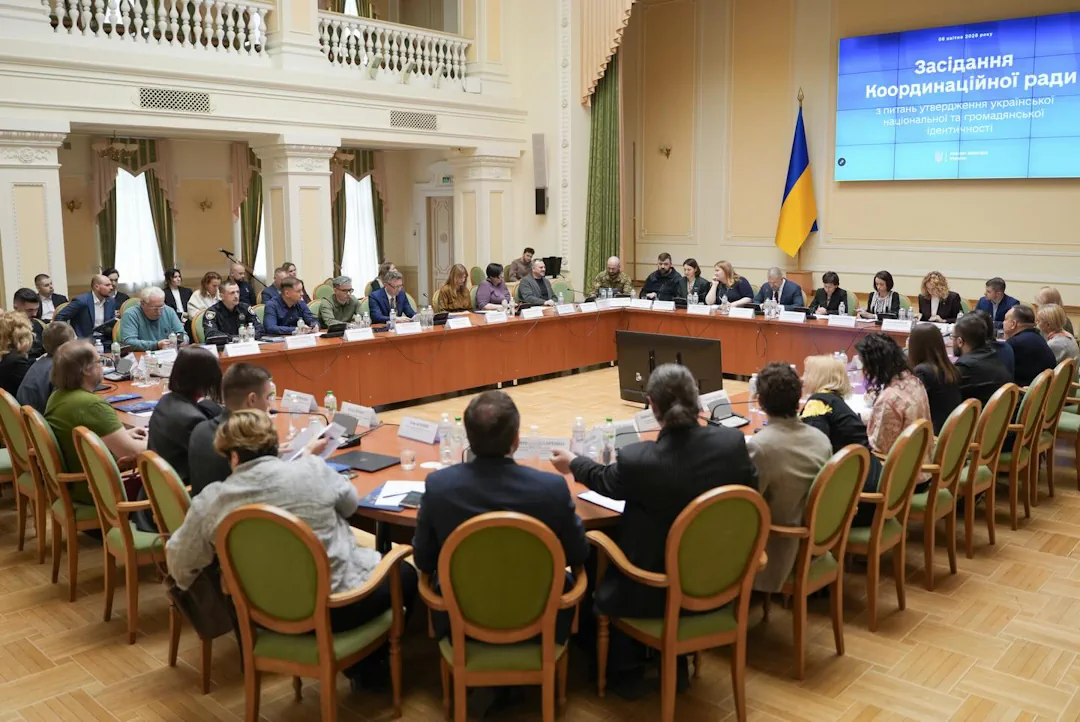
On April 6, 2026, the Club of the Cabinet of Ministers of Ukraine held a meeting of the Coordinating Council on the establishment of Ukrainian national and civic identity with the participation of co-chairs. The focus of the meeting was to work with Ukrainians abroad, in particular young people, as well as the issue of strengthening Ukrainian national and civic identity.
CEO of Sociological Group “Rating” (Rating Group) Oleksiy Antypovych joined the discussion and presented the results of the study “Impact of War on Youth in Ukraine 2025”. We remind that in the framework of the study we interviewed more than 2 thousand Ukrainians aged 14-35 years in Ukraine and 600 representatives of Ukrainian youth in the countries of the European Union. The study was conducted for initiatives of the Ministry of Youth and Sports of Ukraine and the support of the United Nations Development Programme (UNDP) in Ukraine and the Government of Denmark.
- The majority of young people remain optimistic about the future: 78% of young people in Ukraine and 59% abroad rate it as encouraging.
- The study also shows a high level of civic engagement: 53% of young people in Ukraine and 51% have experience in volunteering.
- 77% of young people in Ukraine are ready to join the recovery in their community.
Following the meeting, it was emphasized on the need to strengthen support for Ukrainian communities abroad, develop youth programs and create conditions for involving young people in Ukraine's reconstruction.
“54% of young Ukrainians abroad experience loneliness or lack of communication. For comparison: among young people in Ukraine much less, about 17%. Also, young people abroad are much more likely to feel uncertain about their future. This confirms the critical importance of keeping in touch with our citizens who have been forced to travel abroad because of the war.” Oleksiy Antypovych, CEO Rating Group
According to the results of the meeting where the Rating Group data were presented, the Coordinating Council approved a series of recommendations for establishing national identity and maintaining contact with Ukrainian youth abroad.
Rating Group is one of the largest research institutions in Ukraine, which has been on the market since 2008. The company is registered in Ukraine and has significant experience in conducting sociological surveys in Ukraine and abroad. The group includes: Sociological Group Rating, Research Lab Rating Lab, Rating Online platform and Rating Call Center.

On March 17, 2026, the study “Impact of War on Youth in Ukraine 2025" was presented in Kyiv.
This year's wave of survey was conducted by Sociological Group “Rating” (Rating Group) on the initiative of the Ministry of Youth and Sports of Ukraine and the support of the United Nations Development Programme (UNDP) in Ukraine and the Government of Denmark. The research project demonstrates how Ukrainian youth feel and change during a full-scale war.
The study surveyed more than 2,000 respondents aged 14-35 years in Ukraine and 600 in EU countries. As evidenced by the results presented by the co-founder and CEO Rating Group Oleksiy Antypovych Ukrainian youth remain optimistic despite the circumstances. Thus, 78% of young people in Ukraine and 59% abroad answered that they believe in their future. Oleksiy Antypovych comments:
When I'm asked, “What would you explore next?” I say that you need to explore the future. And young people - this is the future of our country
During the presentation, the participants discussed in particular:
- the impact of war is not the mental health of young people;
- to inform young people about their role in the development and reconstruction of Ukraine;
- priorities of young people;
- assessment of socio-economic opportunities for young people.

The participants of the event also noted the importance of such studies for the formation of evidence-based state youth policy on the basis of raw data. Olena Ursu, Head of the UNDP Project Group on Democratic Governance in Ukraine, observes:
“Young people demonstrate considerable resilience and willingness to participate in the reconstruction of Ukraine. [...] At the same time, the results of the study show that young people need additional support. That is why it is important that decisions in the field of youth policy are made on the basis of data that will allow young people to fully realize their potential and play an active role in the development and recovery of Ukraine.
Similar opinion expresses Uliana Tokarieva, Deputy Minister of Youth and Sports of Ukraine:
“It is important for us to speak about reality as it is, to speak in the language of facts and the language of research that can influence the decisions we make at both the national and local levels. The Ministry of Youth and Sports of Ukraine is always open to cooperation and to building new partnerships, to form such decisions that can already meet the needs of young people”
.webp)
Rating Group is launching a special research project titled “Common Contours” — a survey exploring Ukraine in a European context.
The aim of the project is to help Ukrainian society, experts, and partners identify shared socio-cultural and political contours between Ukraine and the EU. This means supporting a more conscious process of European integration, understanding Ukraine’s strengths, while also recognizing existing challenges.
To achieve this, we mirror questions and compare data from our surveys of Ukrainians with data from other surveys conducted in EU countries and EU candidate countries.
"Ukraine is an important part of the broader European puzzle. It is essential to understand who we are within this puzzle, what our unique qualities are, and how we, together with EU and European countries, can strengthen one another. This is both about our identity and about what we share with other countries", – commented Hlib Kuzmenko, research expert and Head of Communications at Rating Group.
The first release of “Common Contours” has already been published on the Rating Group website. It focuses on how Ukrainians perceive the European Union and how these views differ from those of citizens in other European countries.
.webp)
The Rating Group sociological agency has published the first results of the End of Year Survey 2025 as part of the Gallup International global project!
The End of Year Survey (EoY) is a global annual survey conducted by the international sociological association Gallup International on the future, happiness and expectations of the population of different countries. In 2025, 59,636 respondents in 60 countries around the world were surveyed. In Ukraine, the End of Year Survey has been conducted by Rating Group for the third year in a row.
To this end, in November 2025, the team asked 1,000 citizens about their views on the overall situation, expectations for economic development, world peace, pressing issues and trends.
Why is this important?
Conducting EoY means representing Ukraine in prestigious international studies. Gallup International Association was founded in 1947 by George Gallup, one of the fathers of modern scientific public opinion polling, and brings together respected research organisations from around the world.
In turn, End of Year is the Association's flagship annual survey. It is one of the largest internationally coordinated surveys of public opinion in the world.
When will the publications be released?
Traditionally, EoY international data is divided into several thematic blocks and released gradually throughout the year.
The first issue of the EoY series has already been released. Its theme is Ukrainians' general expectations for the coming year.
Rating Group is one of Ukraine's largest research institutions, operating since 2008. The company is registered in Ukraine and has extensive experience in conducting sociological surveys in Ukraine and abroad. The group includes: Sociological Group Rating, Rating Lab research laboratory, Rating Online platform, and Rating Call Centre.
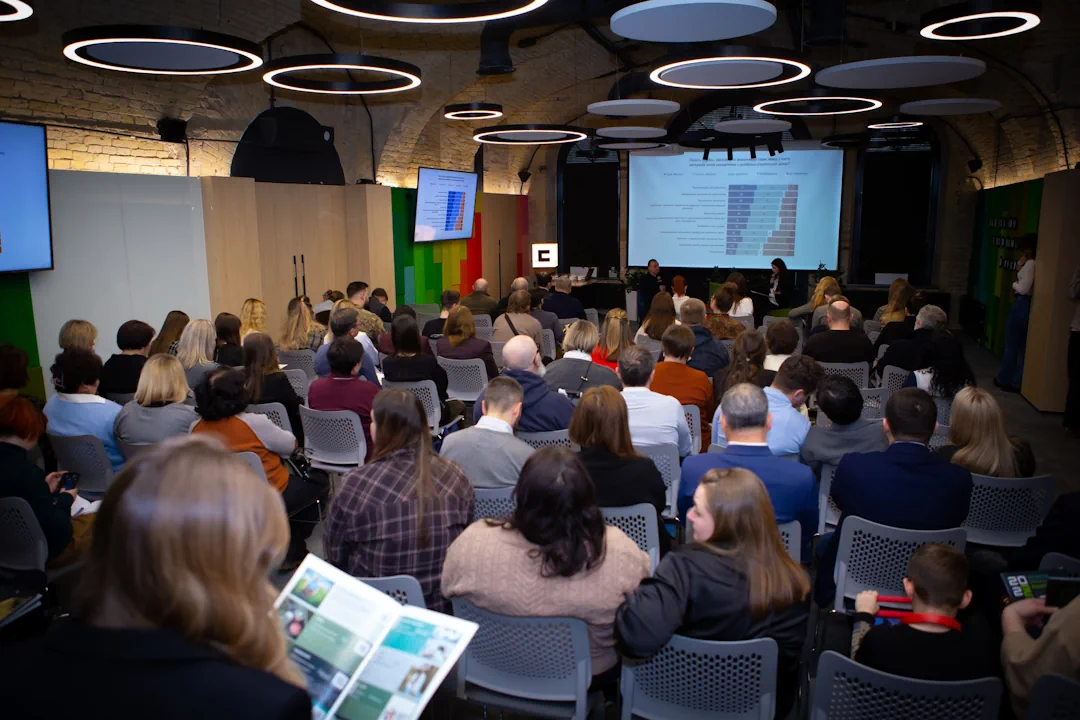
The Rating Group continues to research veteran issues and promote evidence-based public policy in the veteran sphere.
On 23 December 2025, together with the Ukrainian Veterans Fund of the Ministry of Veterans Affairs of Ukraine, we presented the results of a new joint study, ‘Problems of War Veterans in Ukraine’ (part of the ‘Portrait of a Veteran 2025’ project). This is a continuation of our history of effective cooperation with the UVF, which has been ongoing since 2022.
In December, Rating Group researchers surveyed 240 defenders of Ukraine about their needs, support programmes, and challenges. As the company's CEO Oleksii Antypovych said during the presentation, Ukrainian veterans' greatest need is for material and medical support. According to the survey, 50% and 43% of veterans indicated this, respectively.
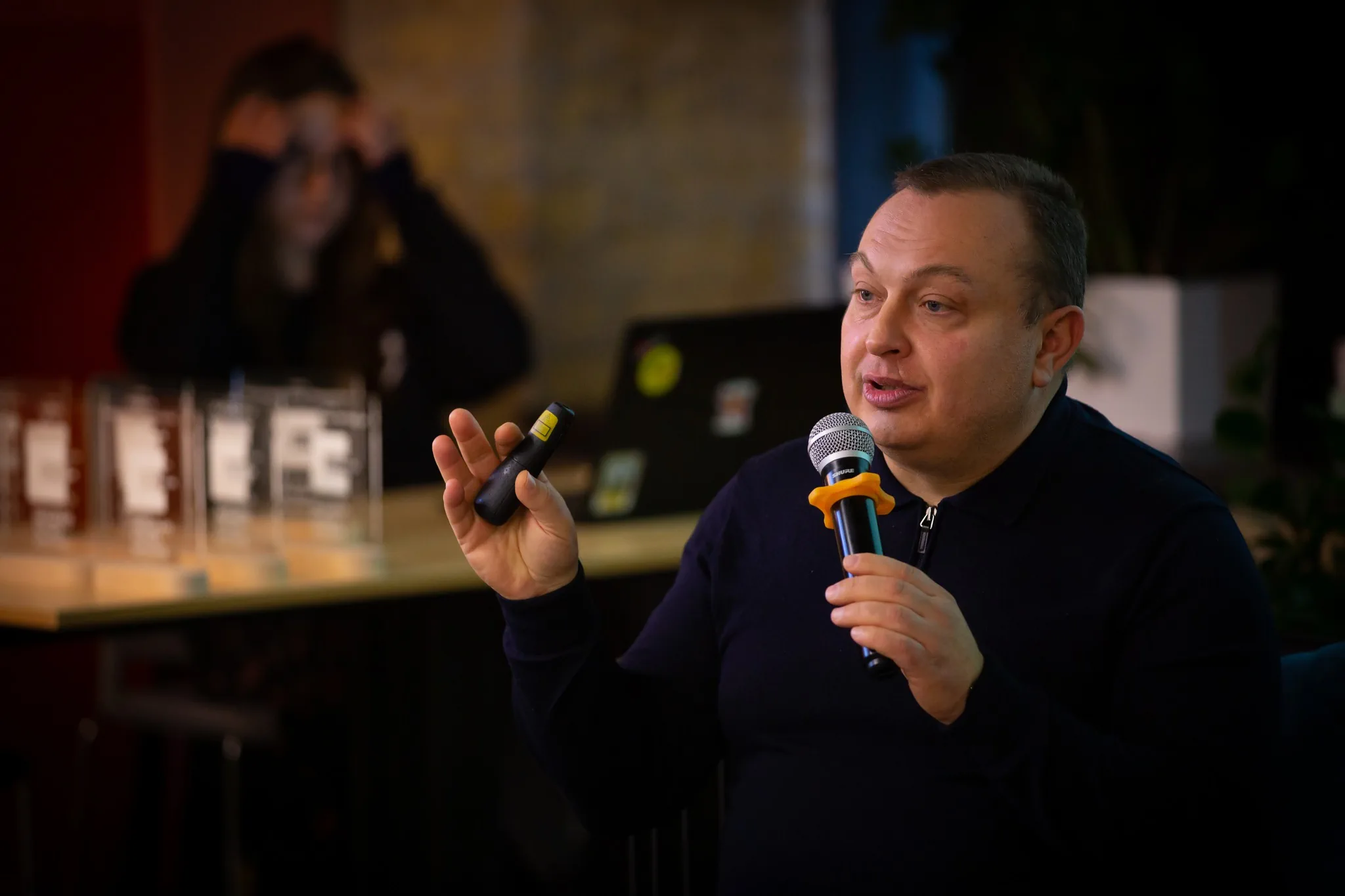
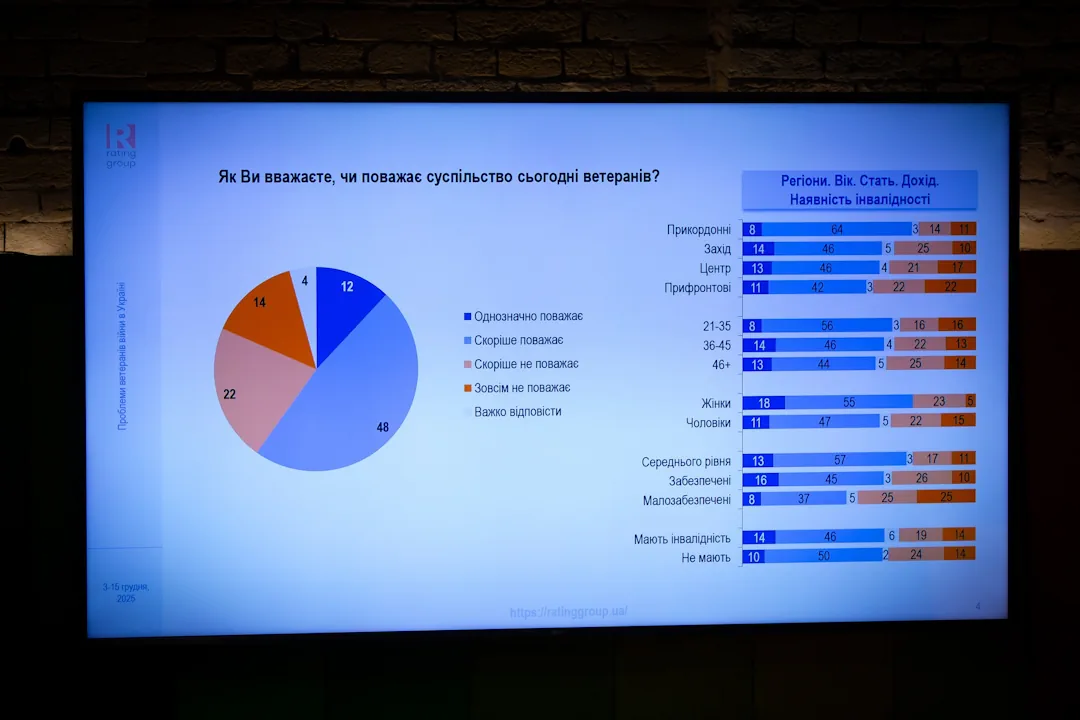
At the same time, a third of veterans feel that society does not give veterans the respect they deserve, and a significant proportion also doubt the effectiveness of state support. Therefore, Oleksii Antypovych emphasises:
"Our defenders are people who risk their lives and health for the sake of everyone, and it is important that society shows its gratitude. Such studies help us understand what kind of support veterans really expect. For example, Ukrainians often think that veterans primarily need free psychological help. And, of course, mental health is extremely important. But our survey shows that veterans also have a huge demand for various forms of material support."
Nataliia Kalmykova, Minister for Veterans Affairs of Ukraine, noted the importance of sociological research in shaping state veterans policy, as it reveals the real needs of veterans.
"In particular, through [...] the Ukrainian Veterans Fund of the Ministry of Veterans Affairs, we are implementing [veterans] policy — supporting veterans' businesses and community initiatives, as well as conducting systematic research. In the future, we will intensify this work by expanding support tools and relying on data and the real needs of veterans," said Nataliia Kalmykova, Minister for Veterans Affairs of Ukraine, about the Rating Group/UVF study.
This was confirmed by Karina Doroshenko, Executive Director of the UVF:
"Our work is based on research. In particular, in 2025, as part of the Varto programme, the Ukrainian Veterans Fund supported 336 projects [...] It is important for us that every figure in our report corresponds to the real needs of veterans," said Karina Doroshenko, Executive Director of the UVF, about the Rating Group/UVF study.
The Rating Group team would like to thank its partners at the Ukrainian Veterans Fund and the Ministry of Veterans Affairs for their cooperation and for the opportunity to help highlight the needs of defenders.
The results of the study are available at the link.

CEO of Rating Group, Oleksii Antypovych, took part in the All-Ukrainian Forum “Ukrainian Identity” held in Dnipro on 27 November 2025!
This annual event brings together the efforts of national and local authorities as well as civil society organisations working to strengthen Ukrainian national and civic identity. The forum is organised by the Ministry of Youth and Sports of Ukraine, the Department for the Promotion of Ukrainian National and Civic Identity of the Ministry, the All-Ukrainian Association of United Territorial Communities, and the Dnipropetrovsk Regional State Administration.

As part of the event’s first panel, Oleksii Antypovych presented the results of a nationally representative sociological study on the development of Ukrainian national and civic identity, together with Nataliia Hontarenko, Acting Head of the Department for the Promotion of Ukrainian National and Civic Identity at the Ministry of Youth and Sports. This survey was carried out by Rating Group in September 2025 at the request of the Ministry of Youth and Sports.
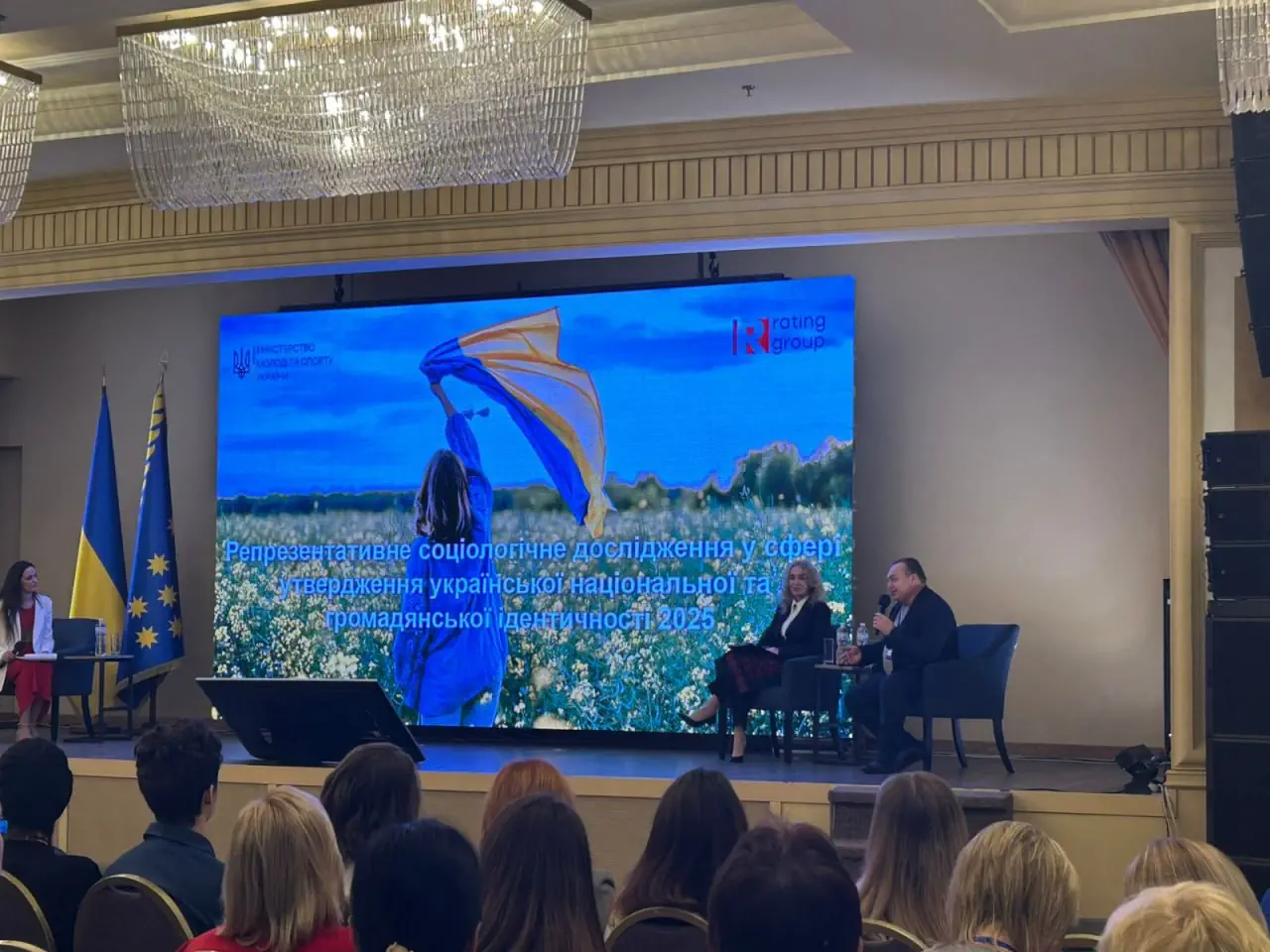
Key findings:
- The overwhelming majority of Ukrainians (99%) primarily identify as citizens of Ukraine, 87% as members of their ethnic group, and 75% as members of their local community.
- According to respondents, the most important factor in being considered Ukrainian is feeling Ukrainian (94%). Other widely supported criteria include respecting Ukrainian laws and the political system (89%), holding Ukrainian citizenship (86%), and feeling responsible for the situation in the country (84%).
- Overall, 73% believe that a person's nationality is defined by self-identification rather than the ethnic origin of their parents.
- Commemorating the memory of the war has become a cultural practice: 72% of Ukrainians regularly join the nationwide moment of silence, and an additional 18% do so occasionally.
- The most frequently visited forms of cultural memory include screenings of documentary and feature films about Ukraine, festivals dedicated to Ukrainian culture, museums, and memorial complexes.
More results can be found in the attached presentation and report.

Founders of Rating Group Ihor Tyshchenko and Oleksii Antypovych, together with the team, took part in the 5th Congress of the Sociological Association of Ukraine on 20–21 November 2025 at Karazin Kharkiv National University!
This is one of the largest social science conferences in Ukraine, held every five years, where leading Ukrainian researchers present their new findings.
This year’s theme was “Society and Sociology in an Exponential World: Research Challenges, Opportunities, and Prospects.” Rating Group is a permanent member of the Sociological Association of Ukraine, and the company’s CEO, Oleksii Antypovych, serves on its board.
The ISSP international study in Ukraine — first results
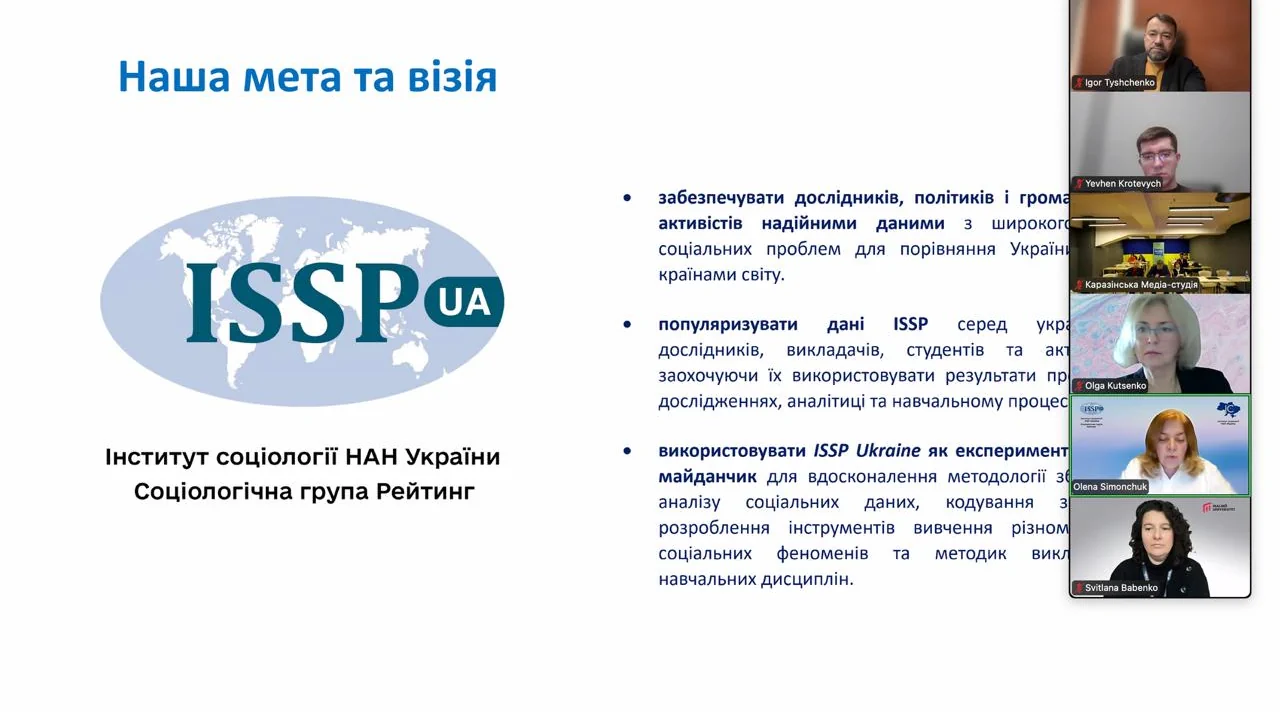
On 21 November, Rating Group and the Institute of Sociology of the NAS of Ukraine presented the first results of the International Social Survey Programme (ISSP) 2025 in Ukraine. The study was presented by Olena Symonchuk (Doctor of Sociology, Head of the Department of Social Structures at the Institute of Sociology of the NAS of Ukraine), Ihor Tyshchenko (Founder and CEO of Rating Group) and Yevhen Krotevych, Head of the Analytics Department at Rating Group (Experimental Research Division).
Rating Group and the Institute of Sociology of the NAS of Ukraine are the official ISSP representatives in Ukraine. In fact, for the first time in years, ISSP is represented in Ukraine at such an institutional level. The comprehensive academic supervision of the project is carried out by the Institute of Sociology, while Rating Group provides the funding, data collection, and analysis. The first implemented module was “Digital Society.”
In addition, the team announced the launch of the ISSP Ukraine project and website. ISSP Ukraine is a project that opens the door for Ukraine to the world of comparative sociological research under the ISSP programme. Thanks to strictly harmonized international standards, the results of Ukrainian surveys will now be integrated into global comparisons and international analytics.
What is the phenomenon behind Ukrainian resilience?
On 20 November, Rating Group CEO Oleksii Antypovych and SAU Vice President Nataliia Chernysh (Doctor of Sociology and Professor at the Department of Sociology, Ivan Franko National University of Lviv) moderated the session “The Phenomenon of Ukrainian Resilience.”
Oleksii Antypovych and Nataliia Chernysh also presented the results of their joint study, “Problems of Social Cohesion in Ukraine.” The research covers topics such as Ukrainians’ self-identification, interpersonal trust, levels of social resilience, willingness to help others, and other key indicators of social cohesion.

The neighbouring session, “Educational Resilience in the Digital Age: Structural Shifts and Social Dilemmas,” was moderated by Roman Borysov, Head of the Analytics Department at Rating Group (Strategic Research Division), PhD in Sociology and Associate Professor at the Department of Sociology of the Educational and Scientific Institute of Sociology and Media Communications of Karazin Kharkiv National University, together with Valentyna Chepak, Doctor of Sociology and Dean of the Faculty of Sociology at Taras Shevchenko National University of Kyiv.
Roman Borysov also delivered a presentation titled “Perceptions of Ukrainian Higher Education Among Parents of (Prospective) Applicants.”
How does Ukrainian sociology continue to operate during wartime?

On 21 November, Oleksii Antypovych spoke at the second plenary session of the Congress. His presentation, “Sociological Surveys in Wartime: Opportunities and Limitations,” summarized the key challenges faced by Ukrainian sociology under wartime conditions and highlighted the best practices for conducting research in this context.
How can we help children overcome stress? Marianna Tkalich, CEO of the Rating Lab research laboratory and Doctor of Psychology, shares simple but important advice for parents in her column for NV. It is based on the results of the study ‘Changes in Children's Mental Health and Well-being,’ for which Rating Group/Rating Lab surveyed more than 1,500 teenagers aged 10-18 and their parents in October 2025 using the unique Family 360° family research technology.
Below are several points from the author's article.
The importance of caring for mental health during wartime
"In conditions of prolonged war, social instability and constant challenges, the issue of mental health is no longer secondary. People are increasingly thinking not only about physical survival, but also about psychological resilience [...] But in order to effectively help ourselves, our children, our loved ones and our community, we need facts from scientific research, not intuition."
About the increase in stress among adolescents
"The proportion of children (aged 10-18) with high or elevated stress levels increased from 27% (in 2024) to 37% (in 2025). The figures rose particularly among girls aged 10-13. Younger teenagers are a very vulnerable group for many reasons: they are entering puberty, undergoing hormonal changes and psychological maturation, and expanding their social opportunities. At the same time, they are still children who need protection, care, and responsible adults around them."
On the importance of communication
"77% of children who regularly talk to their parents about their feelings have higher stress resistance. The stress level in such children is half that of those who rarely communicate."
About gadgets, AI and coping with stress
"Gadgets are the least useful way to cope with stress. An alarming fact: one in ten teenagers asks Artificial Intelligence (AI) for advice about their condition. AI cannot replace human warmth; control the time and content you spend online."
About Family 360° technology
It is not worth making conclusions about teenagers without asking their opinion. That is why the Rating Group team launched Family 360° technology for family surveys, which focuses on the child who is being surveyed, as well as their parents, family members and, in some cases, teachers, doctors, psychologists, etc. Comparing the answers of children and their parents allows us to understand the relationships and changes within the family. We have previously used this approach successfully with our partners at UNICEF, KSE, and Ty Yak? when researching mine awareness, mental health, education, and career guidance.
About the study
We first researched the topic of mental health in the parent-child context in October 2024. This year, we decided to continue, expanding the topic and using longitudinal research techniques to better understand the dynamics. In October 2025, this survey covered more than 1,500 children/adolescents aged 10-18 and their parents.
Authors of the research idea: Svitlana Roiz, child and family psychologist, mother of two; Marianna Tkalych, CEO of Rating Lab, Doctor of Psychological Sciences, mother of Masha (17 years old); and Tetiana Skrypchenko, Deputy Director of Rating Group, mother of Solomiia (8 months old).
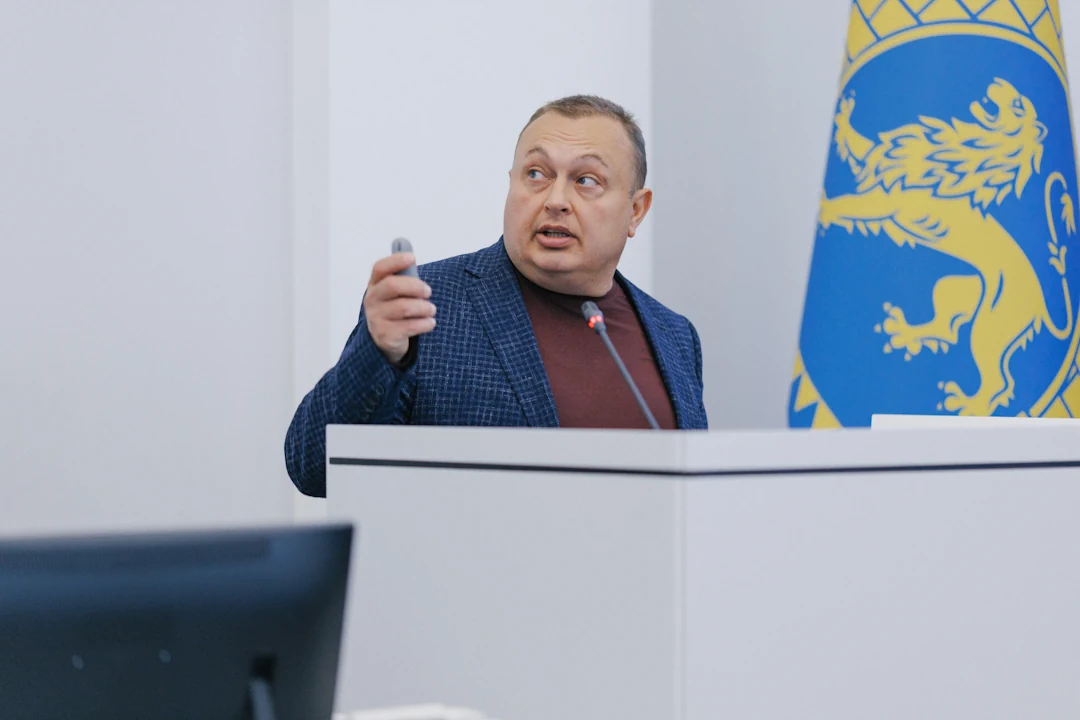
On September 29, 2025, Oleksiy Antypovych, CEO of Rating Group, took part in the roundtable “Building National Resilience: The Role of Local Self-Government” (organized by the Institute of the City and the National Platform for Resilience and Cohesion, moderated by Oleh Saakyan) within the framework of Ukrainian Resilience Week. Ukrainian Resilience Week is an annual event where local authorities, experts, and international partners gather to strengthen the resilience of Ukrainian cities.
Using Rating Group’s data, Oleksiy Antypovych shared insights into what helps Ukrainians maintain resilience. The discussion was based on findings from the academic study “Problems of Social Cohesion in Ukraine”, conducted by the Rating Sociological Group in collaboration with Dr. Nataliia Chernysh, Doctor of Sociology. Commenting on the results, CEO Oleksiy Antypovych noted:
“The resilience index currently stands at 3.6 out of 5 possible points, which is above the average level. And yes, of course, our society faces very serious challenges to resilience and unity every day. Yet Ukrainians continue to remain resilient, and there are many positive indicators: the vast majority of respondents feel a sense of unity with other citizens and their communities, and they look optimistically toward Ukraine’s future. This resilience is also reflected in concrete actions: over 70% of people financially support the Armed Forces of Ukraine, and about half of the respondents help refugees, internally displaced persons, and people with disabilities.”
Rating Group systematically studies issues of social resilience, cohesion, and well-being. Learn more on this topic in the following materials:
- Problems of Social Cohesion in Ukraine
- Presentation by Rating Group Deputy Director Tetiana Skrypchenko: “Promoting Resilience and Social Cohesion under Occupation”
- Regional Ranking by the Local Well-Being Index 2024 by Rating Lab
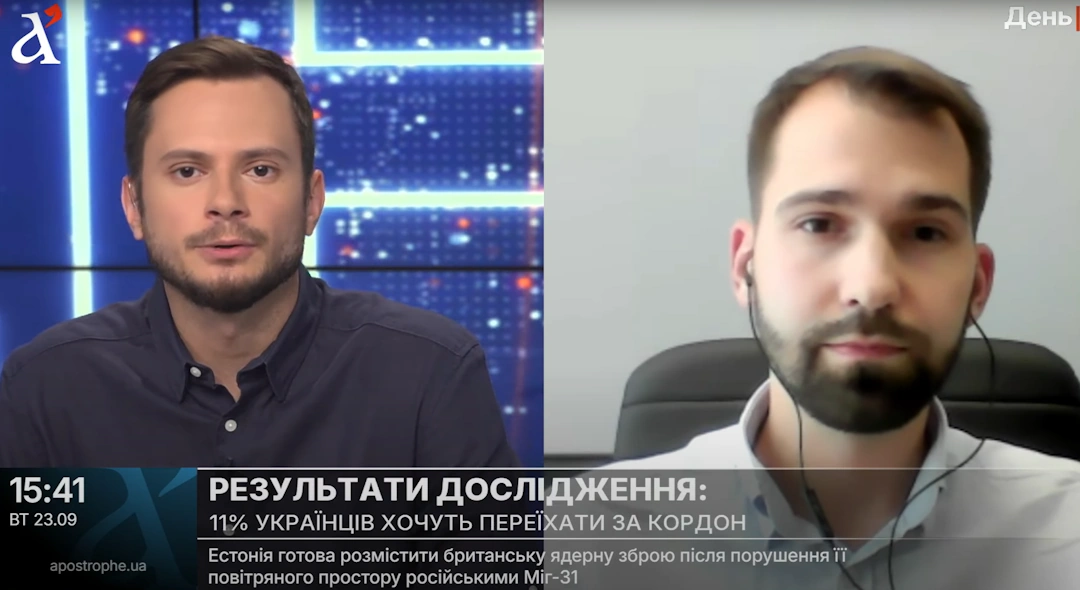
Hlib Kuzmenko, research expert and Head of Communications at Rating Group, commented on Ukrainians’ migration intentions on Apostrof TV on September 23, 2025. As a reminder, a Rating Group survey showed that 11% of Ukrainians overall — and nearly 20% among young people aged 18–35 — would like to move abroad permanently.
According to Hlib Kuzmenko, these figures do not mean that all of these respondents will definitely leave Ukraine. Rather, Ukrainians’ real decisions will depend on the further situation at the front. There is also a difference between an abstract desire and actual plans to move:
"To conclude that all these people will definitely leave would be a mistaken assumption. To some extent, the percentages here also depend on how the question is asked. Recently, the research laboratory Rating Lab asked Ukrainians whether they plan to move somewhere after the war — that is, not about an abstract desire but about potential plans. And in that case, the share of those who would leave was more than twice as low."
At the same time, the expert noted that migration intentions are indeed stronger among young people, and this may pose certain risks for the country’s economic development:
"Young people are the category with noticeably stronger migration intentions. And this is something that deserves attention. They are often active individuals who want to work and are ready to take on certain initiatives. In other words, they are potentially very economically active citizens."
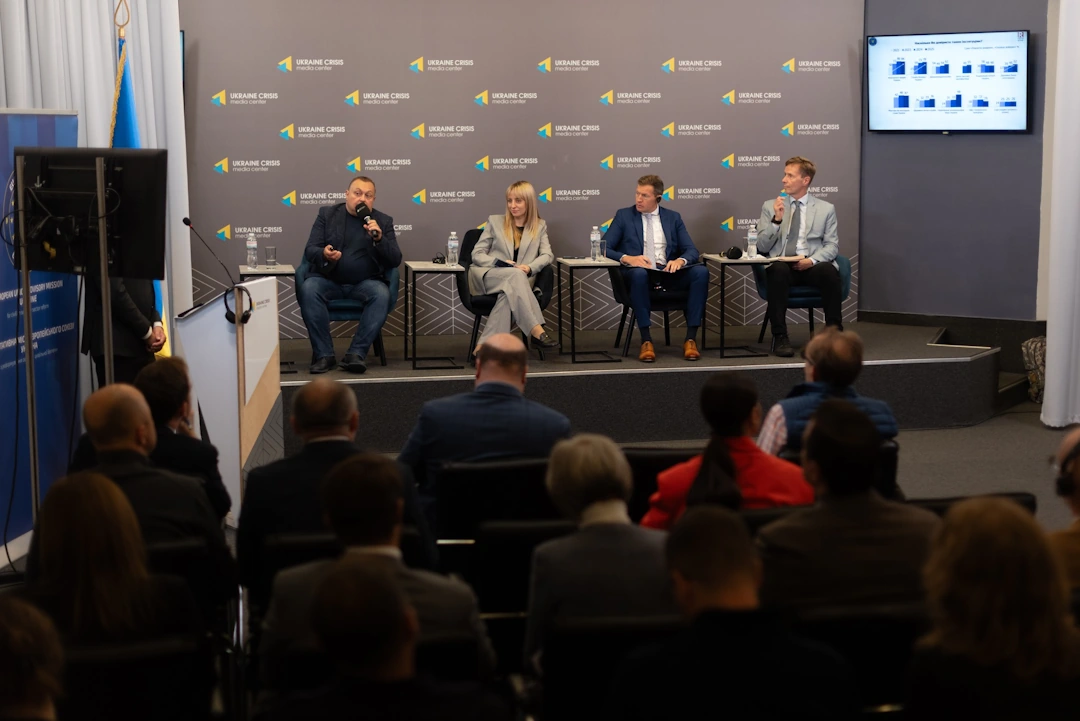
The sociological company Rating Group and the European Union Advisory Mission (EUAM) in Ukraine have presented the results of a new study titled “Trust, Reforms, and EU Integration: What Ukrainians Think in 2025.” This continues the tradition of an annual nationwide public opinion survey that provides a comprehensive understanding of Ukrainians’ attitudes toward reforms, institutions, threats, challenges, and the country’s path to EU membership.
The event took place on September 25, 2025, at the Ukraine Crisis Media Center with the participation of the following speakers:
- Rolf Holmboe, Head of EUAM Ukraine
- Gediminas Navickas, Deputy Head of the EU Delegation to Ukraine
- Kateryna Pavlichenko, Deputy Minister of Internal Affairs of Ukraine
- Oleksiy Antypovych, CEO of Rating Group
According to the study’s findings, Ukrainians continue to demonstrate high levels of trust in their international partners, with the European Union (63%), the International Monetary Fund (58%), NATO (54%), and the Council of Europe (53%) enjoying the highest levels of trust. A clear majority of Ukrainians (68%) also believe that the country will be able to successfully implement the necessary reforms to join the EU.
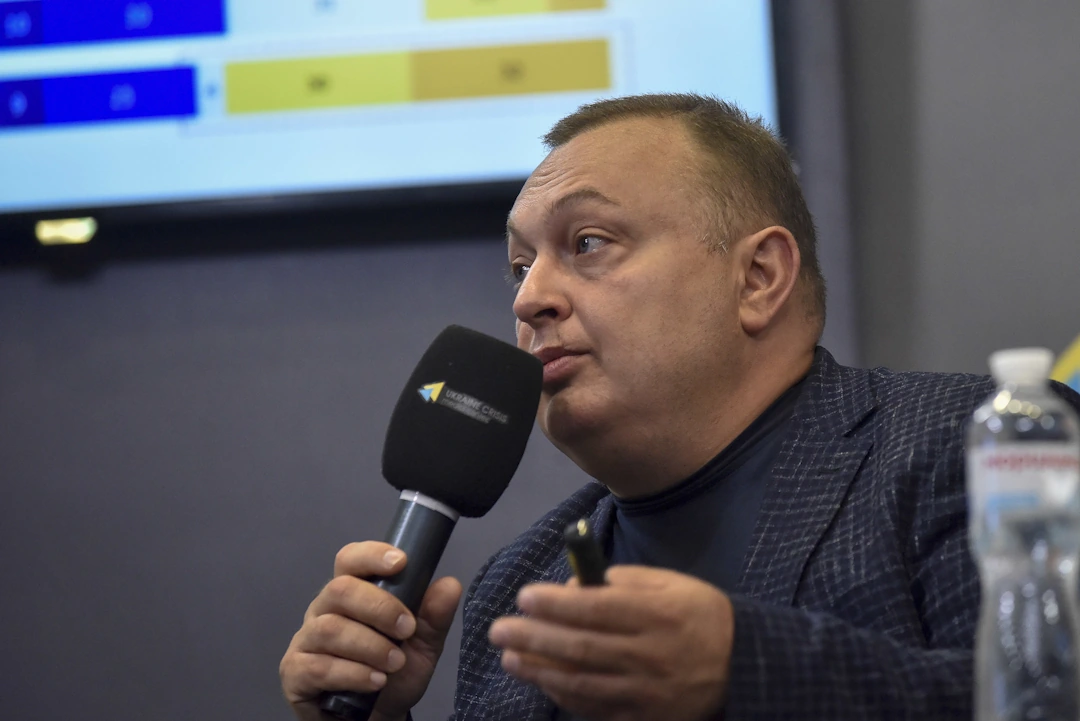
The discussion participants emphasized the importance of the survey, which has been initiated by EUAM since 2015. Oleksiy Antypovych, CEO of Rating Group, noted that this is already the second such study conducted by Rating Group for EUAM since the beginning of the full-scale war.
"It is very important that this study shows dynamics. The best way to look at sociology is precisely in dynamics — then you understand where society and the country are heading,” said Oleksiy Antypovych, CEO of Rating Group
The speakers reflected on the fact that monitoring public sentiment is also important for building effective communication between European institutions and Ukrainian society.
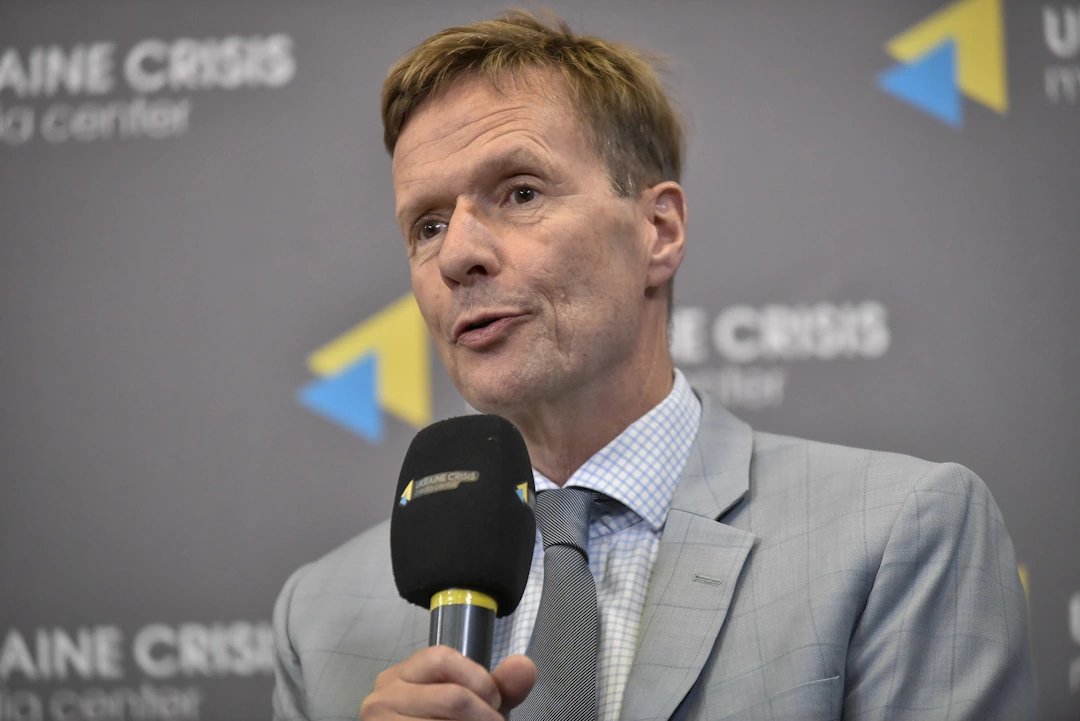
"The results of this survey are very important. It can help us understand what society thinks, what concerns people have, whom they trust, and how they view reforms. European institutions, such as the EU Advisory Mission, also bear responsibility to the people of Ukraine. The findings of the study can guide us on how to communicate better and engage in dialogue,” said Rolf Holmboe, Head of EUAM Ukraine
Such communication should also contribute to better awareness among Ukrainians about the EU system, its legislation, rules, and everyday conditions. This will help Ukrainians look at European integration in a more realistic way:
"Since the beginning of the full-scale invasion, Ukrainians have started to realize that Europe is not only about ‘greener grass’ and ‘clearer skies.’ It is also about rules, laws, and the absence of corruption. Because of the war, we have all come to fully recognize ourselves as Ukrainians and to appreciate the value of our own state. Going forward, our sense of European identity will continue to grow. And in some respects, we will even take a more sober view of EU accession,” said Oleksiy Antypovych, CEO of Rating Group
See more:
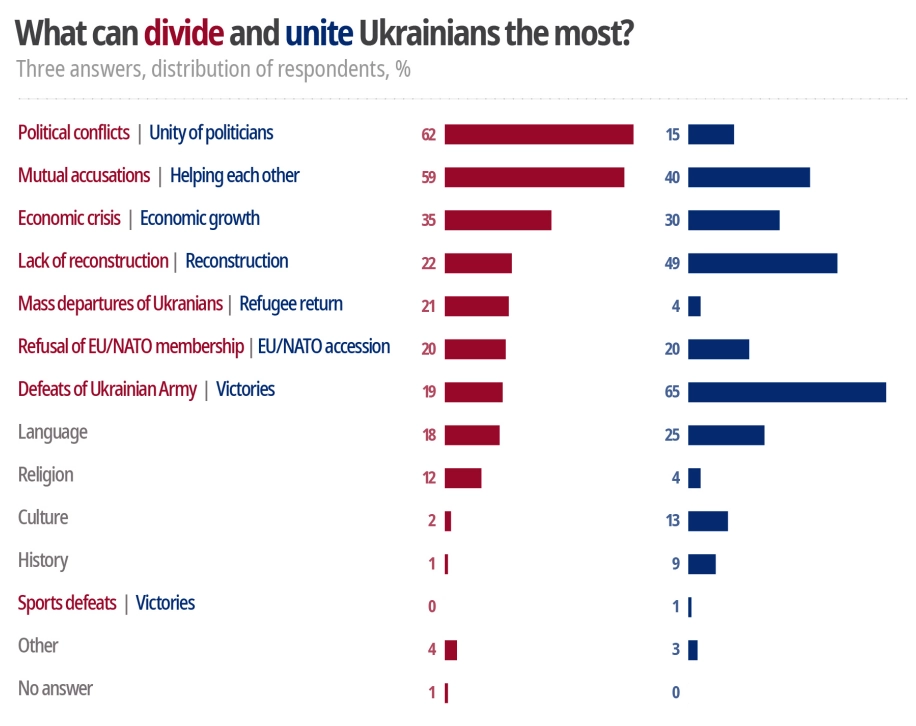
Deputy Director of Rating Group Tetiana Skrypchenko took part in the international scientific conference on the social challenges of the Russian-Ukrainian war from the research center Konflikt und Kooperation im östlichen Europa (Germany).
In the report "Fostering Resilience and Social Cohesion under Occupation", Tetiana Skrypchenko talks about how Ukrainians manage to maintain resilience, how communities unite, and what conclusions should be drawn to further strengthen Ukrainian society. The report is based on data from Rating Group research.
See some of the key insights below. See the full report "Emancipatory Dimensions of In:Security – Strategies of Coping with War Challenges in Ukraine" in the attached file.
On the importance of social resilience
"Efforts to build resilience are not just about survival but also about resistance and empowerment. Resilience helps Ukraine stand up to Russian control, both on the frontline and in society. Community resilience, in particular, plays an important role in establishing emancipatory practices, fostering a sense of agency and security, and rejecting imposed narratives. By focusing on both national unity and local support, Ukraine can make sure that resilience works as a bulwark against outside threats and insecurity."
On the ways of uniting communities
How to strengthen community cohesion? Based on research by the Rating Group and Rating Lab, Tetiana Skrypchenko notes the important understanding that levels of resilience vary by group. For example, resilience is lower among the less affluent and women of all ages. Low resilience in these groups can lead to greater stress, long-term psychological problems, less social participation and higher risks, which exacerbates inequality.
Also based on research by the Rating Group and the Transatlantic Dialogue Center (2024), Tetiana Skrypchenko mentions methods such as, for example, involving local residents in projects aimed at supporting Ukrainian defenders; reviving national customs.
On the experience of the deoccupied regions
"Respondents noted an increased sense of national and regional identity, with many stating that they had become more ‘Ukrainian’ because of the war. It is crucial to consider these experiences and establish institutions for remembering the wartime and occupation experience. Regional initiatives to address collective trauma should be scaled up to national level in order to foster unity and sustain resilience"
Recently, the Rating Group team recently released another study on the resilience and cohesion of Ukrainian society with the participation of sociology professor Natalia Chernysh.