
News and Press releases
Search news and press releases
The Rating Group continues to research veteran issues and promote evidence-based public policy in the veteran sphere.
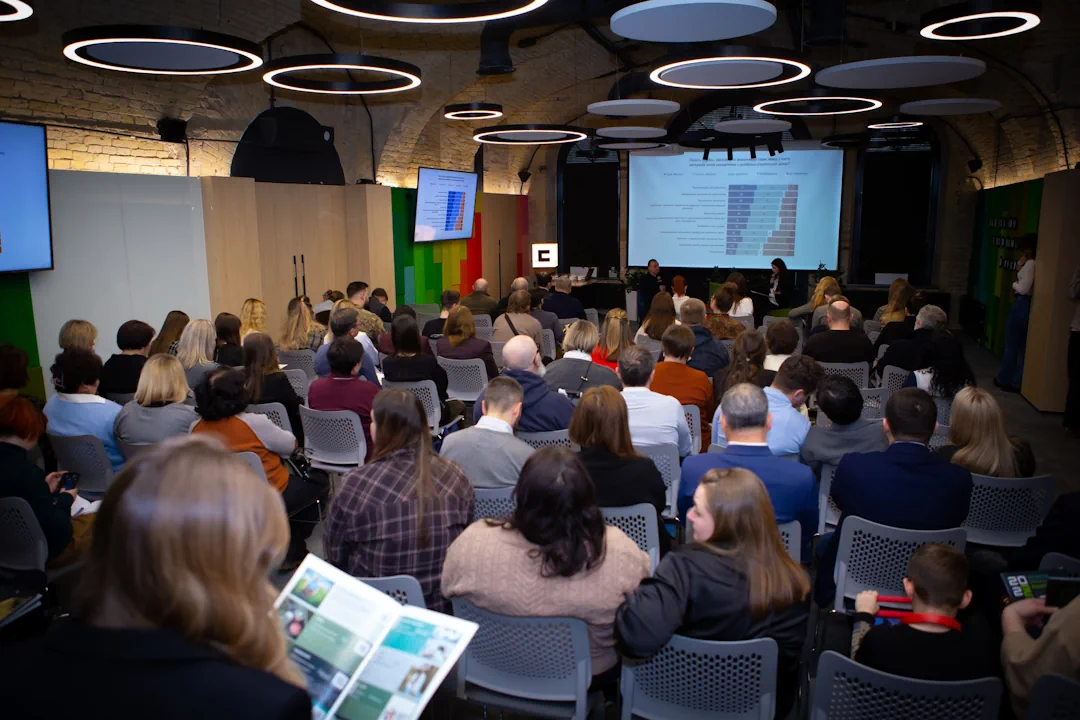
On 23 December 2025, together with the Ukrainian Veterans Fund of the Ministry of Veterans Affairs of Ukraine, we presented the results of a new joint study, ‘Problems of War Veterans in Ukraine’ (part of the ‘Portrait of a Veteran 2025’ project). This is a continuation of our history of effective cooperation with the UVF, which has been ongoing since 2022.
In December, Rating Group researchers surveyed 240 defenders of Ukraine about their needs, support programmes, and challenges. As the company's CEO Oleksii Antypovych said during the presentation, Ukrainian veterans' greatest need is for material and medical support. According to the survey, 50% and 43% of veterans indicated this, respectively.
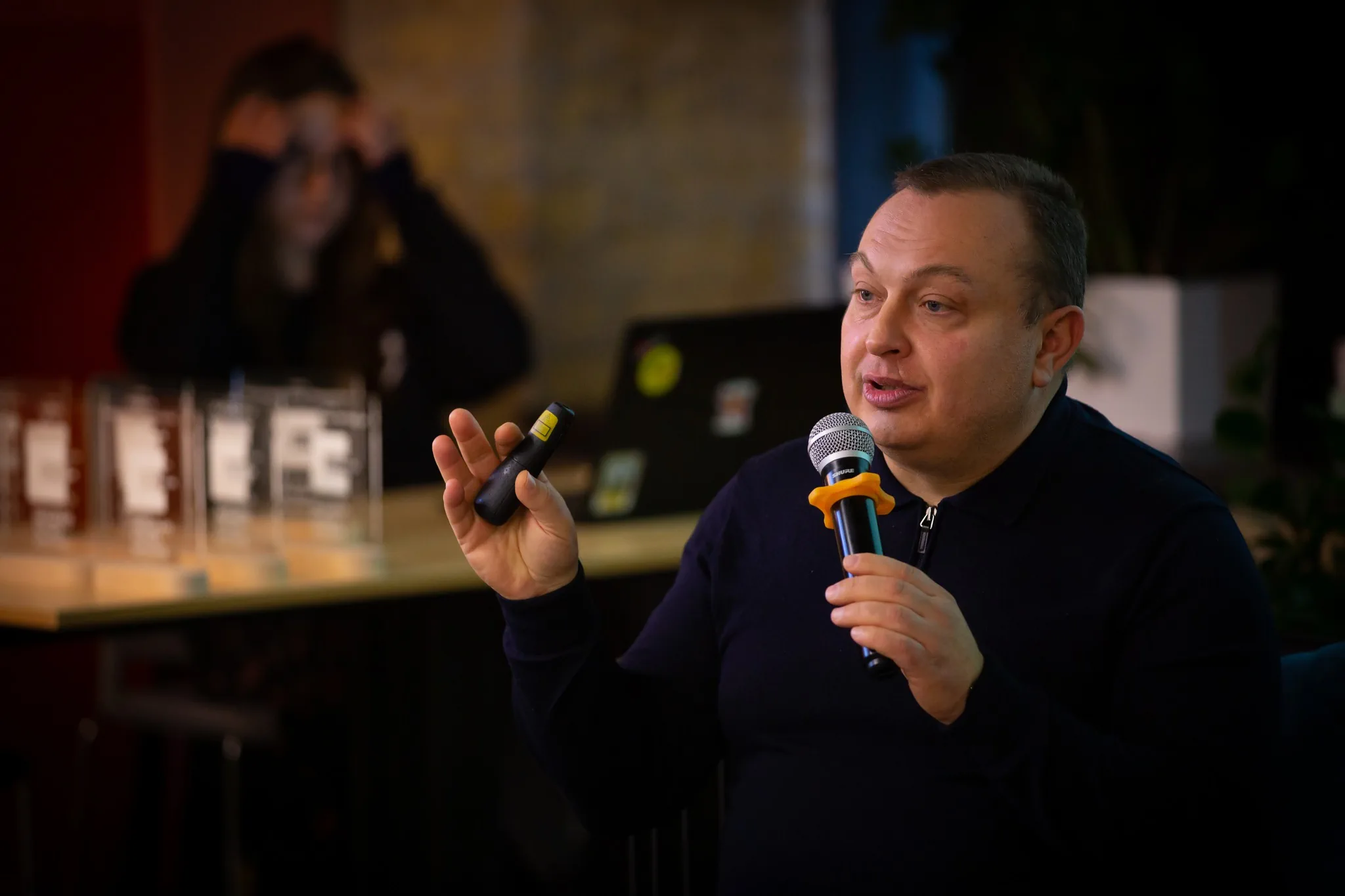
At the same time, a third of veterans feel that society does not give veterans the respect they deserve, and a significant proportion also doubt the effectiveness of state support. Therefore, Oleksii Antypovych emphasises:
"Our defenders are people who risk their lives and health for the sake of everyone, and it is important that society shows its gratitude. Such studies help us understand what kind of support veterans really expect. For example, Ukrainians often think that veterans primarily need free psychological help. And, of course, mental health is extremely important. But our survey shows that veterans also have a huge demand for various forms of material support."
Nataliia Kalmykova, Minister for Veterans Affairs of Ukraine, noted the importance of sociological research in shaping state veterans policy, as it reveals the real needs of veterans.
"In particular, through [...] the Ukrainian Veterans Fund of the Ministry of Veterans Affairs, we are implementing [veterans] policy — supporting veterans' businesses and community initiatives, as well as conducting systematic research. In the future, we will intensify this work by expanding support tools and relying on data and the real needs of veterans," said Nataliia Kalmykova, Minister for Veterans Affairs of Ukraine, about the Rating Group/UVF study.
This was confirmed by Karina Doroshenko, Executive Director of the UVF:
"Our work is based on research. In particular, in 2025, as part of the Varto programme, the Ukrainian Veterans Fund supported 336 projects [...] It is important for us that every figure in our report corresponds to the real needs of veterans," said Karina Doroshenko, Executive Director of the UVF, about the Rating Group/UVF study.
The Rating Group team would like to thank its partners at the Ukrainian Veterans Fund and the Ministry of Veterans Affairs for their cooperation and for the opportunity to help highlight the needs of defenders.
The results of the study are available at the link.

The Rating Group sociological group surveyed 240 defenders of Ukraine as part of a study entitled ‘Problems of War Veterans in Ukraine.’ The survey was conducted on the initiative of the Ukrainian Veterans Fund of the Ministry of Veterans Affairs of Ukraine and is part of the ‘Portrait of a Veteran 2025’ project.
The research team learned about the main challenges veterans face when returning to civilian life, their needs, and their perceptions of the effectiveness of support programmes.
Challenges in civilian life
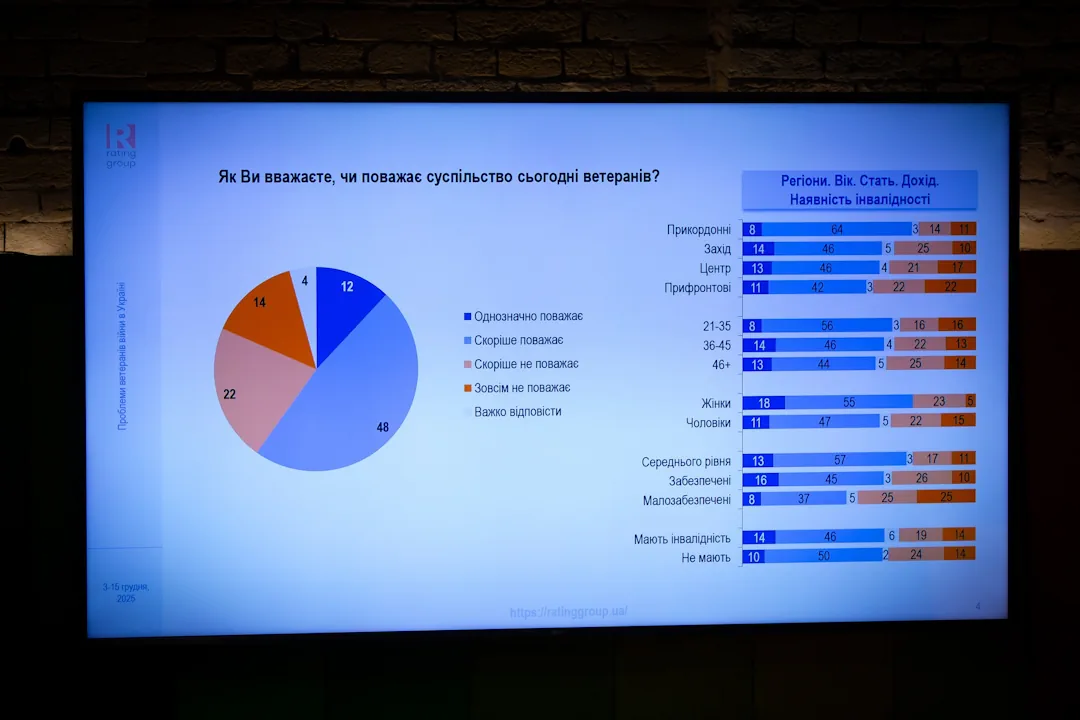
One-third of Ukrainian veterans feel that society does not respect them today
- At the same time, 60% of the veterans surveyed responded that society does respect veterans. Also, the majority of respondents (58%) believe that society is not informed about the needs and problems of veterans in civilian life.
- Psycho-emotional instability (84%), alcohol or drug abuse (79%), lack of understanding from society (76%), physical health problems and difficulties in obtaining medical care (75%), unemployment (73%), lack of inclusive spaces and adapted workplaces for people with disabilities (72%), and conflicts in the family (71%) are negative phenomena that, according to veterans, are likely to arise in their lives after returning from war.
- Sixty per cent mentioned the incompatibility of military experience with civilian life, 58 per cent mentioned problems with obtaining social benefits, 51 per cent mentioned the risk of breaking the law and participating in crime, and 48 per cent mentioned suicide.
Meeting the needs of veterans
We asked veterans to rate how well their various needs were being met on a 5-point scale (1 – not met at all, 5 – completely met). Respondents could also indicate that they did not have such needs at all.
- The best-rated need was discounted travel (4.3 points on average).
- Average ratings were given to medical care (3.3), physical rehabilitation and/or prosthetics (3.3), employment (3.2), psychological support (3.1), educational needs/retraining (3.1 points), information and counselling support (3.1), business development (3.0) and financial support for families (3.0).
- The respondents rated legal support (2.7) and housing provision (2.6) the lowest.
What kind of support do veterans need?
Financial (50%) and medical (43%) support are the main requests of veterans.
- About a quarter of respondents indicated psychological support (28%) and housing assistance (26%), while one in five (22%) indicated legal support.
- Only one in ten said they did not need any support today.
Use of benefits and support programmes
- Most often, veterans use subsidies for utility payments (69%), free travel (52%), medical care (41%), and pensions (33%).
- Financial assistance was mentioned by 21%, psychological rehabilitation by 14%, education benefits by 12%, and educational services and benefits by 10%.
- Only 8% of respondents said they did not use any of the benefits or programmes mentioned.
Effectiveness of veteran support programmes
- Opinions on the overall effectiveness of state veteran programmes were divided: 51% believe that they are effective, while 40% of respondents question their effectiveness.
- State rehabilitation and prosthetics programmes for persons with disabilities are considered effective by 59% of respondents, 27% of respondents have the opposite opinion, and 15% were unable to assess them.
- Assessments of the accessibility (inclusiveness) of public spaces for persons with disabilities were also divided: 47% believe that they are completely or somewhat accessible, 47% of respondents question their accessibility, and another 7% were unable to assess them.
- On the other hand, the effectiveness of programmes run by non-governmental organisations (civil society organisations, charitable foundations, volunteer associations) to support veterans is rated much higher by respondents. 75% of respondents consider them to be completely or somewhat effective, while 17% hold the opposite opinion.
Rating Group is one of Ukraine's largest research institutions, operating since 2008. The company is registered in Ukraine and has extensive experience in conducting sociological surveys in Ukraine and abroad. The group includes: Sociological Group Rating, Rating Lab research laboratory, Rating Online platform, and Rating Call Centre.
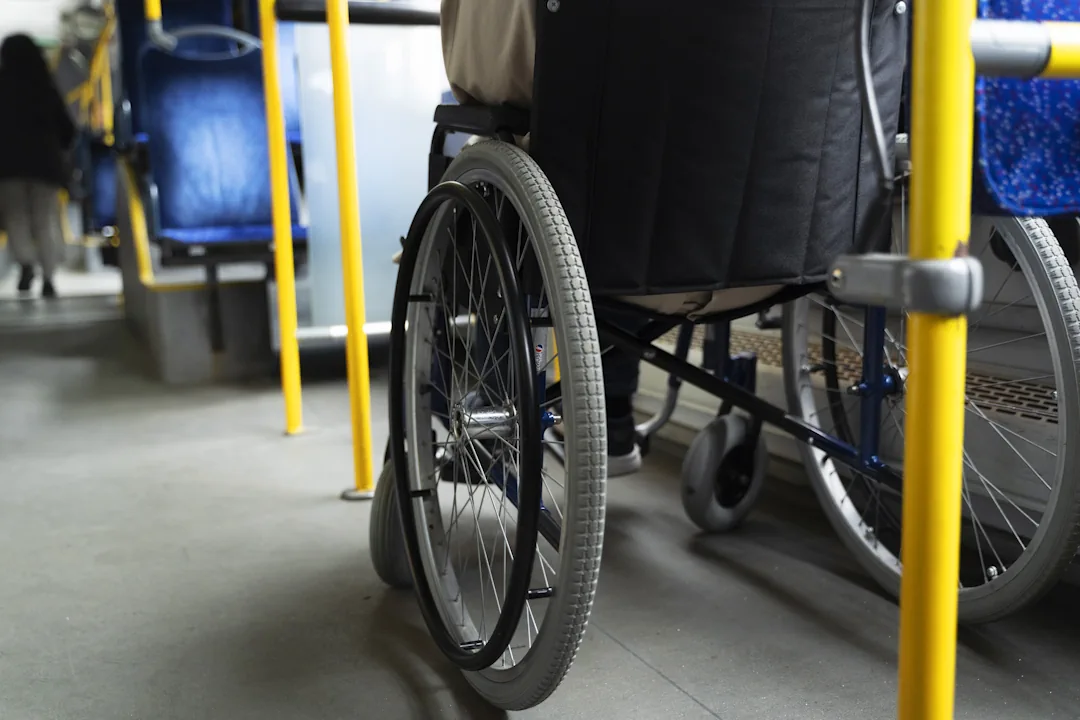
How tolerant are Ukrainians toward people with disabilities? Rating Group and Project HOPE Ukraine explored this question within the framework of the Rehab4 project. To do so, Rating Group conducted a survey among the adult population in six regions of Ukraine: Dnipropetrovsk, Zhytomyr, Ivano-Frankivsk, Odesa, Rivne, and Cherkasy oblasts.
Level of bias
The stigmatization index stands at 30 points, indicating a moderate level of bias toward people with disabilities across the six surveyed regions of Ukraine
This moderate level is driven primarily by compassion–pity and by perceptions of people with disabilities as a burden. As a result, there is a risk of paternalistic attitudes in which people with disabilities are viewed as objects of assistance rather than full and autonomous individuals.
Visibility of people with disabilities
- 70% of respondents see people with disabilities often or daily.
- Among those who do, this most frequently occurs on the streets (82%), in shops (59%), and in public transport (48%).
Declarative tolerance VS hidden biases
- Around 90% of respondents say they are willing to accept people with disabilities as neighbours, friends, or acquaintances; 86% — as colleagues; and 75% — as partners.
- At the same time, many believe that society overall holds a neutral attitude toward people with disabilities. This discrepancy may indicate the presence of latent biases masked by socially desirable responses.
- The emotional perception of veterans with disabilities differs from that of civilians with disabilities: toward the former, respondents most often feel gratitude (64%), compassion (47%), and pride (37%); toward the latter — primarily compassion (73%), as well as pity (36%), and feelings of sadness or sorrow.
Structural barriers and responsibility
- We asked respondents to evaluate various opportunities in Ukraine in general, and specifically for people with disabilities, on a scale from 1 (no opportunities) to 5 (all opportunities), and calculated the average scores. This makes it possible to compare conditions for different groups of citizens: the largest gaps appear in opportunities to engage in sports (4.0 in Ukraine overall vs. 3.4 for people with disabilities), spend leisure time (3.8 in Ukraine vs. 3.5 for people with disabilities), and find a job (3.1 vs. 2.5).
- We also asked respondents to assess the state of certain initiatives/infrastructure areas in their locality on a scale from 1 (terrible) to 5 (excellent), and again calculated average scores. The most critical situations concern transport accessibility for wheelchair users and the accessibility of government websites for blind people — both received ratings of just 2 out of 5.
- Respondents primarily believe that the responsibility for addressing issues affecting people with disabilities lies with local authorities (83%). Responsibility is also frequently attributed to central authorities (39%).

Rating Group and Institute of Sociology of the National Academy of Sciences of Ukraine officially launch ISSP Ukraine!
In 2025, Ukraine became the 45th participating country of the ISSP (International Social Survey Programme). It is one of the oldest and largest sociology programs in the world. Rating Group and Institute of Sociology of the National Academy of Sciences of Ukraine are the official representatives of Ukraine in ISSP. Funding, collection and analysis of data is carried out by Rating Group, and scientific support is provided by the Institute of Sociology. Also, for the first time, a special site has been opened for Ukrainian researchers: ISSP Ukraine.
In the spring of 2025, we implemented the first research module “Digital Societies”, and here on December 4, ISSP representatives officially confirmed:
Rating Group data meets international quality standards and will be published within ISSP - ISSP Methodology Committee
Also, the ISSP team recognized our experimental author's methodology for data collection and gave the green light to the implementation of the second module - “Work Orientations”, which we plan to complete in the first half of 2026.
The leader and coordinator of the project from Rating Group is Yevhen Krotevych, Head of the Department of Analytics (Department of Experimental Research). We owe Yevhen the success of this project — from the ambitious initiative of representing Ukraine in the ISSP community, organizing data collection and preparation to communication with the ISSP Methodology Committee on approval of the Rating Group methodology.
About the special technique
The Rating Group proposed to the ISSP Methodology Committee an experimental application of the combined approach of CATI and CAWI for the survey on the module “Digital Societies” in Ukraine.
A feature of the proposed methodology is the division of the survey into two stages: CATI and CAWI.
On CATI stage, the survey begins with the generation of a random phone number to contact a potential respondent. After establishing the contact, the operators introduce the respondent to the topic of the survey, ask a few socio-demographic questions, and also ask their consent to participate in the second stage — the CAWI survey. Next, two scenarios are possible:
- Respondents who do not have a smartphone or do not use the Internet are offered to take the survey by phone. In case of consent, the interviewer continues the survey within CATI.
- Respondents who have a smartphone and agreed to take the survey online receive an SMS or a message in the messenger with an individual link to the survey on the online platform Rating Online. Switching to the link opens access to the CAWI stage (self-filling of the questionnaire at a convenient time for the respondent and in any place).
This allows to ensure random selection of respondents and comfortable participation in the survey.
When will it be possible to use the dataset?
The "Digital Societies" module data array should be publicly available in spring 2026 (preliminary). It can be used by all willing researchers, students, teachers and other interested parties.
Rating Group thanks the project coordinators from the Institute of Sociology of the National Academy of Sciences of Ukraine for their cooperation Olena Symonchuk (Doctor of Sociological Sciences, Head of the Department of Social Structures) and Svitlana Oksamytna (Doctor of Sociological Sciences, Leading Researcher of the Department of Social Structures of the National Academy of Sciences)!
On the related note: November 21, the ISSP Ukraine team previewed presented the first results of ISSP 2024 in Ukraine and announced the launch of the project website.

How do punishments and harsh parenting methods affect a child's stress and emotional connection with their parents? How acceptable do parents find such methods? Is violence inherited through generations? These topics are covered in the sixth article from the study "Changes in Children's Mental Health and Well-being" by Rating Group/Rating Lab.
In October 2025, Rating Group/Rating Lab surveyed more than 1,500 teenagers aged 10-18 and their parents using the unique Family 360° family research technology. In each publication, we discuss the mental health of teenagers and various aspects of their lives: gadgets and AI, emotional recognition by parents, dreams, household chores and stress, upbringing and punishment in the family, and bullying. Preliminary results of the series of studies can be found at the link.
The acceptability of harsh parenting practices
We asked parents of children aged 10-18: if a child behaves inappropriately, to what extent are certain parenting actions acceptable?
- Parents are most opposed to physical punishment (89% consider it unacceptable), ignoring (87%), and using unpleasant words in conversation (79%). There is almost complete consensus on this.
- Almost a third of parents (30%) approve of the possibility of threatening severe punishment, 55% are against it, and 16% are undecided.
- More than a third (36%) of parents consider it acceptable to take away phones and gadgets, 50% consider it unacceptable, and another 15% are undecided.
- Parents' opinions on raising their voice or shouting are more evenly divided: 35% are in favour, 42% are against, and 23% are undecided.
Are harsh disciplinary measures and violence inherited?
We asked the parents of teenagers: how were they themselves raised by their parents during their childhood? We wanted to understand whether childhood experiences influence parents' understanding of what is ‘acceptable’ in raising their own children.
The more often certain parenting practices and punishments were used on parents during their childhood, the more acceptable they consider them to be
- This is especially true for yelling and threats. Among parents who were often yelled at as children, almost half (48%) consider this an acceptable method. Meanwhile, among those who were rarely or never yelled at as children, 14% consider this method acceptable.
- Also, among those who were often threatened with severe punishment, 46% consider this acceptable.
We also asked children (aged 10-18) to describe how their parents react to their inappropriate behaviour.
- The least common practices are light physical punishment and ignoring. Five per cent and seven per cent of children, respectively, mentioned that their parents use these methods relatively often.
- One in six children relatively often encounter unpleasant words in conversation, threats of severe punishment and confiscation of gadgets.
- Raising one's voice is the most common practice on the list. About a third of children (34%) encounter it relatively often.
At the same time, there is a worrying tendency: harsh parenting practices, punishment and violence in the family are passed down through generations
As mentioned earlier, the more often parents experienced certain parenting practices in their childhood, the more acceptable they find such methods. There is a direct link between perception and actions in practice: the more acceptable the practice (from the parents' point of view), the more likely they are to apply it to their child. In other words, parents who were yelled at as children are more likely to yell at their own children. This is confirmed by the children's own responses.

51% of parents who consider shouting to be acceptable raise their voices at their children. More than a third (37%) of parents who are ‘undecided’ about the acceptability of shouting also do so. In addition, 42% of parents who consider the use of unpleasant words to be acceptable use them when talking to their own children.
How do such methods affect children?
Harsh disciplinary measures and punishment are detrimental to a child's psychological well-being
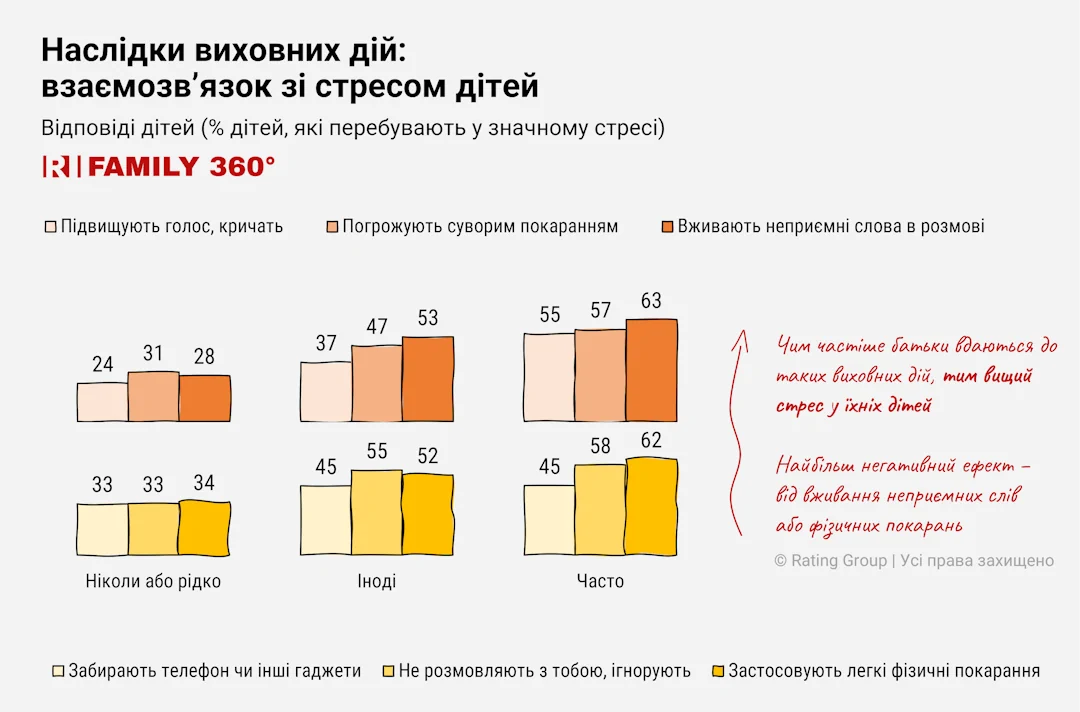
The more often harsh parenting methods are used on children, the greater their stress levels. For example, almost two-thirds of children who are physically punished (62%) or who are spoken to in an unpleasant manner (63%) have significant (conditionally ‘red’) stress levels. More than half of children who are often ignored (58%), threatened with severe punishment (57%) or frequently shouted at (55%) have the same level of stress. These children experience ‘red’ levels of stress two to three times more often than their peers who are never punished in such ways.
Harsh disciplinary measures and punishment destroy the emotional bond between the child and their parents

The more often parents use harsh parenting practices, the weaker the bond between parent and child. For example, just over half (55%) of children whose parents often shout at them feel a strong bond with their parents. In contrast, among their peers whose parents never shout at them, almost 80% feel a strong bond.
About Family 360° technology
It is not worth making conclusions about teenagers without asking their opinion. That is why the Rating Group team launched Family 360° technology for family surveys, which focuses on the child who is being surveyed, as well as their parents, family members and, in some cases, teachers, doctors, psychologists, etc. Comparing the answers of children and their parents allows us to understand the relationships and changes within the family. We have previously used this approach successfully with our partners at UNICEF, KSE, and Ty Yak? when researching mine awareness, mental health, education, and career guidance.
About the study
We first researched the topic of mental health in the parent-child context in October 2024. This year, we decided to continue, expanding the topic and using longitudinal research techniques to better understand the dynamics. In October 2025, this survey covered more than 1,500 children/adolescents aged 10-18 and their parents.
Authors of the research idea: Svitlana Roiz, child and family psychologist, mother of two; Marianna Tkalych, CEO of Rating Lab, Doctor of Psychological Sciences, mother of Masha (17 years old); and Tetiana Skrypchenko, Deputy Director of Rating Group, mother of Solomiia (8 months old).

CEO of Rating Group, Oleksii Antypovych, took part in the All-Ukrainian Forum “Ukrainian Identity” held in Dnipro on 27 November 2025!
This annual event brings together the efforts of national and local authorities as well as civil society organisations working to strengthen Ukrainian national and civic identity. The forum is organised by the Ministry of Youth and Sports of Ukraine, the Department for the Promotion of Ukrainian National and Civic Identity of the Ministry, the All-Ukrainian Association of United Territorial Communities, and the Dnipropetrovsk Regional State Administration.

As part of the event’s first panel, Oleksii Antypovych presented the results of a nationally representative sociological study on the development of Ukrainian national and civic identity, together with Nataliia Hontarenko, Acting Head of the Department for the Promotion of Ukrainian National and Civic Identity at the Ministry of Youth and Sports. This survey was carried out by Rating Group in September 2025 at the request of the Ministry of Youth and Sports.

Key findings:
- The overwhelming majority of Ukrainians (99%) primarily identify as citizens of Ukraine, 87% as members of their ethnic group, and 75% as members of their local community.
- According to respondents, the most important factor in being considered Ukrainian is feeling Ukrainian (94%). Other widely supported criteria include respecting Ukrainian laws and the political system (89%), holding Ukrainian citizenship (86%), and feeling responsible for the situation in the country (84%).
- Overall, 73% believe that a person's nationality is defined by self-identification rather than the ethnic origin of their parents.
- Commemorating the memory of the war has become a cultural practice: 72% of Ukrainians regularly join the nationwide moment of silence, and an additional 18% do so occasionally.
- The most frequently visited forms of cultural memory include screenings of documentary and feature films about Ukraine, festivals dedicated to Ukrainian culture, museums, and memorial complexes.
More results can be found in the attached presentation and report.

Founders of Rating Group Ihor Tyshchenko and Oleksii Antypovych, together with the team, took part in the 5th Congress of the Sociological Association of Ukraine on 20–21 November 2025 at Karazin Kharkiv National University!
This is one of the largest social science conferences in Ukraine, held every five years, where leading Ukrainian researchers present their new findings.
This year’s theme was “Society and Sociology in an Exponential World: Research Challenges, Opportunities, and Prospects.” Rating Group is a permanent member of the Sociological Association of Ukraine, and the company’s CEO, Oleksii Antypovych, serves on its board.
The ISSP international study in Ukraine — first results
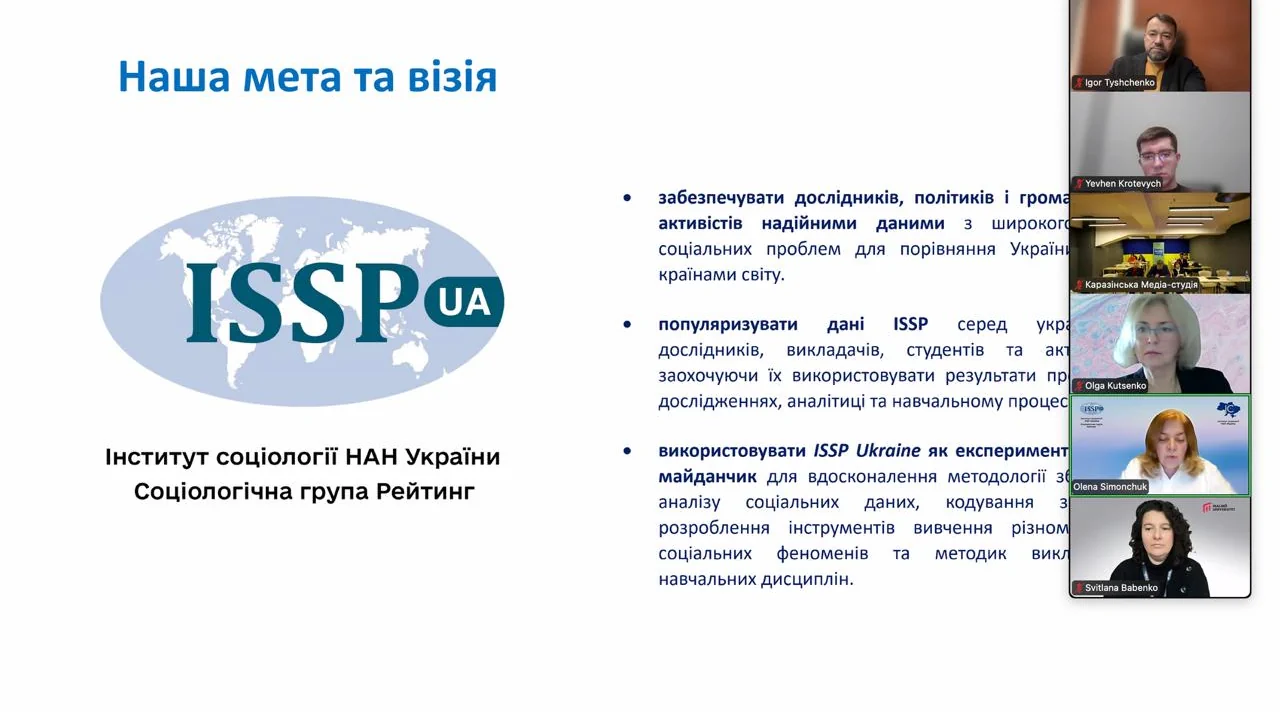
On 21 November, Rating Group and the Institute of Sociology of the NAS of Ukraine presented the first results of the International Social Survey Programme (ISSP) 2025 in Ukraine. The study was presented by Olena Symonchuk (Doctor of Sociology, Head of the Department of Social Structures at the Institute of Sociology of the NAS of Ukraine), Ihor Tyshchenko (Founder and CEO of Rating Group) and Yevhen Krotevych, Head of the Analytics Department at Rating Group (Experimental Research Division).
Rating Group and the Institute of Sociology of the NAS of Ukraine are the official ISSP representatives in Ukraine. In fact, for the first time in years, ISSP is represented in Ukraine at such an institutional level. The comprehensive academic supervision of the project is carried out by the Institute of Sociology, while Rating Group provides the funding, data collection, and analysis. The first implemented module was “Digital Society.”
In addition, the team announced the launch of the ISSP Ukraine project and website. ISSP Ukraine is a project that opens the door for Ukraine to the world of comparative sociological research under the ISSP programme. Thanks to strictly harmonized international standards, the results of Ukrainian surveys will now be integrated into global comparisons and international analytics.
What is the phenomenon behind Ukrainian resilience?
On 20 November, Rating Group CEO Oleksii Antypovych and SAU Vice President Nataliia Chernysh (Doctor of Sociology and Professor at the Department of Sociology, Ivan Franko National University of Lviv) moderated the session “The Phenomenon of Ukrainian Resilience.”
Oleksii Antypovych and Nataliia Chernysh also presented the results of their joint study, “Problems of Social Cohesion in Ukraine.” The research covers topics such as Ukrainians’ self-identification, interpersonal trust, levels of social resilience, willingness to help others, and other key indicators of social cohesion.

The neighbouring session, “Educational Resilience in the Digital Age: Structural Shifts and Social Dilemmas,” was moderated by Roman Borysov, Head of the Analytics Department at Rating Group (Strategic Research Division), PhD in Sociology and Associate Professor at the Department of Sociology of the Educational and Scientific Institute of Sociology and Media Communications of Karazin Kharkiv National University, together with Valentyna Chepak, Doctor of Sociology and Dean of the Faculty of Sociology at Taras Shevchenko National University of Kyiv.
Roman Borysov also delivered a presentation titled “Perceptions of Ukrainian Higher Education Among Parents of (Prospective) Applicants.”
How does Ukrainian sociology continue to operate during wartime?

On 21 November, Oleksii Antypovych spoke at the second plenary session of the Congress. His presentation, “Sociological Surveys in Wartime: Opportunities and Limitations,” summarized the key challenges faced by Ukrainian sociology under wartime conditions and highlighted the best practices for conducting research in this context.
Almost two-thirds of teenagers aged 10-18 have encountered at least one instance of bullying in the last six months. Children who have frequently encountered bullying have twice the level of stress, according to data from Rating Group/Rating Lab.
Bullying is not a ‘childish quarrel’ or a ‘normal part of growing up’ in adolescence. It is a form of violence that affects the psychological well-being not only of the victim of bullying, but also of the entire school, sports club, or any adolescent community. The consequences of bullying can be serious and long-lasting, affecting the mental health, social development and even physical safety of teenagers.
On 20 November, the anniversary of the adoption of the UN Convention on the Rights of the Child, the world celebrates Children's Day. To mark this date, the Rating Group/Rating Lab team has prepared the fifth instalment of its study ‘Changes in the Mental Health and Well-being of Children’. Read on to find out more:
- How common are different forms of bullying among teenagers?
- How is bullying related to the relationship between children and parents?
- What influence do teachers have here?
- How can we help prevent bullying?
In October 2025, Rating Group/Rating Lab surveyed more than 1,500 teenagers aged 10-18 and their parents using the unique Family 360° family research technology. In each publication, we discuss the mental health of teenagers and various aspects of their lives: gadgets and AI, emotional recognition by parents, dreams, household chores and stress, upbringing and punishment in the family, and bullying. Preliminary results of the series of studies can be found at the link.
Note to colleagues and partners:
For over two years, the Rating Group/Rating Lab team has been studying how Ukrainian children, teenagers and families feel. Thanks to the unique Family 360° family research technology, we can see not only the challenges, but also ways to overcome them. We cannot cover this topic with our own resources, and the research needs to be expanded and continued dynamically. Therefore, we are open to cooperation with relevant organisations. For cooperation inquiries, please contact: info@ratinggroup.ua
Forms of bullying: how exactly are teenagers bullied?
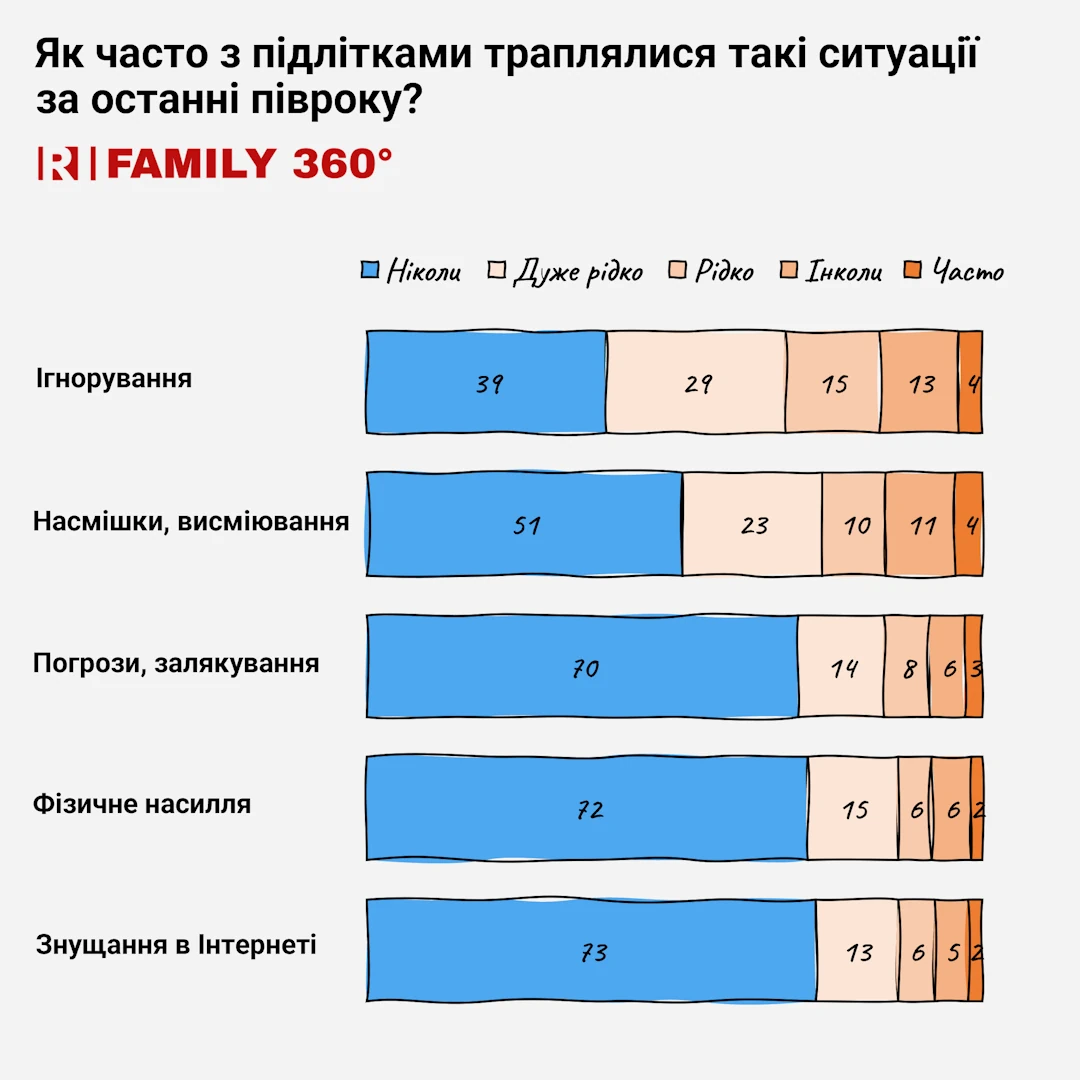
Every teenager can face several types of bullying at the same time. Usually, bullying is not a single act, but a whole range of offensive and/or violent behaviour.
- Ignoring: most teenagers (61%) have experienced this in the last six months. This type of bullying should not be underestimated: systematic ignoring can cause what psychologists call ‘developmental trauma,’ which can later be a sign of certain mental disorders.
- Almost half of teenagers (49%) also experience ridicule and mockery.
- About a third (30%) face threats and intimidation.
- In addition, one in four teenagers is a victim of physical violence, i.e. when they are deliberately beaten, pushed, pinched, hurt (28%), and online bullying (27%), i.e. cyberbullying.
Parents underestimate the extent of bullying against their own children.
This is most true for threats, intimidation and cyberbullying: at least half of parents whose children have been bullied are unaware of it.
Who experiences bullying more?
- Boys experience bullying more often than girls.
- The exception is ignoring, which is equally common among girls and boys.
- Teenagers who have friends experience bullying less often. This is especially true for ignoring, ridicule and cyberbullying.
What does bullying do to a child?
Threats and intimidation cause the most stress.
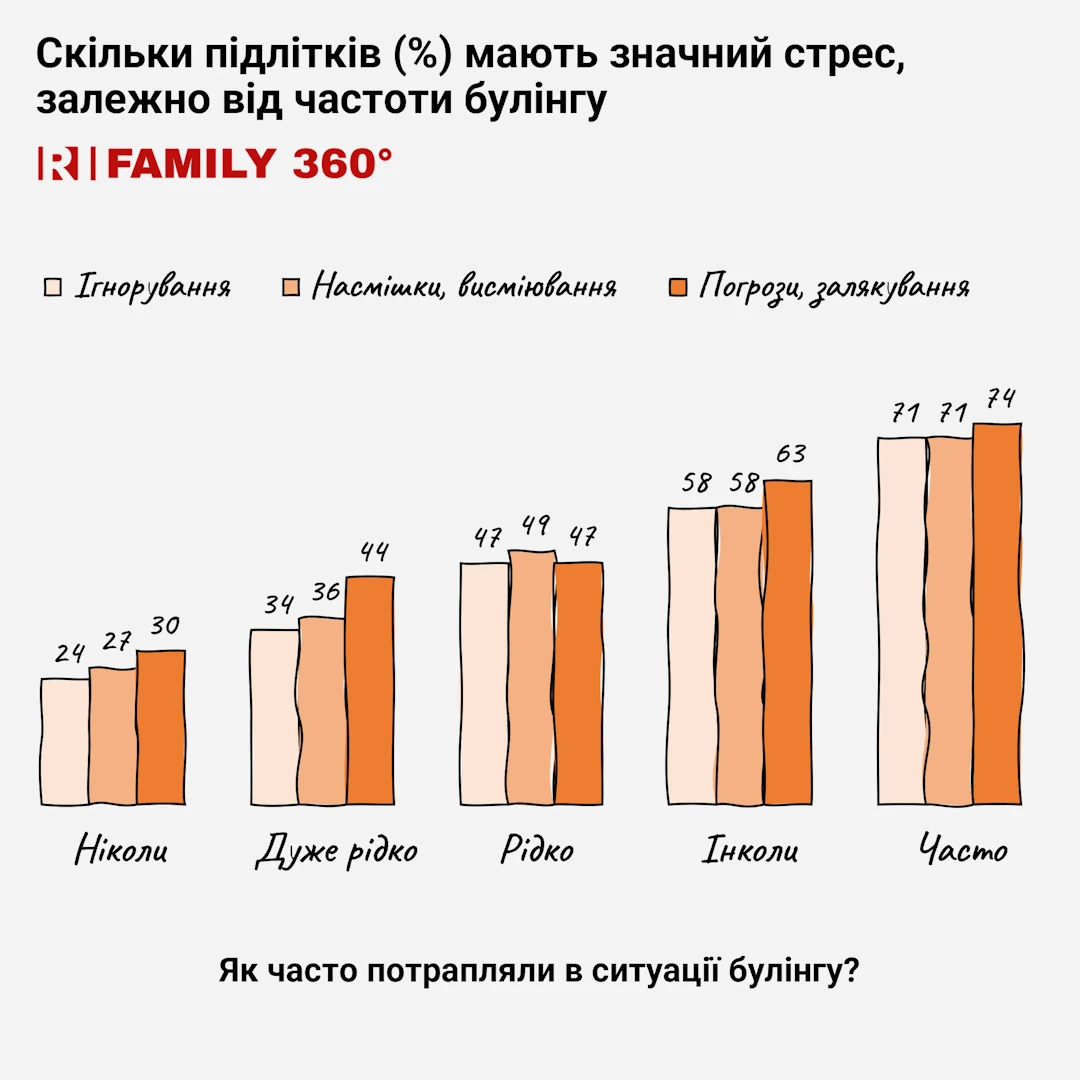
Bullying creates additional challenges for parent-child relationships
Children who experience bullying are less likely to talk to their parents about their experiences. We cannot say whether children are closing themselves off from their parents or whether parents are unwilling to discuss the topic. This requires further research. However, the data showed that:
- 60% of children who have not experienced bullying often discuss their feelings with their parents. Among those who have been bullied, less than half (46%) do so.
- The topics of ignoring, threats and bullying on the internet are most often silenced.
- Children who have experienced bullying feel a much weaker emotional connection with their parents. First and foremost, this again concerns ignoring and threats.
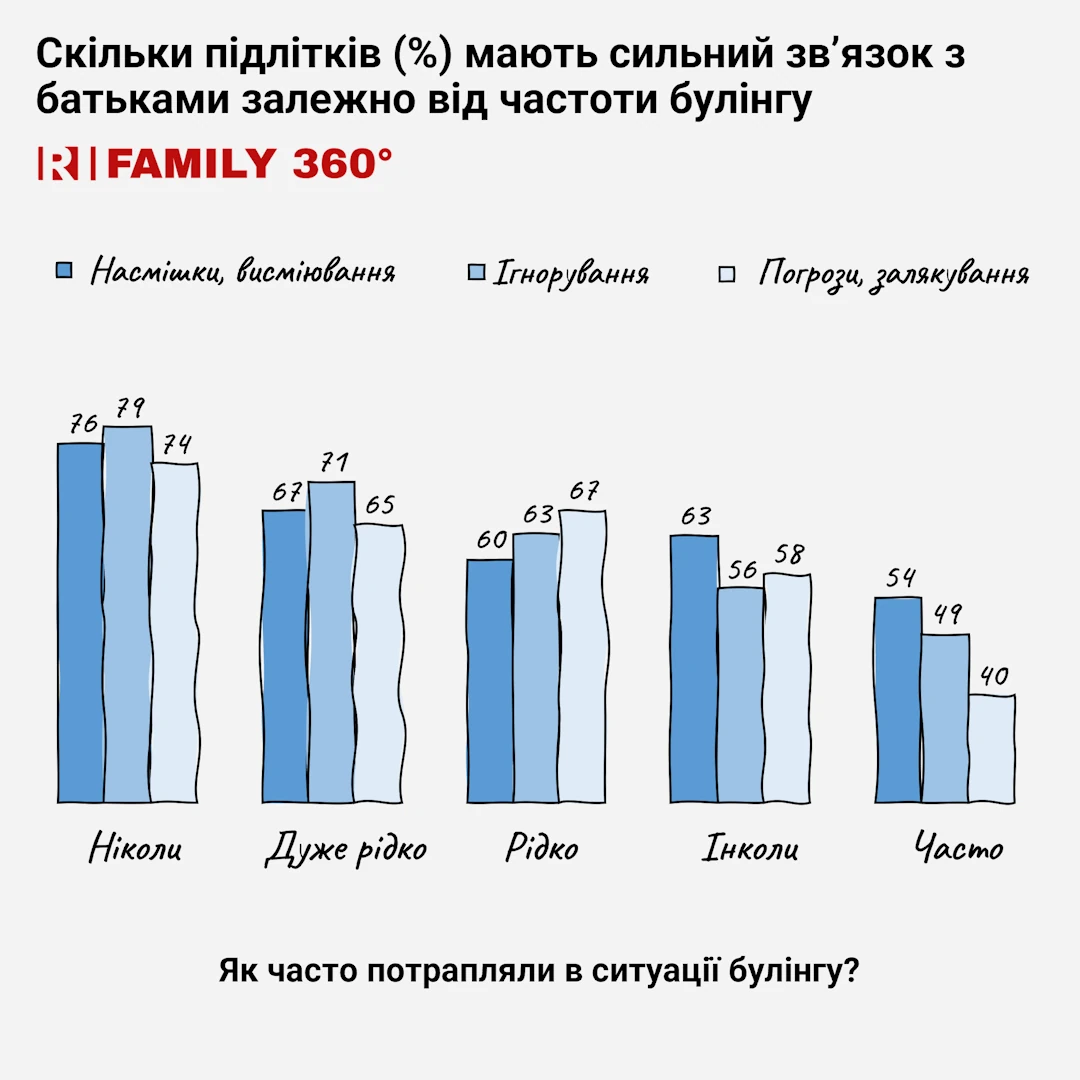
We have previously demonstrated that the frequency of communication with parents affects stress levels. In other words, children who withdraw from communication do not receive the warm, sincere contact with their parents that helps combat stress.
Bullying breeds fear of bullying
Children are actually afraid of being bullied again.
- More than a third (36%) of teenagers who have already experienced bullying openly admit to being afraid of finding themselves in a situation of bullying.
- Among children who have not experienced bullying, this proportion is significantly lower – 22%.
- In general, girls worry about bullying more than boys: 40% of girls and 24% of boys are afraid of finding themselves in such circumstances.
How does bullying affect behaviour in such situations?
We asked teenagers to imagine the following situation: ‘During break time, a group of children are laughing at another child and teasing them. What would you do?’
- 40% would call an adult/teacher.
- 30% would tell the children to stop.
- About 10% would just watch and walk away or even laugh along with the others.
- It is important to note that one in six teenagers was unable to answer.
It is worth noting that teenagers who have experienced bullying are less likely to call an adult (teacher):
- Only 38% of them are willing to call a teacher, compared to almost half (47%) of teenagers who have not experienced bullying.
- Older teenagers aged 14-18 are generally less likely to call a teacher for help (28% vs. 33%).
- Among younger teenagers, the figures are 47% versus 66%.
At the same time, teenagers who have experienced bullying are twice as likely to avoid answering this question (16% compared to 8% among their peers who have not experienced bullying).
What is the role of teachers?
How teachers respond in schools is really important in the context of preventing bullying.
- In schools where teachers are often willing to intervene in situations of possible bullying, bullying occurs less frequently.
- In turn, teenagers in these schools are more willing to call on adults/teachers for help.
Conclusion: what helps prevent bullying?
Bullying is not inevitable. It occurs where there is a lack of attention, support, respect, and clear rules. However, it disappears where there are friends, loved ones, responsible adults nearby, and responsibility in general. So what will help children resist bullying?
- Trusting relationships and communication with loved ones.
- A culture of mutual respect.
- Rejection of bullying others, willingness to intervene and speak out. This applies to children as well as adults and teachers.
By creating such conditions for children, we are not just preventing bullying — we are forming communities where they can feel safe.
About Family 360° technology
It is not worth making conclusions about teenagers without asking their opinion. That is why the Rating Group team launched Family 360° technology for family surveys, which focuses on the child who is being surveyed, as well as their parents, family members and, in some cases, teachers, doctors, psychologists, etc. Comparing the answers of children and their parents allows us to understand the relationships and changes within the family. We have previously used this approach successfully with our partners at UNICEF, KSE, and Ty Yak? when researching mine awareness, mental health, education, and career guidance.
About the study
We first researched the topic of mental health in the parent-child context in October 2024. This year, we decided to continue, expanding the topic and using longitudinal research techniques to better understand the dynamics. In October 2025, this survey covered more than 1,500 children/adolescents aged 10-18 and their parents.
Authors of the research idea: Svitlana Roiz, child and family psychologist, mother of two; Marianna Tkalych, CEO of Rating Lab, Doctor of Psychological Sciences, mother of Masha (17 years old); and Tetiana Skrypchenko, Deputy Director of Rating Group, mother of Solomiia (8 months old).

How can we help children overcome stress? Marianna Tkalich, CEO of the Rating Lab research laboratory and Doctor of Psychology, shares simple but important advice for parents in her column for NV. It is based on the results of the study ‘Changes in Children's Mental Health and Well-being,’ for which Rating Group/Rating Lab surveyed more than 1,500 teenagers aged 10-18 and their parents in October 2025 using the unique Family 360° family research technology.
Below are several points from the author's article.
The importance of caring for mental health during wartime
"In conditions of prolonged war, social instability and constant challenges, the issue of mental health is no longer secondary. People are increasingly thinking not only about physical survival, but also about psychological resilience [...] But in order to effectively help ourselves, our children, our loved ones and our community, we need facts from scientific research, not intuition."
About the increase in stress among adolescents
"The proportion of children (aged 10-18) with high or elevated stress levels increased from 27% (in 2024) to 37% (in 2025). The figures rose particularly among girls aged 10-13. Younger teenagers are a very vulnerable group for many reasons: they are entering puberty, undergoing hormonal changes and psychological maturation, and expanding their social opportunities. At the same time, they are still children who need protection, care, and responsible adults around them."
On the importance of communication
"77% of children who regularly talk to their parents about their feelings have higher stress resistance. The stress level in such children is half that of those who rarely communicate."
About gadgets, AI and coping with stress
"Gadgets are the least useful way to cope with stress. An alarming fact: one in ten teenagers asks Artificial Intelligence (AI) for advice about their condition. AI cannot replace human warmth; control the time and content you spend online."
About Family 360° technology
It is not worth making conclusions about teenagers without asking their opinion. That is why the Rating Group team launched Family 360° technology for family surveys, which focuses on the child who is being surveyed, as well as their parents, family members and, in some cases, teachers, doctors, psychologists, etc. Comparing the answers of children and their parents allows us to understand the relationships and changes within the family. We have previously used this approach successfully with our partners at UNICEF, KSE, and Ty Yak? when researching mine awareness, mental health, education, and career guidance.
About the study
We first researched the topic of mental health in the parent-child context in October 2024. This year, we decided to continue, expanding the topic and using longitudinal research techniques to better understand the dynamics. In October 2025, this survey covered more than 1,500 children/adolescents aged 10-18 and their parents.
Authors of the research idea: Svitlana Roiz, child and family psychologist, mother of two; Marianna Tkalych, CEO of Rating Lab, Doctor of Psychological Sciences, mother of Masha (17 years old); and Tetiana Skrypchenko, Deputy Director of Rating Group, mother of Solomiia (8 months old).
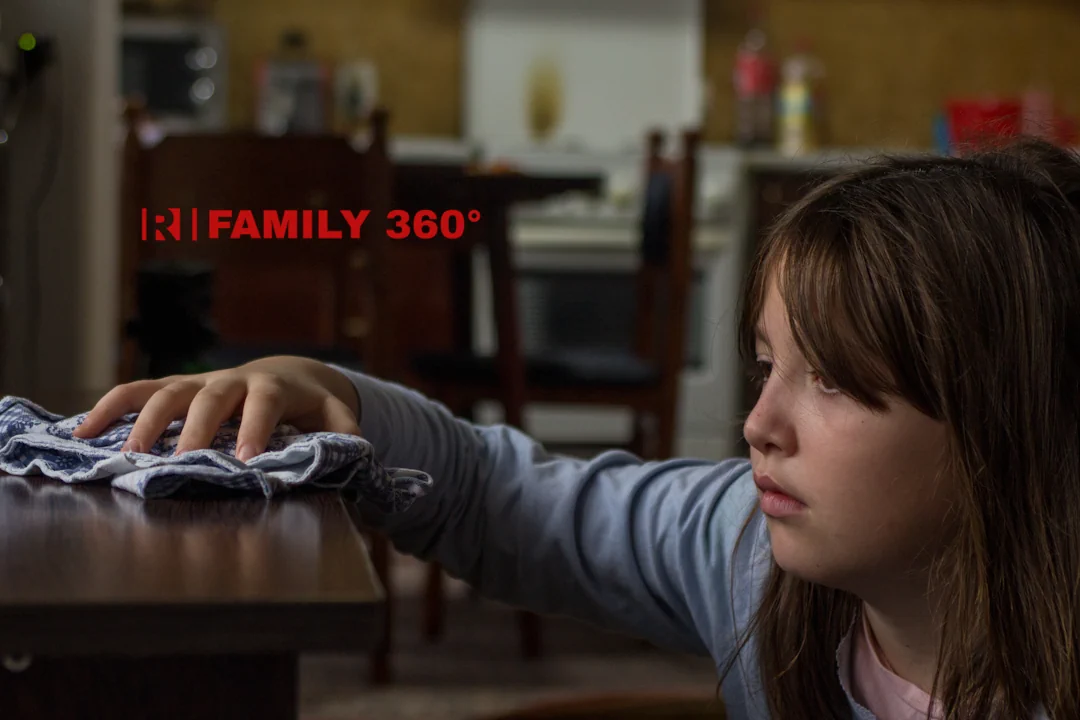
The fourth press release of the study ‘Changes in Children's Mental Health and Well-being’ is devoted to household chores. How much are Ukrainian teenagers burdened with household chores and how does this affect their psychological state?
In October 2025, Rating Group/Rating Lab surveyed more than 1,500 teenagers aged 10-18 and their parents using the unique Family 360° family research technology. In each publication, we discuss the mental health of teenagers and various aspects of their lives: gadgets and AI, emotional recognition by parents, dreams, household chores and stress, upbringing and punishment in the family, and bullying.
How much are children burdened with household chores?
- 56% of teenagers aged 10-18 often clean, wash dishes and do laundry. Another 21% do this from time to time, and 23% rarely or almost never.
- A little over a third of teenagers (36%) often cook meals. In contrast, 22% do so moderately, and 42% rarely cook.
- Slightly more teenagers take care of pets (here and further in this context, the percentage of children whose families have pets is given): 57% do this often, 21% do it moderately often, and 22% do it rarely.
However, it is important to look at the ‘extreme’ categories here:
- 13% of teenagers are constantly busy cleaning, washing dishes and doing laundry;
- 5% of teenagers are constantly involved in cooking;
- 18% constantly look after pets.
The role of gender stereotypes: girls are significantly more burdened than boys
- The vast majority of girls (65%) often do housework, while only half of boys (47%) do so. Among girls aged 14-18, 75% often do housework.
- Also, 44% of girls are often involved in cooking. In contrast, 28% of boys often cook. At the same time, younger girls aged 10-13 are as burdened with cooking as older boys aged 14-18 (in both categories, more than a third of teenagers often cook).
- Girls even take better care of pets: 61% of girls and 52% of boys do this often.
Are household chores harmful to children?
In general, household chores are beneficial. They contribute to the development of discipline, independence, the ability to achieve success (‘there were dirty dishes, I washed them – now they're gone’ is a clear example of early achievements), and the ability to maintain cleanliness.
In fact, children who never participate in household chores have lower stress resistance.
For example, among those who never cook, 61% have good stress resistance (resilience). Among teenagers who cook moderately often, this figure is around 75-77%.
But overloading a child is also harmful to their mental state. This is especially harmful to girls, as they are even more burdened with household chores.
Among teenagers who are constantly cleaning, washing dishes, and doing laundry, almost half (47%) experience significant stress. Among their peers who are less burdened with cleaning, this figure is significantly lower – 35%.
In general, it is best for a child's mental health to find a ‘happy medium’ when it comes to household chores. If a teenager is involved from time to time in cleaning or cooking, for example, this can be a good solution. The main thing is not to burden the child with excessive household responsibilities and not to take away their time for hobbies, socialising with friends, and childhood.
About Family 360° technology
It is not worth making conclusions about teenagers without asking their opinion. That is why the Rating Group team launched Family 360° technology for family surveys, which focuses on the child who is being surveyed, as well as their parents, family members and, in some cases, teachers, doctors, psychologists, etc. Comparing the answers of children and their parents allows us to understand the relationships and changes within the family. We have previously used this approach successfully with our partners at UNICEF, KSE, and Ty Yak? when researching mine awareness, mental health, education, and career guidance.
About the study
We first researched the topic of mental health in the parent-child context in October 2024. This year, we decided to continue, expanding the topic and using longitudinal research techniques to better understand the dynamics. In October 2025, this survey covered more than 1,500 children/adolescents aged 10-18 and their parents.
Authors of the research idea: Svitlana Roiz, child and family psychologist, mother of two; Marianna Tkalych, CEO of Rating Lab, Doctor of Psychological Sciences, mother of Masha (17 years old); and Tetiana Skrypchenko, Deputy Director of Rating Group, mother of Solomiia (8 months old).

In the third publication on the study ‘Changes in Children's Mental Health and Well-being,’ learn about the following:
- How close are Ukrainian teenagers to their parents, and how does this affect the child's stress levels?
- Do parents think they are good at recognising their children's emotions?
- What helps to build closeness? Communication and hugs.
- How many children are rarely or never hugged by their parents?
In October 2025, Rating Group/Rating Lab surveyed more than 1,500 teenagers aged 10-18 and their parents using the unique Family 360° family research technology. In each publication, we discuss the mental health of teenagers and various aspects of their lives: gadgets and AI, parents' recognition of emotions, dreams, household chores and stress, upbringing and punishment in the family, and bullying.
Emotional connection with parents and stress
Most often, teenagers aged 10-18 have a very strong (40%) or strong (30%) emotional connection with their parents. Another 18% have a moderate connection, and 13% have a weak connection.
And the weaker the connection with parents, the more stress children experience
Two-thirds (62%) of teenagers who have a weak connection with their parents experience significant levels of stress. Among children who are very close to their parents, only 25% experience significant stress.
This trend is even stronger among older teenagers aged 14-18. In this age group, 67% of teenagers who have a weak connection with their parents experience significant stress.
How well do parents understand their children's emotions?
We asked parents to assess how often they can tell when their child is happy or sad.
- 73% of parents think they can always tell when their child is happy.
- 55% of parents also believe they can always tell when their child is sad.
We also compared this with how often children tell their parents about their feelings and experiences. Overall, about half of teenagers often share their experiences with their parents, while a third do so rarely. The trend is consistent:
The more a child talks to their parents about their feelings, the more confident parents are in understanding their child's emotions
Among parents whose children often talk to them about their feelings, 78% believe that they can always recognize joy. Also, more than 60% of these parents think that they can always recognize sadness in their child.
Communication and hugs – simple and important things
Those who hug and communicate more have a much stronger emotional connection
Half (52%) of children who often share their experiences with their parents have the strongest level of emotional bond. Among those who rarely share their experiences, this figure is half as much (24%).
Hugs show an even stronger trend: children who hug their parents often are significantly more likely to have the strongest level of connection (50%). Among those whose parents hug them rarely or never, only 12% have such a strong connection.
But not every child experiences parental hugs
One in ten children (13%) aged 10-13 never hug their parents or do so rarely
Among older teenagers aged 14-18, this figure is 21%.
In contrast, only 6% of parents of children aged 10-13 and only 10% of parents of teenagers aged 14-18 say that they never hug their child or do so rarely. This gap in the responses of children and parents suggests that some children lack warm displays of affection from their parents. Perhaps their parents hug them, but not as much as they would like.
About Family 360° technology
It is not worth making conclusions about teenagers without asking their opinion. That is why the Rating Group team launched Family 360° technology for family surveys, which focuses on the child who is being surveyed, as well as their parents, family members and, in some cases, teachers, doctors, psychologists, etc. Comparing the answers of children and their parents allows us to understand the relationships and changes within the family. We have previously used this approach successfully with our partners at UNICEF, KSE, and Ty Yak? when researching mine awareness, mental health, education, and career guidance.
About the study
We first researched the topic of mental health in the parent-child context in October 2024. This year, we decided to continue, expanding the topic and using longitudinal research techniques to better understand the dynamics. In October 2025, this survey covered more than 1,500 children/adolescents aged 10-18 and their parents.
Authors of the research idea: Svitlana Roiz, child and family psychologist, mother of two; Marianna Tkalych, CEO of Rating Lab, Doctor of Psychological Sciences, mother of Masha (17 years old); and Tetiana Skrypchenko, Deputy Director of Rating Group, mother of Solomiia (8 months old).
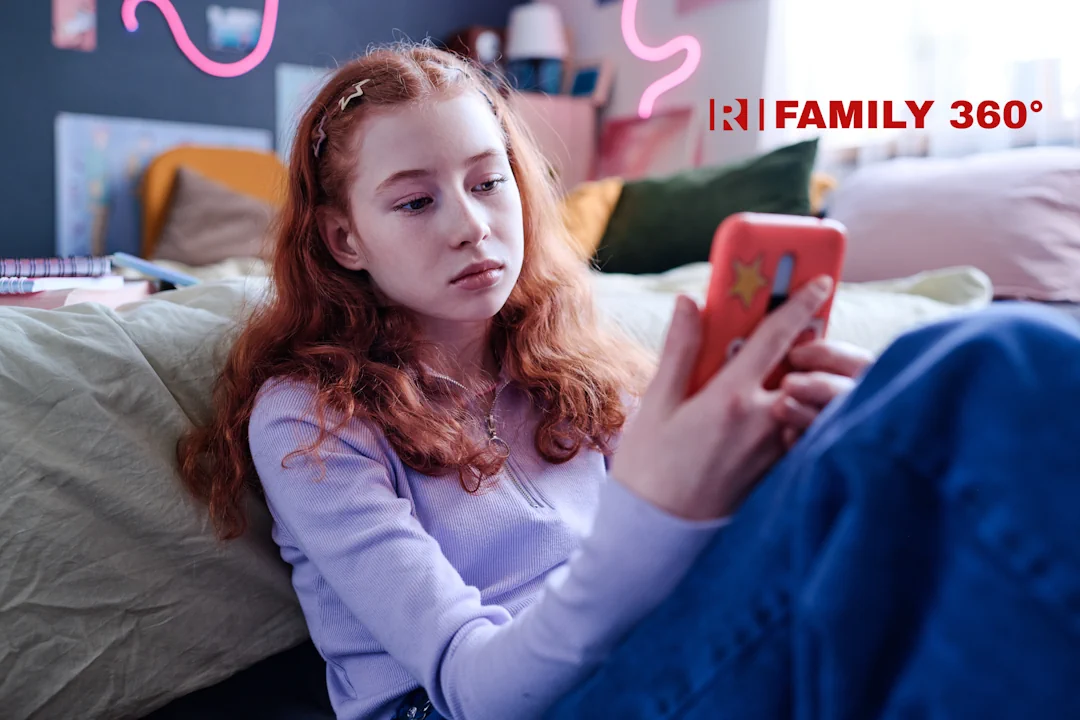
How often do teenagers consult AI about their emotions and feelings, and who does so more often? This is the topic of the second publication on the study ‘Changes in Children's Mental Health and Well-being.’
In October 2025, Rating Group/Rating Lab surveyed more than 1,500 teenagers aged 10-18 and their parents using the unique Family 360° family research technology. In each publication, we discuss the mental health of teenagers and various aspects of their lives: gadgets and AI, emotional recognition by parents, dreams, household chores and stress, upbringing and punishment in the family, and bullying.
How common is this phenomenon?
.webp)
In general, every tenth teenager aged 10-18 often asks artificial intelligence for advice about their emotional state and mood. Most often, girls aged 14-18 (16%) consult AI.
In fact, one in six teenage girls aged 14-18 asks AI for advice about their emotional state and mood.
Among younger girls aged 10-13, this proportion is lower – 9%. Among boys, 5% of younger teenagers aged 10-13 and 7% of teenagers aged 14-18 often turn to AI for such advice.
At the same time, two-thirds of teenagers aged 10-18 never turn to AI for advice about their psychological state.
So teenagers see AI as a ‘psychologist’...?
65% of teenagers who often ask AI for advice about their emotional state have significant levels of stress (elevated or high). This is twice as often as their peers who rarely ask AI for such advice.
Some children do seek help from AI when experiencing certain emotions. Of course, consulting with artificial intelligence cannot replace a psychologist or psychotherapist. But in fact, some children do this (at least partially), and this is worth paying attention to.
…compensate for a lack of understanding from parents?
Teenagers who often turn to AI for advice about their emotional state have a weaker emotional connection with their parents.
Among those who frequently consult AI, only 23% have a very strong connection with their parents, while among those who rarely turn to AI, 42% have a strong connection with their parents. Thus, children seek support and guidance from AI that they may not be receiving from their loved ones.
About Family 360° technology
It is not worth making conclusions about teenagers without asking their opinion. That is why the Rating Group team launched Family 360° technology for family surveys, which focuses on the child who takes the survey, as well as parents, family members, and in some cases teachers, doctors, psychologists, etc. Comparing the answers of children and their parents allows us to understand the relationships and changes within the family. We have previously used this approach successfully with our partners at UNICEF, KSE, and Ty Yak? when researching mine awareness, mental health, education, and career guidance.
About the study
We first researched the topic of mental health in the parent-child relationship in October 2024. This year, we decided to continue, expanding the scope of the topic and using longitudinal research techniques to better understand the dynamics. In October 2025, this survey covered more than 1,500 children/adolescents aged 10-18 and their parents.
The authors of this study are: Svitlana Royz, child and family psychologist, mother of two children; Marianna Tkalych, CEO of Rating Lab, Doctor of Psychological Sciences, mother of Masha (17 years old); Tetiana Skrypchenko, Deputy Director of Rating Group, mother of Solomiya (8 months old).
About Family 360° technology
It is not worth making conclusions about teenagers without asking their opinion.
That is why the Rating Group team launched Family 360° technology for family surveys, which focuses on the child who takes the survey, as well as parents, family members, and in some cases teachers, doctors, psychologists, etc. Comparing the answers of children and their parents allows us to understand the relationships and changes within the family. We have previously used this approach successfully with our partners at UNICEF, KSE, and Ty Yak? when researching mine awareness, mental health, education, and career guidance.
About the study
We first researched the topic of mental health in the parent-child context in October 2024. This year, we decided to continue, expanding the scope of the topic and using longitudinal research techniques to better understand the dynamics. In October 2025, this survey covered more than 1,500 children/adolescents aged 10-18 and their parents.
The authors of this research idea are: Svitlana Roiz, child and family psychologist, mother of two children; Marianna Tkalich, CEO of the Rating Lab research laboratory, Doctor of Psychology, mother of Masha (17 years old); Tetiana Skrypchenko, Deputy Director of the Rating Group, mother of Solomiya (8 months old).
Below are the first insights from the research series ‘Changes in Children's Mental Health and Well-being.’
Ukrainian children are experiencing increasing levels of stress
- In autumn 2024, Rating Group and UNICEF found that 27% of Ukrainian children had significant (high or elevated) levels of stress. By October 2025, this figure had risen to 37%.
- Stress increased particularly among girls aged 10-13. We surveyed more than 900 children from a previous study (longitudinal study) and found that stress had increased in 40% of girls in this age group over the course of a year.
- The increase in stress among adolescents is accompanied by certain (often negative) feelings. One in ten children/adolescents who have experienced increased stress have recently felt disappointment as their main emotion.
- On the other hand, children who have experienced decreased stress since 2024 are more likely to feel joy, calmness and interest. They experience less anxiety, sadness and disappointment.
How is this related to parental stress?
We found that in one in five cases, the main feeling of children and parents in recent times coincides. Most often, this feeling is anxiety.
Some children pick up anxiety from their parents, and the stress intensifies.
Anxiety is the most common feeling among children with high and elevated stress levels.
What helps children cope with stress?
So, how can you help your child cope with stress? The results of the Family 360° survey allow us to suggest several useful practices.
Build trusting relationships and communicate more.
About 77% of children who communicate relatively more often with their parents and loved ones about their feelings and experiences have good stress resistance (among those who communicate rarely, this figure is slightly more than half). The stress level in children who communicate frequently with their parents is twice as low.
Support your child's hobbies or help them find a favourite activity.
Children who often engage in their favourite activities are more likely to have low or moderate stress levels (68%). In contrast, less than half of their peers who rarely engage in hobbies have low or moderate stress levels.
Shared hobbies between children and parents are particularly beneficial
As our previous study showed, 57% of children who share a hobby with their parents are well adapted to stress. In other words, they have both high resilience and low stress levels. This has an even stronger effect on parents: 64% of parents who share a hobby with their children are adapted to stress.
Encourage your child to participate in sports and physical activities.
Most children who engage in physical activity frequently have high stress resilience (almost 60%). Among those who do not engage in sports or do so rarely, this figure is 38%.
Sports and physical activity are reliable factors in reducing stress in children.
On the other hand, it is worse when the child's only or main hobby is spending time on gadgets and video games. According to a previous study, the lowest levels of resilience (compared to peers who have other hobbies) are found in children whose hobbies are playing games on their phones or computers. Also, ‘sitting’ on the phone is not a very useful response to a stressful event: children who respond to a trigger by immersing themselves in their phone or computer also have low resilience.
On 27–31 July 2025, Rating Group conducted a nationwide survey commissioned by the Westminster Foundation for Democracy (WFD) on public sentiment in Ukrainian society during wartime. The study focused on analysing citizens’ political orientations, levels of trust in state and public institutions and key leaders, as well as the population’s ideological attitudes.
Particular attention was paid to perceptions of the state of democracy during the war, expectations for political renewal, the role of military personnel and veterans in politics, protest sentiment, attitudes toward elections, and Ukrainians’ media consumption.
The data is current as of July 2025.

Rating Group found out how often Ukrainians consume alcoholic beverages and how this is connected to their relationships with a partner.
This is the second part of a survey conducted at the request of the Institute of Psychology and Psychotherapy. The first part — about Ukrainians’ relationships with their partners — can be viewed at the link.
Alcohol consumption
- 44% of respondents did not consume alcohol at all during the past month, 24% did so once a month, 21% — several times a month, 9% — several times a week, and 2% — daily or almost daily.
- Alcohol consumption is more common among younger (18–35 years) and middle-aged (36–50 years) respondents, men, and those who have a partner.
- Less affluent respondents reported drinking alcohol less frequently.
Drinking together with a partner
- Respondents more often consume alcohol separately from their partners.
- During the past month, 61% did not drink alcohol together with their partner at all, 19% did so once a month, 15% — several times a month, and 4% — several times a week.
- Joint alcohol consumption is less common among older respondents (51+) and those who report having poor relationships with their partners.
Impact on relationships with a partner
- An overwhelming majority (81%) of respondents who have a partner said that alcohol consumption does not affect their relationship.13% believe it worsens the relationship, while 2% think it improves it.
- Concerns about alcohol having a negative impact on relationships are more frequently expressed by young people aged 18–35, those who have poor relationships with their partners, and those who do not drink alcohol together.
Rating Group is one of the largest research institutions in Ukraine, operating on the market since 2008.The company is registered in Ukraine and has extensive experience conducting sociological surveys both in Ukraine and abroad. The group includes the following divisions: Rating Sociological Group, Rating Lab (Research Laboratory), Rating Online Platform, and Rating Call Center.

At the end of July 2025, Rating Group conducted a survey among Ukrainians about their relationships with their partners. How many Ukrainians have a partner, and how do they assess their relationships?
The study was commissioned by the Institute of Psychology and Psychotherapy.
Relationship status and evaluation
- 70% of surveyed Ukrainians have a partner, while 30% do not.
- Among those who have a partner, two-thirds describe their relationship as very good, and another 30% — as rather good.
- Young people are more likely than other age groups to rate their relationships as very good (71%). The views of men and women on the state of their relationships do not differ significantly.
Changes in relationships
- According to one-third of respondents, their relationships have improved recently.60% said their relationships have not changed, while 6% reported they have worsened.
- Improvements were more often noted by young people (45%) and by those who describe their relationships as very good (43%).
Spending time together
- About one-third of respondents said that during the past month they spent time together with their partner — engaging in hobbies, going for walks, reading, or watching movies (excluding household chores) — every day or almost every day.
- A quarter did so several times a week, 16% — several times a month, 8% — once a month, and 15% — not at all.
- Older respondents (51 and older) were more likely to report spending time together almost daily (46%), as well as those who describe their relationships as very good (43%).
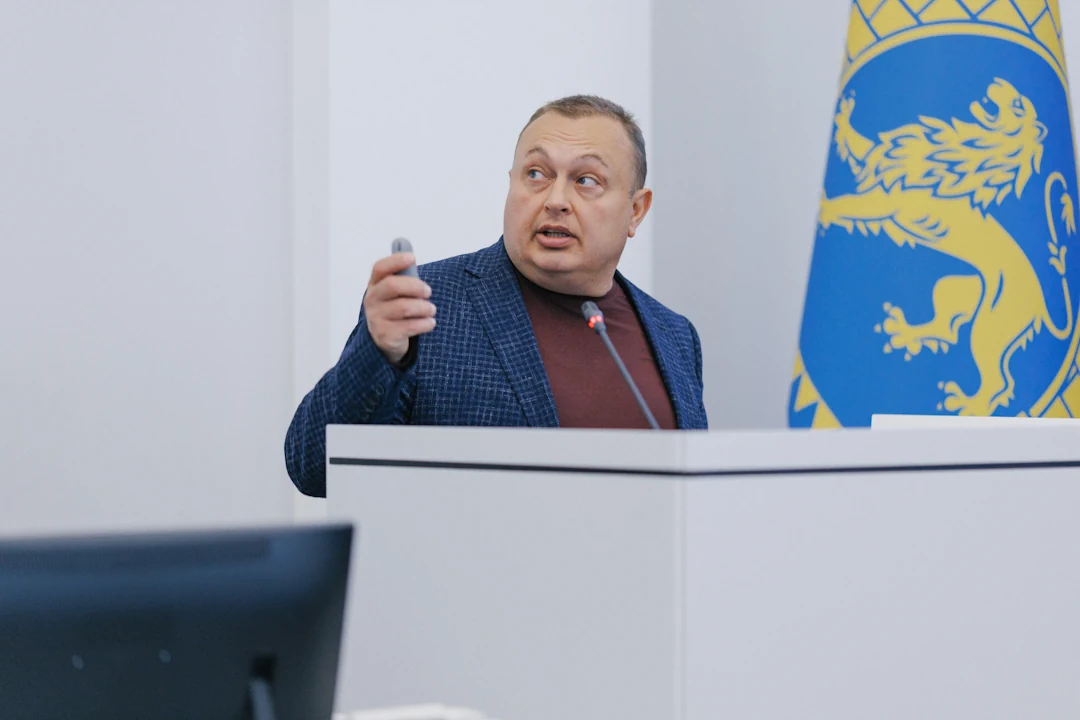
On September 29, 2025, Oleksiy Antypovych, CEO of Rating Group, took part in the roundtable “Building National Resilience: The Role of Local Self-Government” (organized by the Institute of the City and the National Platform for Resilience and Cohesion, moderated by Oleh Saakyan) within the framework of Ukrainian Resilience Week. Ukrainian Resilience Week is an annual event where local authorities, experts, and international partners gather to strengthen the resilience of Ukrainian cities.
Using Rating Group’s data, Oleksiy Antypovych shared insights into what helps Ukrainians maintain resilience. The discussion was based on findings from the academic study “Problems of Social Cohesion in Ukraine”, conducted by the Rating Sociological Group in collaboration with Dr. Nataliia Chernysh, Doctor of Sociology. Commenting on the results, CEO Oleksiy Antypovych noted:
“The resilience index currently stands at 3.6 out of 5 possible points, which is above the average level. And yes, of course, our society faces very serious challenges to resilience and unity every day. Yet Ukrainians continue to remain resilient, and there are many positive indicators: the vast majority of respondents feel a sense of unity with other citizens and their communities, and they look optimistically toward Ukraine’s future. This resilience is also reflected in concrete actions: over 70% of people financially support the Armed Forces of Ukraine, and about half of the respondents help refugees, internally displaced persons, and people with disabilities.”
Rating Group systematically studies issues of social resilience, cohesion, and well-being. Learn more on this topic in the following materials:
- Problems of Social Cohesion in Ukraine
- Presentation by Rating Group Deputy Director Tetiana Skrypchenko: “Promoting Resilience and Social Cohesion under Occupation”
- Regional Ranking by the Local Well-Being Index 2024 by Rating Lab
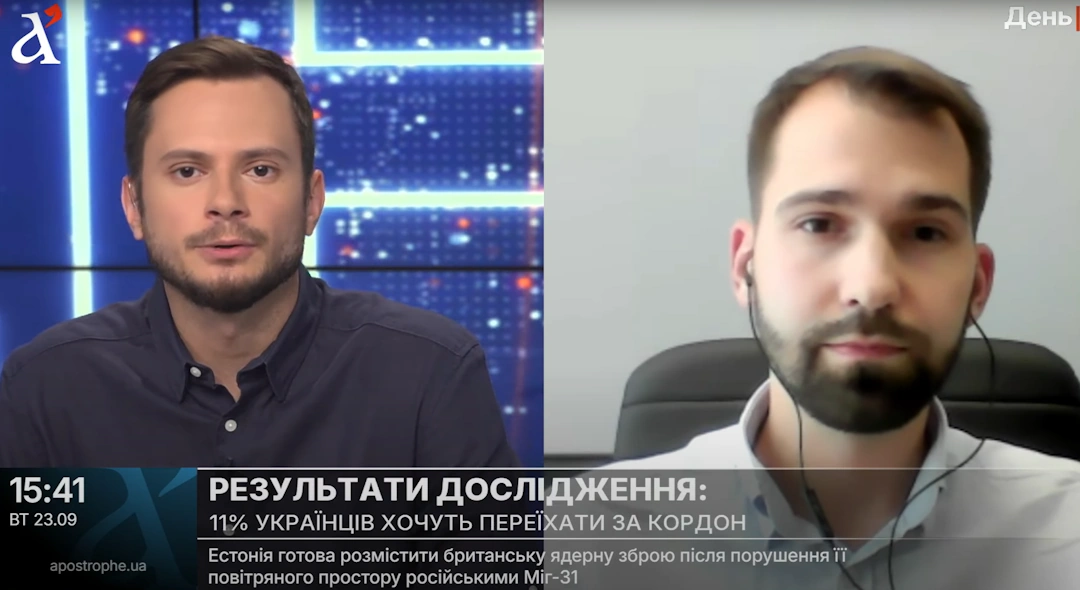
Hlib Kuzmenko, research expert and Head of Communications at Rating Group, commented on Ukrainians’ migration intentions on Apostrof TV on September 23, 2025. As a reminder, a Rating Group survey showed that 11% of Ukrainians overall — and nearly 20% among young people aged 18–35 — would like to move abroad permanently.
According to Hlib Kuzmenko, these figures do not mean that all of these respondents will definitely leave Ukraine. Rather, Ukrainians’ real decisions will depend on the further situation at the front. There is also a difference between an abstract desire and actual plans to move:
"To conclude that all these people will definitely leave would be a mistaken assumption. To some extent, the percentages here also depend on how the question is asked. Recently, the research laboratory Rating Lab asked Ukrainians whether they plan to move somewhere after the war — that is, not about an abstract desire but about potential plans. And in that case, the share of those who would leave was more than twice as low."
At the same time, the expert noted that migration intentions are indeed stronger among young people, and this may pose certain risks for the country’s economic development:
"Young people are the category with noticeably stronger migration intentions. And this is something that deserves attention. They are often active individuals who want to work and are ready to take on certain initiatives. In other words, they are potentially very economically active citizens."

How do Ukrainians perceive the challenges that veterans face when returning to civilian life? What forms of support do they consider most important?
The sociological company Rating Group and the European Union Advisory Mission (EUAM) in Ukraine explored this as part of the nationwide survey “Trust, Reforms, and EU Integration: What Ukrainians Think in 2025.”
Veterans’ challenges
- The biggest challenges that veterans face when returning to civilian life, according to respondents, are most often related to health issues: post-traumatic stress and stress disorders (63%), disability (54%), and health problems in general (51%). In addition, 40% mention alcoholism and drug addiction.
- Lack of employment is noted by 43%.
- While only 12% point to the lack of access to education and training.
Veterans’ support
- The majority of Ukrainians (62%) consider rehabilitation to be the most important form of support.
- This is followed by employment opportunities (47%) and access to medical care (43%).
- Another 27% highlighted support from veterans’ communities, while 6% mentioned education and training.
Rating Group is one of the largest research institutions in Ukraine, operating on the market since 2008. The company is registered in Ukraine and has extensive experience in conducting sociological surveys both in Ukraine and abroad. The Group includes: Rating Group Ukraine, the research laboratory Rating Lab, the platform Rating Online, and Rating Call Center.
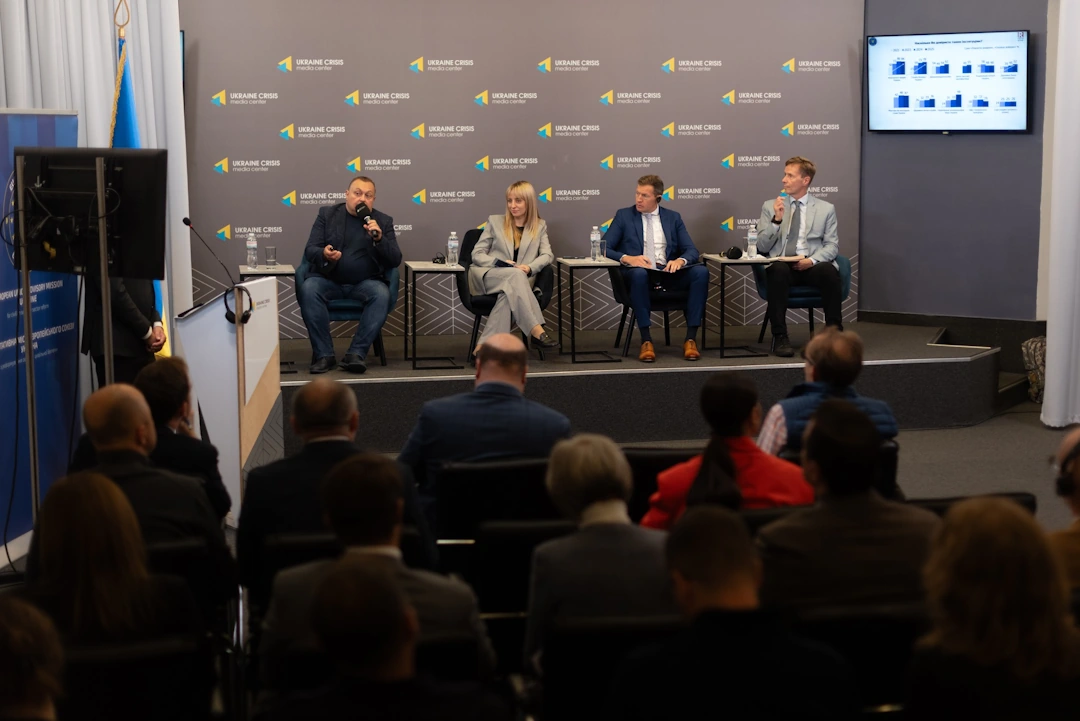
The sociological company Rating Group and the European Union Advisory Mission (EUAM) in Ukraine have presented the results of a new study titled “Trust, Reforms, and EU Integration: What Ukrainians Think in 2025.” This continues the tradition of an annual nationwide public opinion survey that provides a comprehensive understanding of Ukrainians’ attitudes toward reforms, institutions, threats, challenges, and the country’s path to EU membership.
The event took place on September 25, 2025, at the Ukraine Crisis Media Center with the participation of the following speakers:
- Rolf Holmboe, Head of EUAM Ukraine
- Gediminas Navickas, Deputy Head of the EU Delegation to Ukraine
- Kateryna Pavlichenko, Deputy Minister of Internal Affairs of Ukraine
- Oleksiy Antypovych, CEO of Rating Group
According to the study’s findings, Ukrainians continue to demonstrate high levels of trust in their international partners, with the European Union (63%), the International Monetary Fund (58%), NATO (54%), and the Council of Europe (53%) enjoying the highest levels of trust. A clear majority of Ukrainians (68%) also believe that the country will be able to successfully implement the necessary reforms to join the EU.
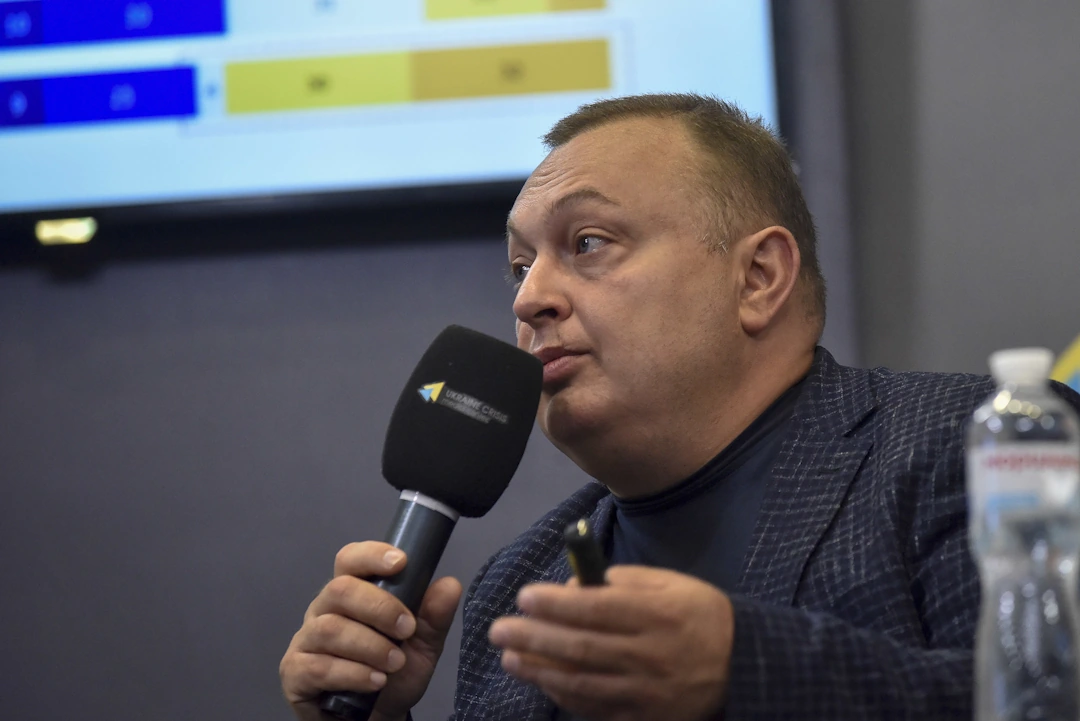
The discussion participants emphasized the importance of the survey, which has been initiated by EUAM since 2015. Oleksiy Antypovych, CEO of Rating Group, noted that this is already the second such study conducted by Rating Group for EUAM since the beginning of the full-scale war.
"It is very important that this study shows dynamics. The best way to look at sociology is precisely in dynamics — then you understand where society and the country are heading,” said Oleksiy Antypovych, CEO of Rating Group
The speakers reflected on the fact that monitoring public sentiment is also important for building effective communication between European institutions and Ukrainian society.

"The results of this survey are very important. It can help us understand what society thinks, what concerns people have, whom they trust, and how they view reforms. European institutions, such as the EU Advisory Mission, also bear responsibility to the people of Ukraine. The findings of the study can guide us on how to communicate better and engage in dialogue,” said Rolf Holmboe, Head of EUAM Ukraine
Such communication should also contribute to better awareness among Ukrainians about the EU system, its legislation, rules, and everyday conditions. This will help Ukrainians look at European integration in a more realistic way:
"Since the beginning of the full-scale invasion, Ukrainians have started to realize that Europe is not only about ‘greener grass’ and ‘clearer skies.’ It is also about rules, laws, and the absence of corruption. Because of the war, we have all come to fully recognize ourselves as Ukrainians and to appreciate the value of our own state. Going forward, our sense of European identity will continue to grow. And in some respects, we will even take a more sober view of EU accession,” said Oleksiy Antypovych, CEO of Rating Group
See more: