
Press releases
Search press releases

In issue #5 of the End of Year Survey, we discuss how concerned Ukrainians are that AI will replace their jobs.
We compare the data with public opinions in other European countries.
The End of Year Survey (EoY) is a global annual survey by the international sociological association Gallup International on the future, happiness, and expectations of populations in various countries. In 2025, over 60,000 respondents were surveyed in 61 countries worldwide. In Ukraine, the EoY survey has been conducted for the third consecutive year by the Sociological Group "Rating" (Rating Group).
Almost a third (30%) of employees in Ukraine are concerned that artificial intelligence will replace their jobs
- At the same time, another 69% of working individuals stated that they are not concerned about this.
- Employed citizens are relatively more concerned that AI will replace their jobs than self-employed individuals (32% compared to 19%).
- Self-employed citizens feel significantly calmer: 78% are generally not concerned, with 60% specifically stating that it does not concern them at all.
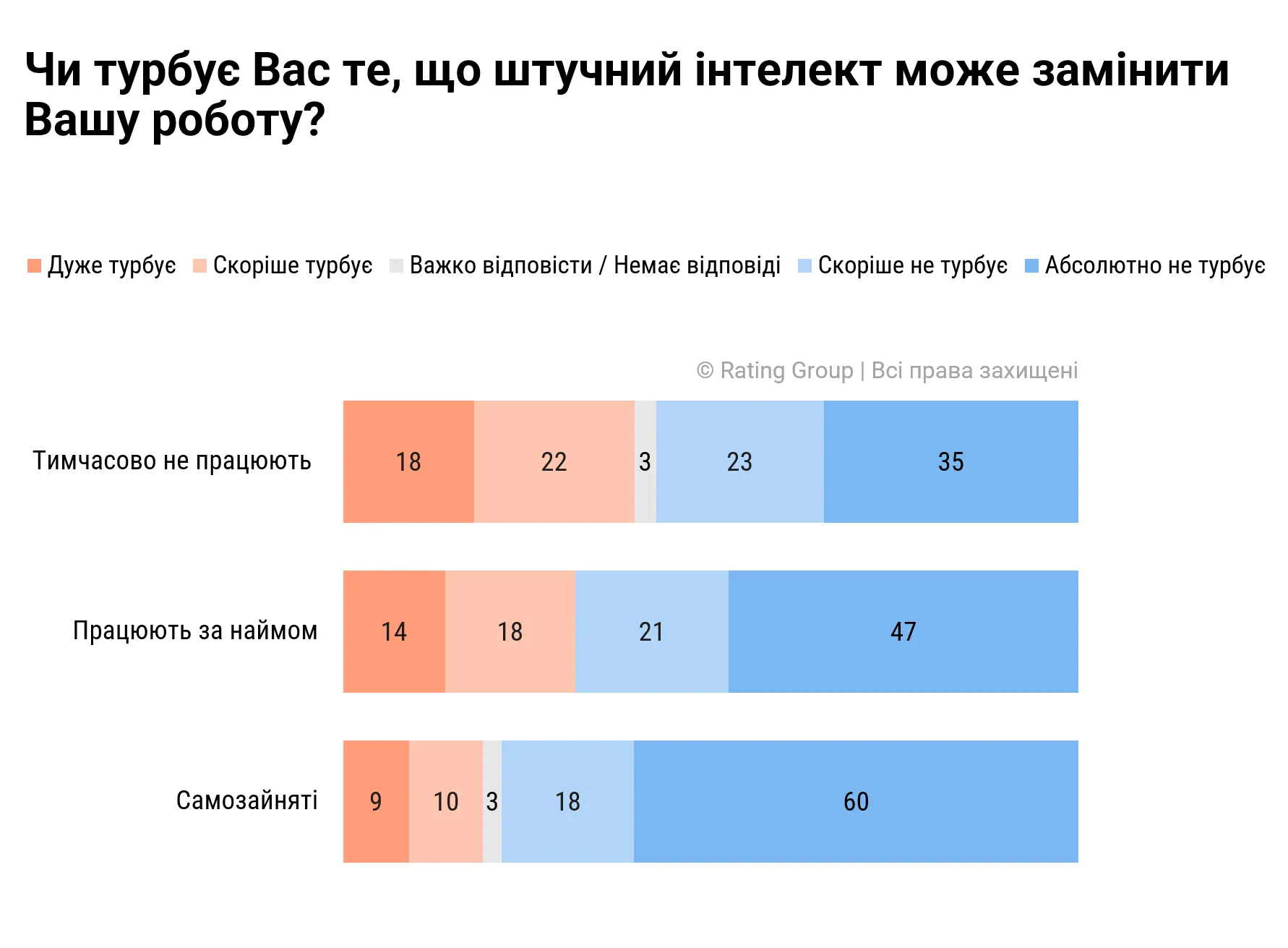
- The most concerned (40%) are, that AI will replace their jobs, are citizens who are currently temporarily out of work (unemployed / on parental leave / engaged in household duties*).
- Ukraine is among the top 10 European countries with the calmest perception regarding the scenario of AI replacing respondents' jobs (considering the balance between the proportion of working respondents who are concerned and those who are not). The top 10 countries for this indicator also include Nordic countries, Estonia, Latvia, Croatia, Germany, and the Netherlands.
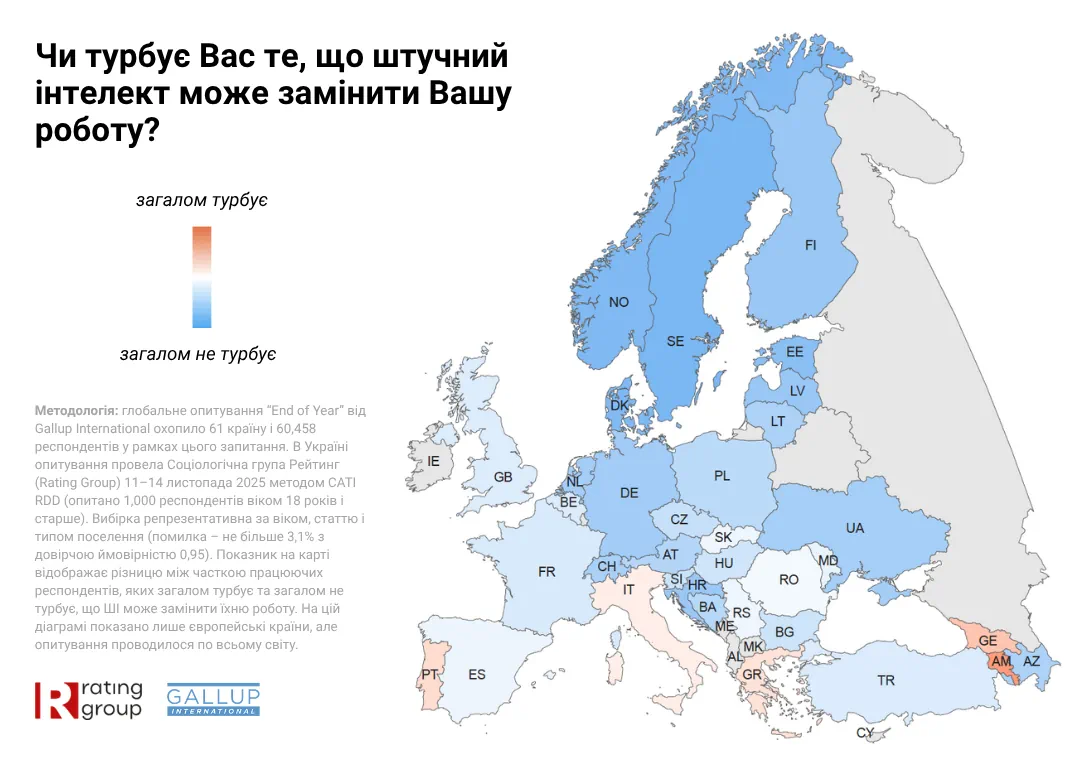
*in the context of the survey, 'work' refers to 'professional employment', meaning it does not include unpaid reproductive labor, such as childcare, housework, etc.
Rating Group is one of Ukraine's largest research institutions, operating since 2008. The company is registered in Ukraine and has extensive experience conducting sociological surveys both in Ukraine and abroad. The group includes: Sociological Group Rating, Rating Lab research laboratory, Rating Online platform, and Rating Call Center.

For Mother's Day 2026 (May 10), the team of the Sociological Group Rating (Rating Group) asked Ukrainian mothers what it means for them to be a mother, what challenges they face, whether they have time for themselves, and if anyone helps them.
Being a mother means...
We asked the respondents to describe in their own words what being a mother personally means to them.
For mothers, motherhood is primarily love, care, tenderness, warmth, and a feeling of happiness. Many also mention that it means being a support and a friend to their child.

And what is the hardest part of motherhood?
Mothers say the hardest part is worrying about their child and their health, responsibility, lack of time for themselves, and the fatigue and exhaustion from being a 24/7 mom. And sometimes – a lack of support.
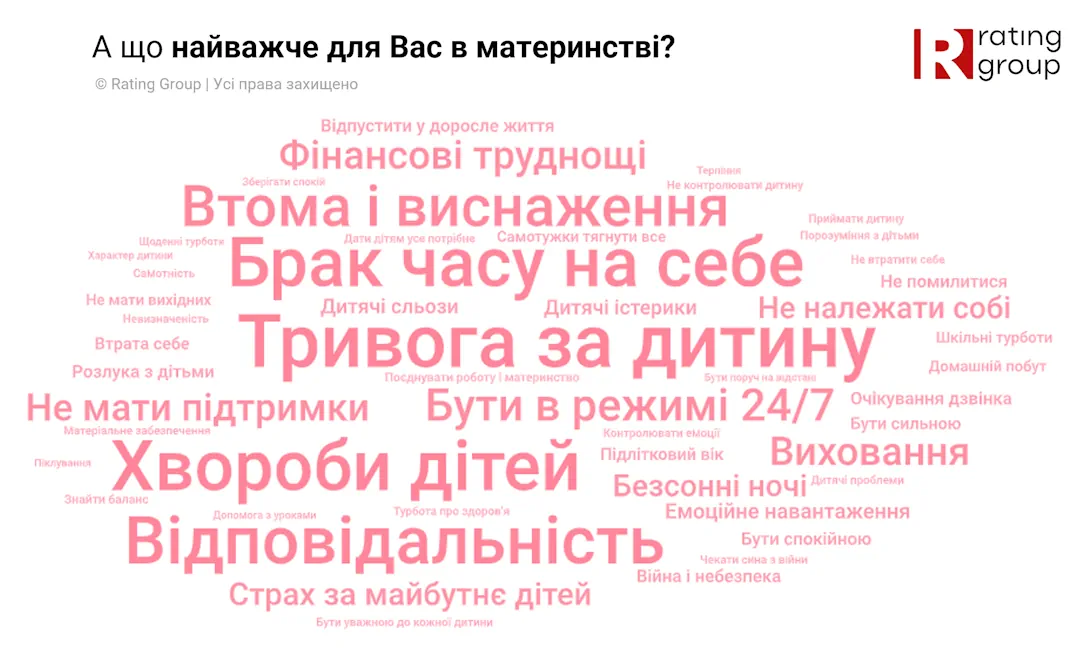
What do mothers feel?
We asked the respondents to assess their emotional state over the past month.
The most common feeling among Ukrainian mothers is anxiety (43%). Another 8% report fear.
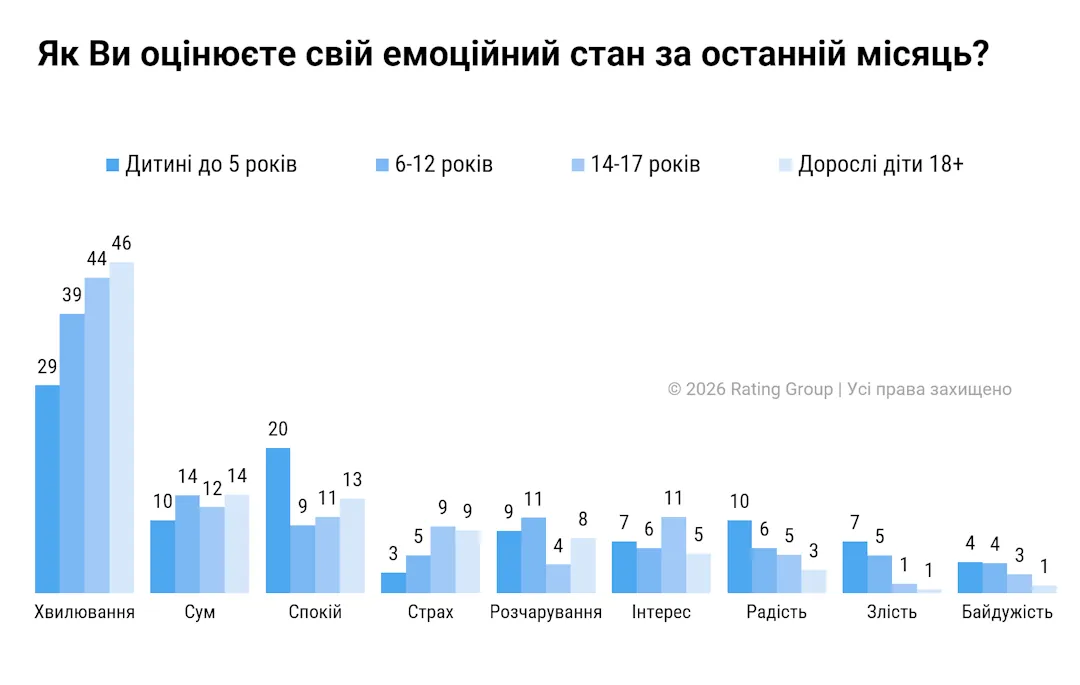
- In general, the older the child, the more often mothers feel anxious: 46% among mothers with adult children, compared to 29% among mothers of the youngest children (under 5 years old).
- Sadness is felt by 13% of mothers, while joy as a primary emotion is felt by only 5%. Mothers of children under 5 years old report joy relatively more often (10%).
- Calmness is felt by 13% of mothers. Mothers of children under 5 years old feel calm relatively more often: 20% (compared to 9-13% among mothers of children of other ages).
Time for themselves: what mothers (don't) manage to do?
Most mothers of children under 5 years old are unable to eat properly, rest, and do daily chores throughout the day:
- Approximately 65% of them cannot have breakfast and lunch every day. 57% cannot have a peaceful dinner.
- 64% of them cannot always take a shower/wash their hair when needed.
- 44% cannot even go to the toilet peacefully when needed.
What about time for rest?
- Approximately 35% of mothers of young children, 54-60% of mothers of school-aged children, and 72% of mothers whose children are adults have a relatively stable opportunity for rest. The rest do not have such an opportunity.
- Among mothers of preschoolers, one in four never or almost never has the opportunity to rest during the day (read a book, watch a movie, drink coffee, or just lie down). Only 7% of them have the opportunity to rest every day.
- Mothers of three or more children also rarely manage to rest.
At what age do mothers start getting enough sleep?
- Only about 10-15% of mothers of children under 18 get enough sleep every day or almost every day, whereas among mothers of adult children, this figure is already 30%.
- It is important to note that among mothers of preschoolers, almost 28% do not get enough sleep almost every day, and most of them sleep no more than 2-3-4 hours consecutively.
- Among mothers of school-aged children, about 40% also sleep poorly; however, a comparatively larger percentage among them get longer sleep of about 5-8 hours without waking up.
Help with the child
- Every second mother receives no help with her child/children, neither during the day nor in the evening. Every third mother receives no help even on weekends.
- In general, mothers receive support somewhat more often on weekends than on weekdays: primarily from their partner/husband (50%).
- The younger the child, the more support mothers receive from their partner and their parents. However, even among mothers of children under 5, one-third receive no help even in the evening.
- It is important that mothers of young children who receive no help with their children are significantly less likely to eat properly and do daily chores, especially regarding simple things like taking a shower or going to the toilet.
- Also, mothers who receive no help more often than others feel anxiety, sadness, indifference, and at the same time feel less joy.
Recovery
- It is important that the problem also includes the difficult process of postpartum recovery: almost every second mother needed more than 1-2 years to recover physically.
- Moral recovery is somewhat faster (from one month to six months), but not for everyone; at least one-third also needed a year or more to recover morally and psychologically.
- At the same time, with each subsequent child (for mothers having their second or third birth), recovery is a little faster, at least psychologically.
Rating Group is one of the largest research institutions in Ukraine, operating since 2008. The company is registered in Ukraine and has significant experience in conducting sociological surveys both in Ukraine and abroad. The group includes: Sociological Group Rating, Rating Lab research laboratory, Rating Online platform, and Rating Call Center.

For Europe Day 2026 (May 9) Sociological Group “Rating” (Rating Group) prepared the 4th issue of the study “Common Contours”. This time we compare:
- how Ukraine and other EU candidate countries perceive membership in the European Union;
- how Ukraine and the EU member states see the main values of the EU.
We would like to remind readers that Common Contours is a research series about Ukraine in a European context, where we mirror questions and compare data from our own surveys of Ukrainians with findings from surveys conducted in EU member states, candidate countries, and other European countries. In this edition, we compare the results of our survey with Eurobarometer data - the official EU survey series conducted by the European Commission and the European Parliament.
Note: Eurobarometer data belongs directly to the EU and we thank you for open access to it.
Is EU membership good or bad?
The vast majority of Ukrainians believe that Ukraine's accession to the EU would be a good thing. We are among the candidate countries with the most positive views on EU membership.
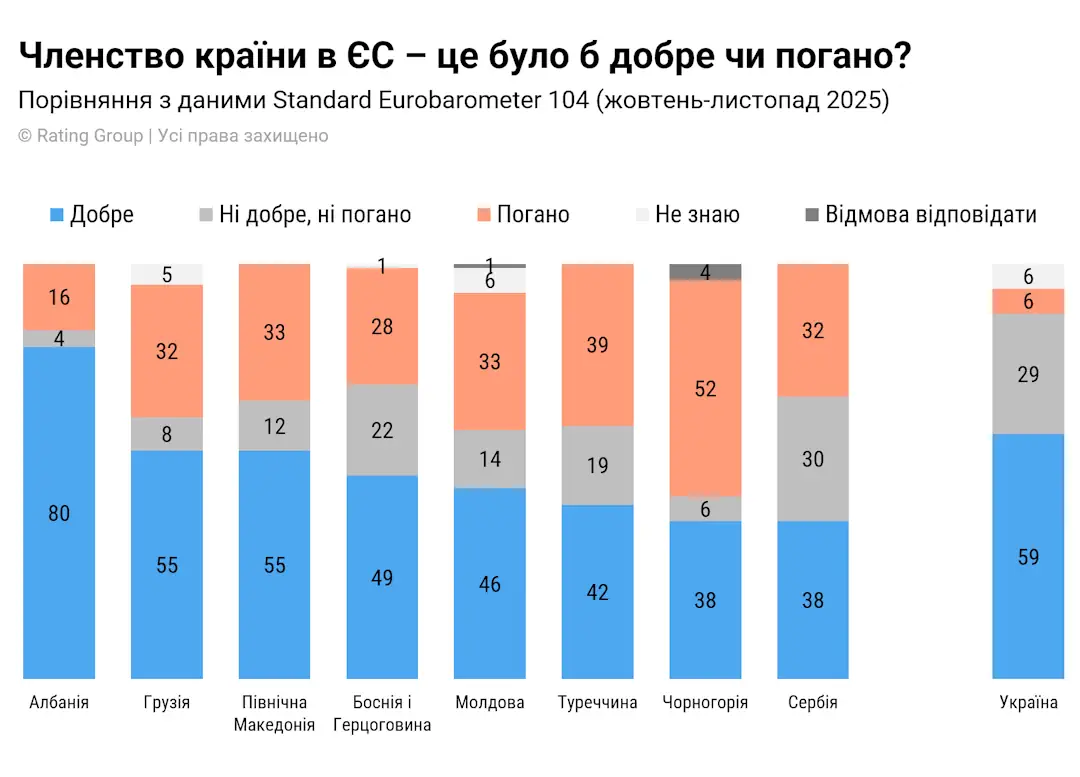
- In particular, 59% of respondents in Ukraine perceive EU membership positively, while 29% say it would be neither good nor bad. Only 6% express a negative opinion.
- Positive attitudes dominate across all macro-regions, with the highest level recorded in Kyiv (70%).
- Among EU candidate countries, the most positive attitudes toward EU membership are found in Albania (80% said EU membership would be a good thing) and Ukraine itself (59%).
- At the same time, Ukraine has the lowest share of direct negative assessments of EU membership among candidate countries. While this figure stands at 6% in Ukraine, it reaches 16% in Albania, 52% in Montenegro, and 33% in Moldova.
Would the country benefit from EU membership?
72% of Ukrainians are convinced that the country would benefit from EU membership
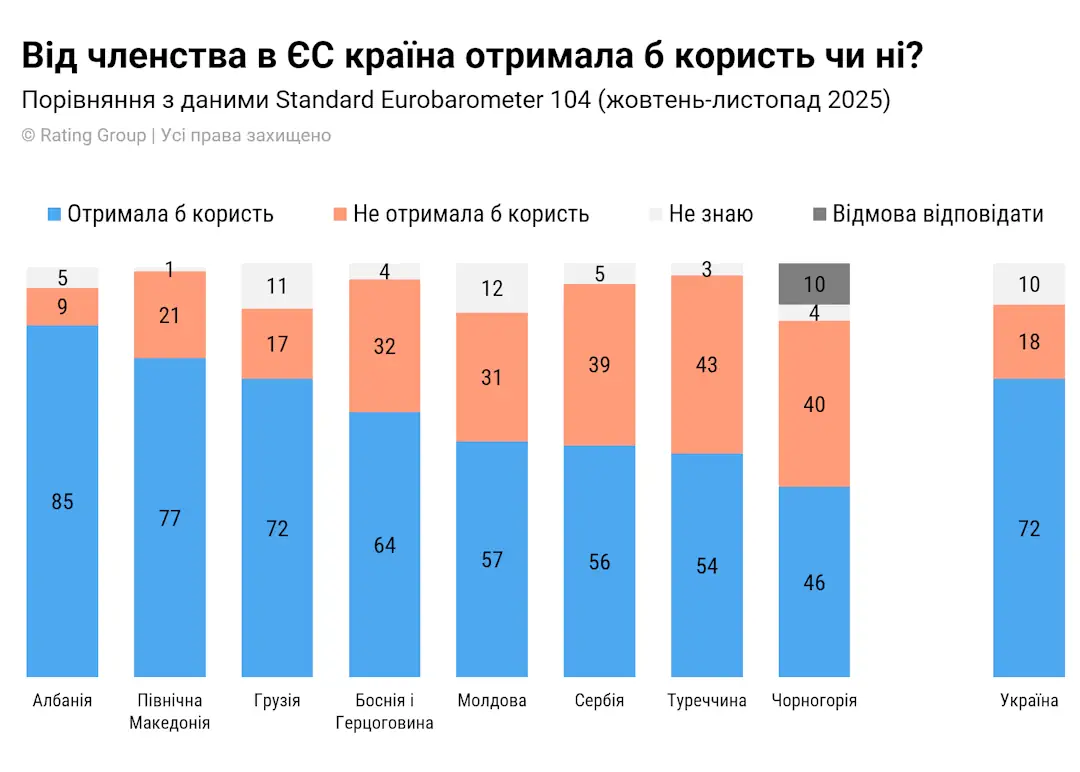
- Another 18% said there would be no benefit, and 10% said they did not know.
- Interestingly, even among opponents of joining the EU, almost one in five recognizes that membership in the European Union would be beneficial.
- Residents of Kyiv (80%) and the West (77%) speak about the benefits of membership relatively more often, but we also see a proportionately high rate among residents of other regions (Center - 71%, East - 68%, South - 67%).
- Among the candidate countries, Ukraine is among the most optimistic about the benefits of EU membership, along with Albania (85%), North Macedonia (77%) and Georgia (72%).
Perceptions of EU values
We asked respondents to choose from a list of values that they think best represent the European Union.
For Ukrainians, the values of the European Union are прежде всего peace, respect for human life, democracy, respect for rights, and the rule of law. Overall, Ukrainians’ perceptions of EU values are highly similar to views within EU member states themselves.
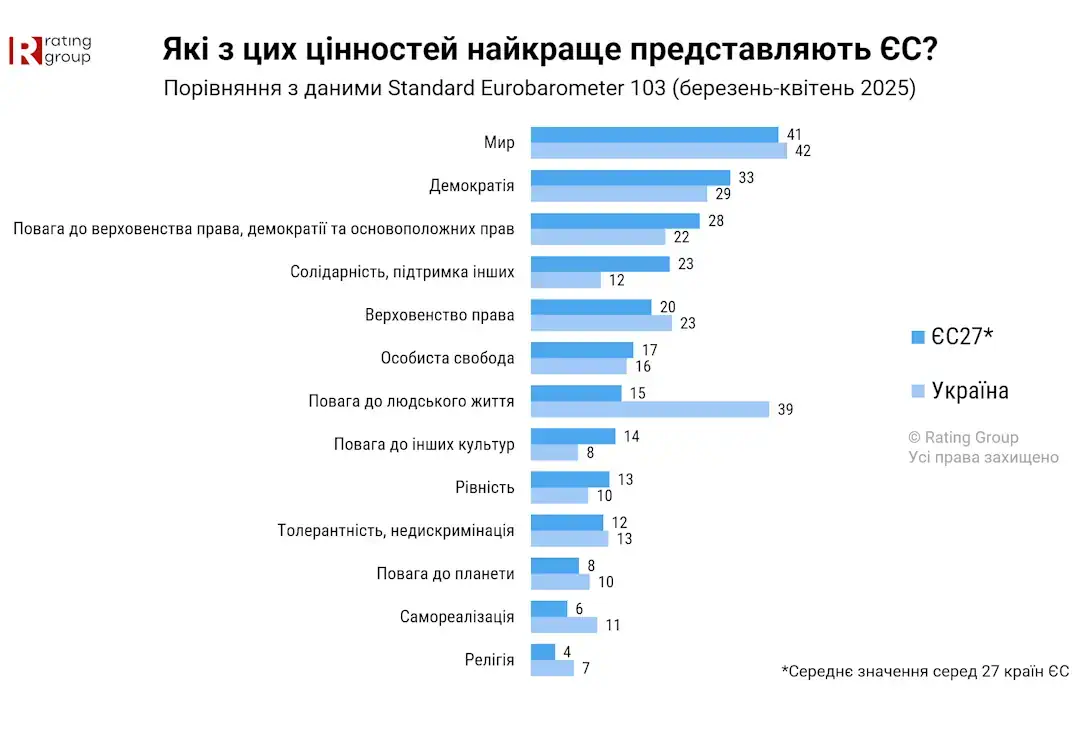
- Most often, Ukrainians mention peace (42%) and respect for human life (39%) as the key values of the EU.
- Ukrainians and EU citizens share similar perceptions of the EU as a space of peace-related values (42% in Ukraine and 41% on average across the EU), democracy (29% and 33%), respect for rights (22% and 28%), and the rule of law (23% and 20%).
- It is worth noting that, in the context of the full-scale invasion, Ukrainians mention respect for human life (39%) significantly more often than respondents in EU countries on average (15%).
- Compared to other key values, Ukrainians relatively less frequently selected solidarity and support for others (12%, compared to 23% in the EU average).
Below, take a look at what some of these expectations look like on the map.
Democracy
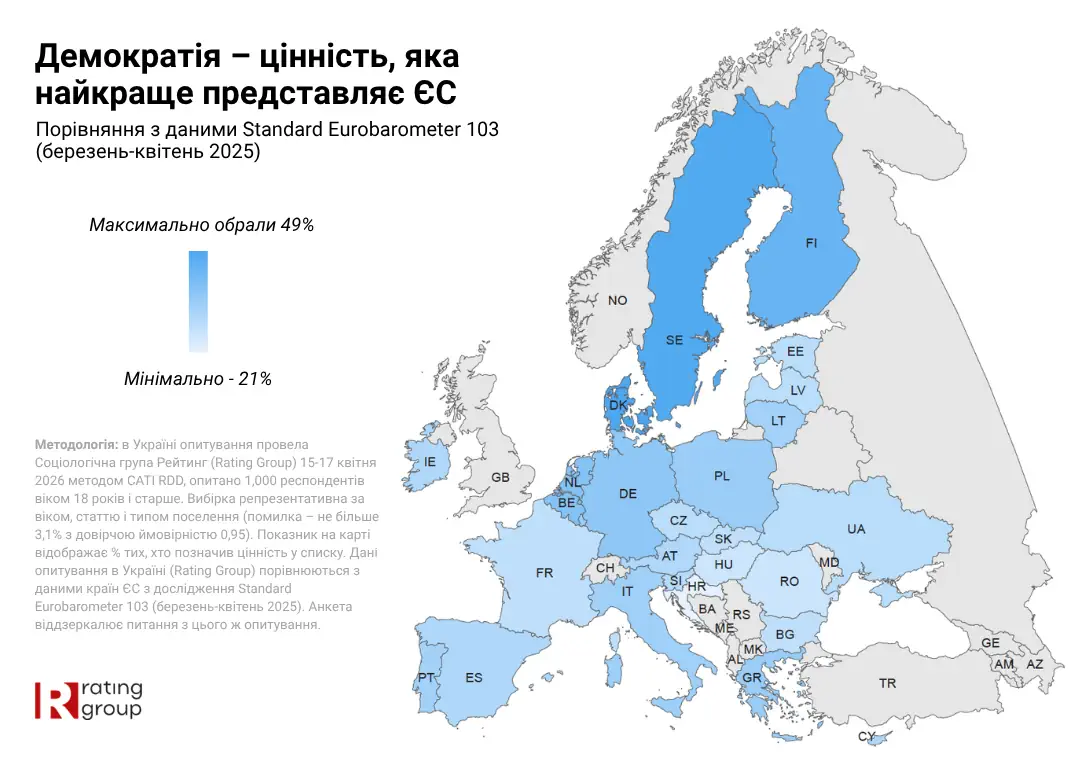
- Almost one third of Ukrainians (29%) selected democracy among the values that best represent the EU.
- By this indicator, Ukrainian public opinion generally follows the broader European trend, particularly the trend observed in Eastern European countries.
- A similar share selecting this answer option can be found in Latvia (29%), Estonia (29%), Slovakia (28%), and Bulgaria (28%). Comparable figures are also observed in several Western, Central, and Southern European countries, including France (28%), the Czech Republic (29%), and Spain (31%).
Respect for human life - expectations from Ukraine's European future?
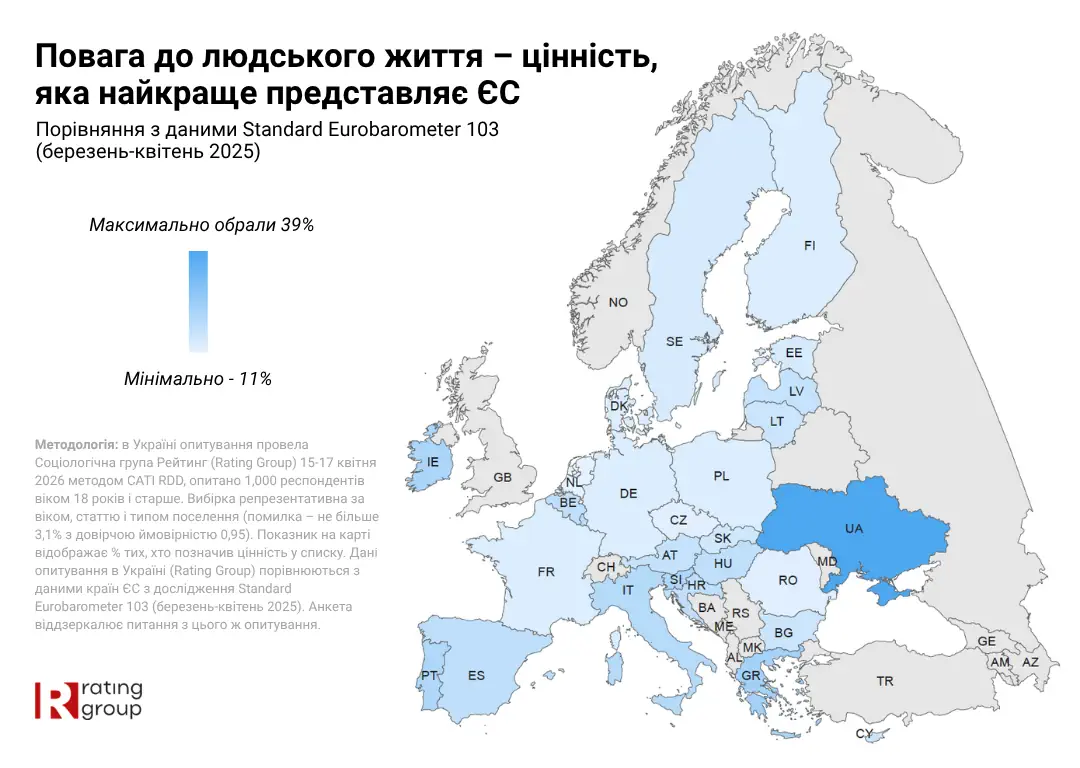
- Ukraine stands out significantly against the background of EU countries in the frequency of choosing respect for human life in the list of the main values of the EU.
- In the context of war, this indicates rather the desire for a peaceful and European future and security.
Rule of Law
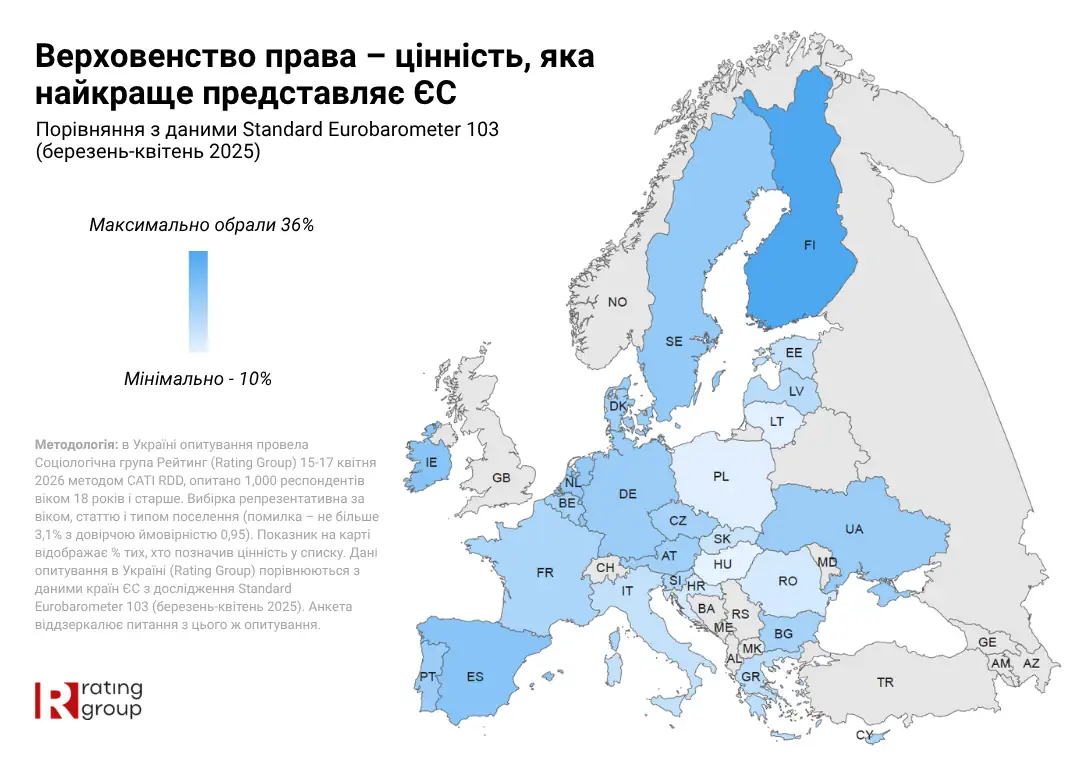
- Ukrainians and EU citizens share a very similar view on this value: 23% in Ukraine and 20% in the EU believe that the rule of law is best represented by the EU.
- The views of Ukrainians here are primarily similar to the opinions of the respondents of the Central European states.
- Ukrainians are more likely to speak of the rule of law as an EU value than our neighbours in Poland (11%), Romania (13%) or Slovakia (15%).
Rating Group is one of the largest research institutions in Ukraine, which has been on the market since 2008. The company is registered in Ukraine and has significant experience in conducting sociological surveys in Ukraine and abroad. The group includes: Sociological Group Rating, Research Lab Rating Lab, Rating Online platform and Rating Call Center.

The vast majority of Ukrainians (82%) believe that Ukraine will win the war
This is evidenced by the results of a new survey conducted by the Sociological Group "Rating" (Rating Group) in March 2026 for the Center for Analysis and Sociological Research (CISR) of the International Republican Institute (IRI) in Ukraine.
Survey topics:
- Assessment of the general situation
- Reconstruction of Ukraine
- Adaptation to wartime
- Attitudes towards elections during wartime
- Perceptions regarding the end of the war
- Other
The survey results are available in an interactive dashboard on the IRI website, as well as in the attached report.
Rating Group is one of Ukraine's largest research institutions, operating since 2008. The company is registered in Ukraine and has significant experience conducting sociological surveys both in Ukraine and abroad. The group includes: Sociological Group Rating, Rating Lab research laboratory, Rating Online platform, and Rating Call Center.

Within the framework of a new survey, the Sociological Group “Rating” (Rating Group) and research laboratory Rating Lab learned how the emotional state of Ukrainians has changed after the difficult winter of 2026.
Monitoring study of emotional state has been carried out since 2020 on the initiative of Rating Lab
General findings
The emotional state of Ukrainians is recovering after a difficult winter

- In April 2026, we see an improvement: the proportion of those who feel stressed has decreased to 39% (compared to 51% in February).
- Another 24% said they felt calmer rather, and 36% hesitated.
- Relatively more often, less affluent respondents, residents of the East, talk about tension. Among women, young people feel better, and older women aged 51+ are the most stressed. Among men, we do not fix a clear trend.
How has the emotional state of Ukrainians changed since 2020?

- Before a full-scale invasion. In 2020-2021, the emotional state of Ukrainians fluctuated. At the beginning of the COVID-19 pandemic, Ukrainians were still relatively more likely to feel calm (44%) than tense (23%). Later in 2020, tensions were felt markedly more (33%). At the same time, as of March 2021, the emotional state recovered somewhat: the relative majority felt calm (43%).
- Since the beginning of a full-scale invasion. At this time emotional state deteriorated sharply. About 50% of Ukrainians directly noted significant tensions in April 2022.
- After the successes of the Armed Forces at the front, the liberation of part of the territories, the emotional state began to improve moderately. As of February 2023, a year since the start of the full-scale war, a third of Ukrainians indicated that they feel tension, a third - that they feel calm.
- Winter 2026. During the difficult winter of 2026, in the face of massive Russian attacks on critical infrastructure, constant blackouts of light, heat, Ukrainians experienced the peak of emotional tension since 2020 (51%). This share exceeded even the figure of April 2022 (the first months of a full-scale invasion).
- Spring 2026. In April 2026 — with the onset of spring and the improvement of the situation in the energy system — the emotional state of Ukrainians improved rapidly. The proportion of those experiencing significant stress decreased by 12 percentage points.
Rating Group is one of the largest research institutions in Ukraine, which has been on the market since 2008. The company is registered in Ukraine and has significant experience in conducting sociological surveys in Ukraine and abroad. The group includes: Sociological Group Rating, Research Lab Rating Lab, Rating Online platform and Rating Call Center.

Rating Group, together with partners from the National Agency on Corruption Prevention (NACP) and the OSCE, conducted an expert survey “Corruption in Ukraine 2025: expert views and assessments.” The study is part of the project “Support to the development of effective tools for preventing corruption and strengthening anti-corruption compliance in Ukraine,” implemented by the OSCE Support Programme for Ukraine in cooperation with the NACP.
A total of 369 experts were surveyed:
- “Theorists” – analysts, independent experts/activists, NGO representatives, media, representatives of international organizations, academics
- “Practitioners” – representatives of anti-corruption bodies, the judiciary, the Verkhovna Rada/parliamentary oversight, ministries and other central executive authorities, regional state administrations, regional councils, and the Kyiv City Council
General assessments
- Corruption, especially political corruption, is seen as a serious challenge for Ukraine, although experts are generally optimistic about overcoming it.
- Political corruption is considered the most critical issue: 87% of experts assess it as a serious problem. Corruption in business is rated as such by 76%, while everyday corruption – by 43%.
- About two-thirds of experts (65%) believe corruption in Ukraine is widespread. The corruption perception index stands at 3.9 out of 5 and has not changed compared to 2023.
- 41% of experts see no change in the level of corruption over the past year, 33% say it has increased, and 21% say it has decreased.
- Expectations are generally optimistic: more than half of experts (53%) expect corruption levels to decline in the future, while 30% predict an increase.
Most and least corrupt sectors
Experts identify the most corrupt sectors (on a 1–5 scale, where “1” means no corruption and “5” means “very widespread”):
- customs (4.4)
- construction and infrastructure (4.3)
- security and defense (4.2)
The lowest levels of corruption, according to experts, are observed in foreign relations, digitalization, and statistics.
Assessment of anti-corruption policy
The effectiveness of state anti-corruption policy is assessed with caution.
Most often (45%), experts say that anti-corruption policy in Ukraine is sometimes effective and sometimes not. Another 28% consider it effective, while 23% say it is ineffective.
The overall effectiveness score is 3.1 out of 5 (compared to 3.0 in 2023). This is an average score based on a 5-point scale, where 1 means “completely ineffective” and 5 means “very effective.”
Anti-corruption policy priorities
Experts consider the following directions most effective for reducing corruption:
- automation of public services and business regulation (51%)
- ensuring inevitability of punishment (49%)
- judicial reform (37%)
- fostering zero tolerance for corruption, promoting integrity and respect for the rule of law (36%)
Assessment of anti-corruption institutions
Most experts consider the activities of National Anti-Corruption Bureau of Ukraine, Specialized Anti-Corruption Prosecutor's Office, High Anti-Corruption Court, and the National Agency on Corruption Prevention effective and largely independent.
These institutions remain leaders by average effectiveness score (1 = “completely ineffective,” 5 = “very effective”):
- NABU (3.8)
- SAPO (3.8)
- High Anti-Corruption Court (3.6)
- NACP (3.5)
More than half of experts rate these bodies as effective and consider them mostly independent. At the same time, other state institutions, particularly law enforcement agencies, receive significantly lower ratings.
Who is responsible for combating corruption?
Experts most often assign responsibility for combating corruption to the following institutions (up to three could be selected):
- NABU (45%)
- NACP (39%)
- Verkhovna Rada of Ukraine (34%)
- Office of the President of Ukraine (30%)
Compared to 2023, the perceived role of anti-corruption bodies has slightly increased, while the role of the President and the Presidential Office has decreased (from 43% to 30%).
Rating Group is one of the largest research institutions in Ukraine, operating since 2008. The company is registered in Ukraine and has extensive experience conducting sociological research both domestically and internationally. The group includes: Sociological Group “Rating,” the research laboratory Rating Lab, the platform Rating Online, and the Rating Call Center.

The topic of Issue No. 4 of the End of Year Survey is how Ukrainians perceive the demographic situation in the country:
- how to assess the demographic situation in the country as a whole;
- how many children do they think should be in the family.
We compare the data with public views in other European countries.
The End of Year Survey (EoY) is a global annual survey by the international sociological association Gallup International on the future, happiness and expectations of the population of different countries. In 2025, more than 60,000 respondents were surveyed in 61 countries of the world. In Ukraine, the EoY survey is conducted for the third year in a row by the Sociological Group “Rating” (Rating Group).
Assessment of the demographic situation
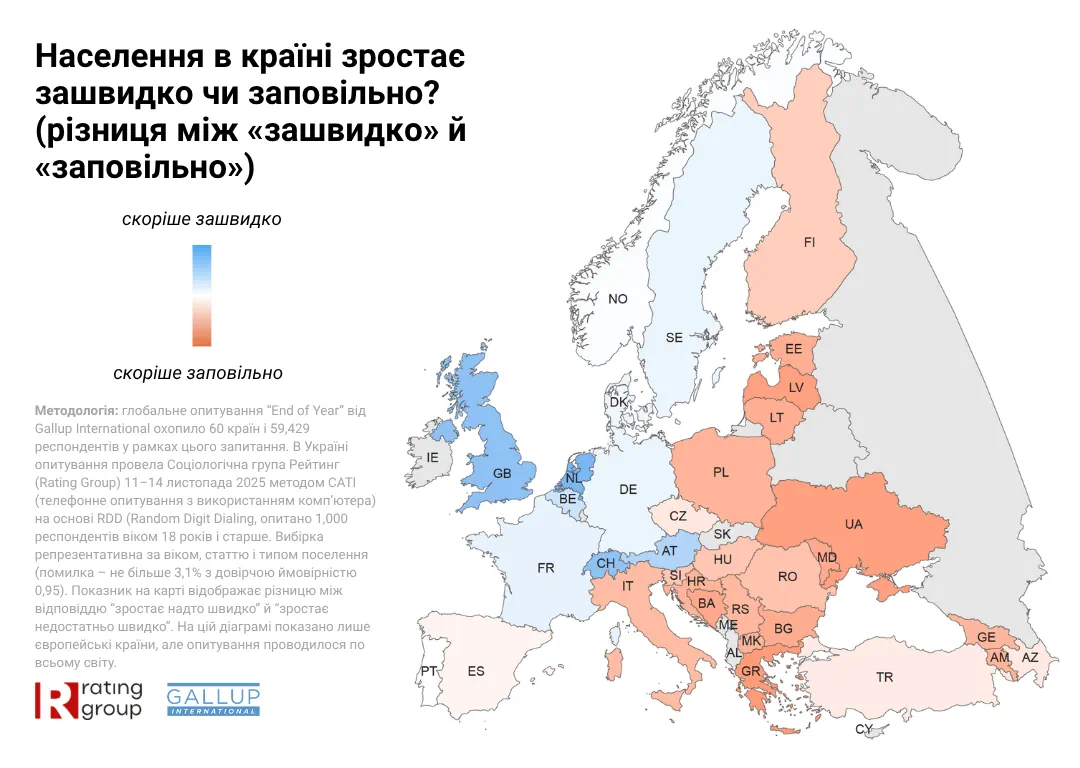
Ukraine ranks second in Europe on concerns about slow population growth
- The vast majority of Ukrainians (88%) believe that the population of the country is not growing fast enough. Only 5% rate the pace as optimal, and 1% as too high.
- According to the share of responses about too slow population growth, Ukraine shares the second place in the world with Latvia (there is also 88% of the opinion). An even greater share of concern in this context is in Greece.
How many children should be in the family?
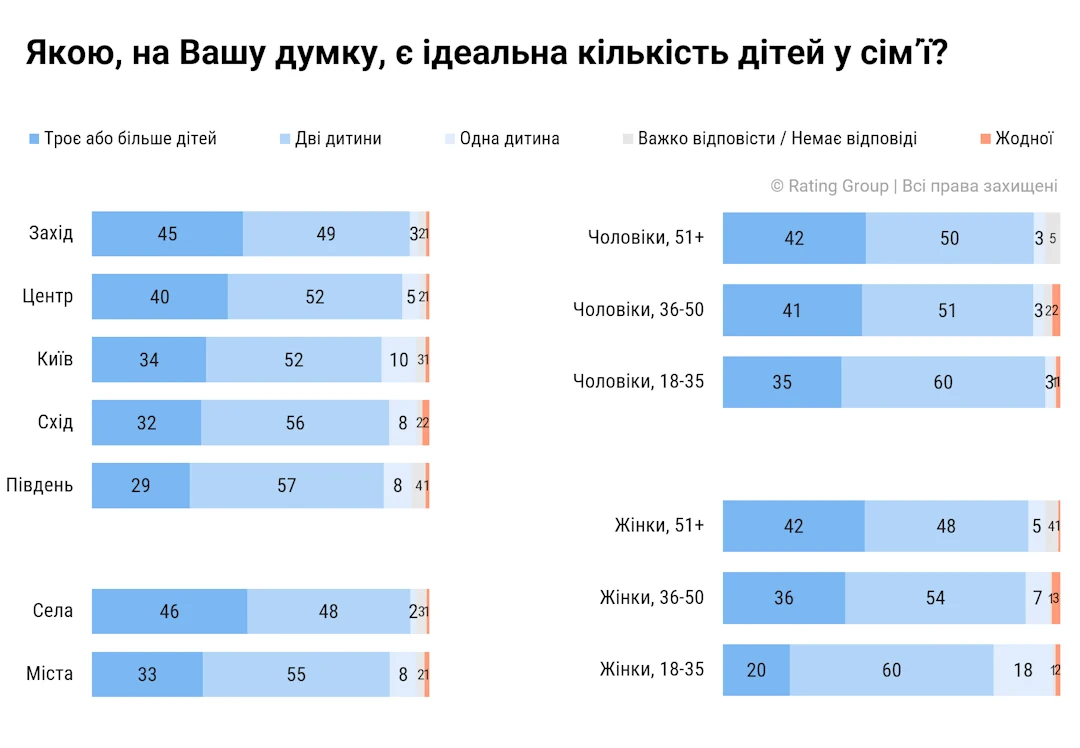
Ukrainians most approve of the family model when there are 2-3 children or more. This resonates with a general concern about population size.
- Most Ukrainians consider a family with two children to be the best model (53%), while 37% believe that it is worth having three or more children. The proportion of those who talk about one child or say that ideally it is possible not to have children at all (“childfree”) is low (6% and 1%, respectively).
- In all socio-demographic categories, the opinion prevails that it is best to have two children. About what it is worth having three or more children relatively Older respondents aged 51+, residents of the West (45%) and the Center (40%) of the country, as well as in rural areas (46%) speak more often.
- Among young people aged 18-35, the model of the family with two children is particularly supported (60% in the responses of both men and women).
- Young men want more children than women. A third of young men (35%) express the opinion that it is worth having three or more children, and among young women this proportion is 20%. For their part, young women are more likely than young men to support the option when there is one child (18% compared to 3%). Such a significant difference between men and women is not observed in other age categories.
- In general, the views of Ukrainians are comparable to the global average trend (54% - for the model of a family with two children, 27% - with three and more).
- In addition, Ukraine is among the top 10 countries in Europe in terms of the frequency of choice of 3+ children (the same list includes, for example, Armenia, Georgia, Moldova, Estonia, Latvia). This is again an indicator that Ukrainians are very concerned about the demographic situation.
Note: this question shows the views of the respondents, but does not indicate the actual number of children in their family
Rating Group is one of the largest research institutions in Ukraine, which has been on the market since 2008. The company is registered in Ukraine and has significant experience in conducting sociological surveys in Ukraine and abroad. The group includes: Sociological Group Rating, Research Lab Rating Lab, Rating Online platform and Rating Call Center.

Rating Group (Sociological Group “Rating”) conducted a unique cross-audit study on breastfeeding. We wanted to know how Ukrainian mothers, women, doctors relate to breastfeeding and what experience they have.
To do this, we interviewed three audiences:
- 970 mothers of children aged 0 to 2 years (in particular, 450 — mothers of children aged 0-6 months and 520 — mothers of children aged 6 months to 2 years)
- 792 other women (including women with older children, grandmothers of babies, women without children)
- 220 pediatricians and family doctors who work with children from birth
The authors of the study: Tetiana Skrypchenko, Deputy Director of Rating Group (mother of Solomiia, 1 year old); Marianna Tkalych, CEO of Rating Lab, Doctor of Psychological Sciences (mother of Masha, 17 years old); Anna Makhnitska, breastfeeding and infant sleep consultant, USCARA member, mother of 6 children.
The study was funded by Rating Group.
Important: the study is prepared in order to reflect the views, assessments, opinions, experiences of citizens of Ukraine. The results of the study are not medical advice.
How common is breastfeeding?
Almost 60% of babies from 0 to 6 months are breastfed. Instead, 28% — have artificial feeding (formula), another 14% — on mixed (both formula and breastfeeding at the same time).
Note: the method of primary feeding of the child was studied, additional exclusive feeding (without supplementation or complementary feeding) was not studied.
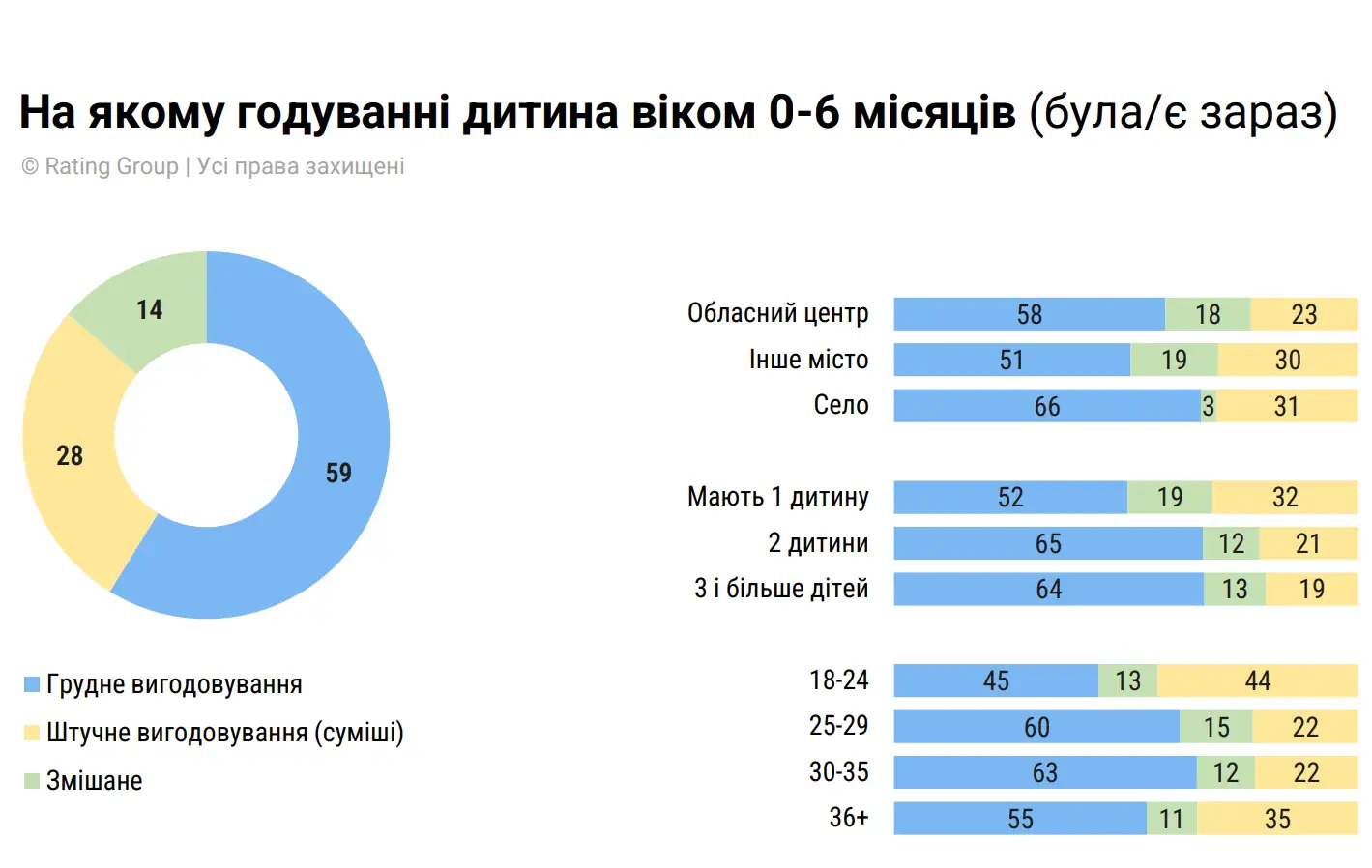
- The lowest percentage of BF — among young mothers aged 18-24 (45%) and women who are first-time mothers (52%). AF is also more common in villages (66%) and regional centers (58%) than in small towns (51%). The financial situation of the family has no connection with the level of BF.
- Most children who were on mixed feeding up to 6 months, after half a year completely switch to artificial feeding.
- 91% of mothers on BF feed their baby on demand. Among those who are mixed, on demand, 71% feed, those who are fully on mixtures - 59% (others feed on schedule).
- Mixed-fed babies are significantly more likely to use the dummy (45% — constantly use) than those on mixed (18% use constantly) or exclusively on BF (11% constantly use).
Feeding ideas
We asked respondents to rate which feeding — breastfed or artificial — was better according to various criteria.
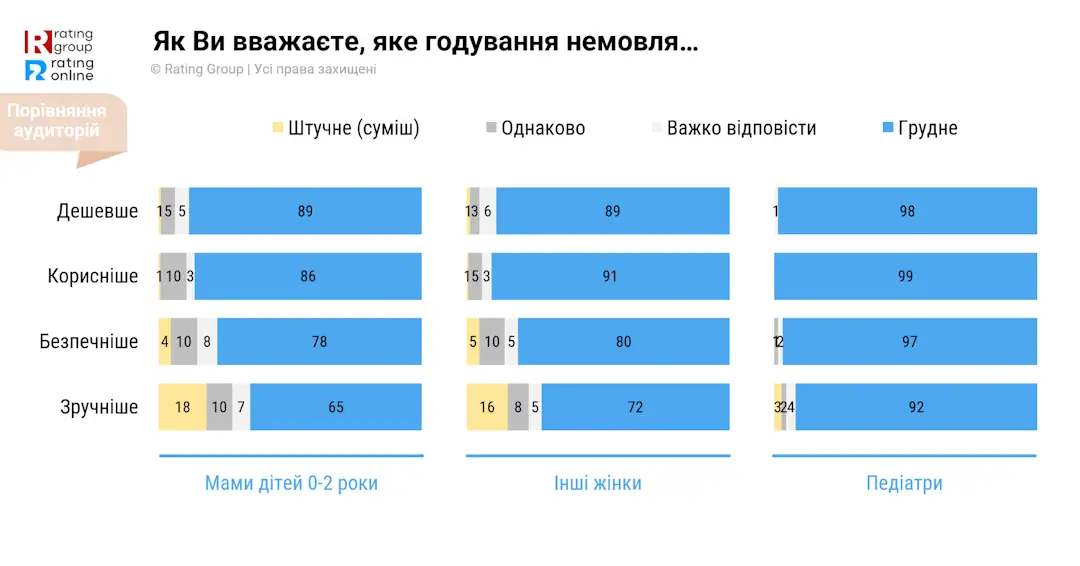
Among all audiences, the idea prevails, that breastfeeding is a cheaper, healthier and safer feeding option than a mixture.
At the same time, opinions are divided on convenience. In particular, for mothers on suture mixtures seem more convenient than breastfeeding.
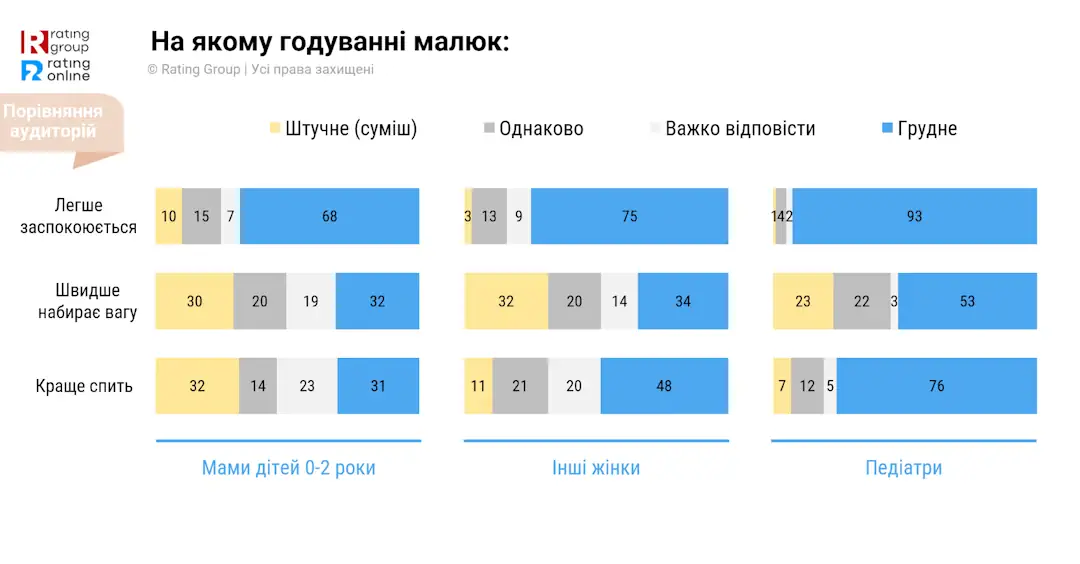
- On what feeding the baby calms down more easily: most believe that on BF (68%). The exception is mothers on AF, who in this matter often do not see the differences between AF and BF.
- On what feeding the baby gains weight faster: here half of the other women, and even almost half of the doctors answered that the child can gain faster on mixtures or that there is no difference between the mixture and BF in terms of weight gain. In part, even the mothers on BF also agreed with this.
- When the child sleeps better? Among mothers who are on AF or mixed feeding, half answered that they sleep better on the mixture, the rest opted for the option that it is the same or that they do not know. Even mothers with BF doubt this question: at least a quarter of them believe that the baby can sleep better on the mixture, most of them also could not answer.
- If compare expressed breast milk and formula, the majority of respondents clearly prefer breast milk from both mothers (77%) and other women (76%) and doctors (99%). At the same time, for mothers whose baby is on formula, the advantage of expressed milk is not obvious, almost half of them believe that the mixture is the best option (46%).
- Against this background, an option milk from a can of breast milk looks less familiar and understandable to respondents. In this comparison, the mixture is perceived as more familiar. For mothers on BF, milk from a can of breast milk is still better than a mixture, but for mothers on mixed - 50 to 50. And according to moms on the mix, the mixture is definitely the best alternative to milk from a can of breast milk.
Stereotypes, myths, public pressure regarding breastfeeding
Stereotyping support
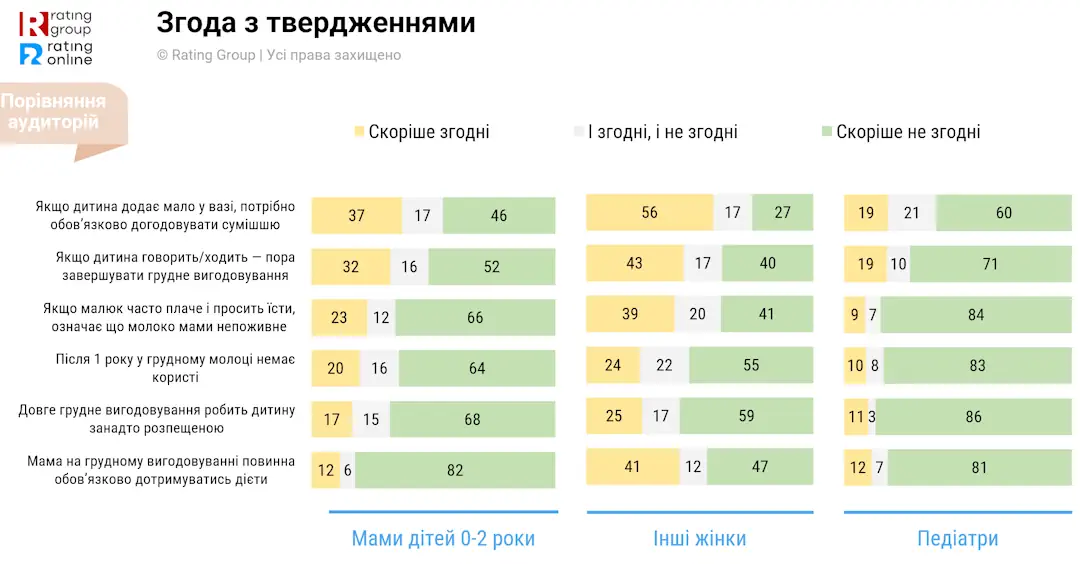
A block of statements about breastfeeding shows that anti-BF myths are not dominant, but noticeably present. Doctors mostly disagreed with all the statements, however, among other women, many myths are partly widespread.
“If the child gains little weight, you need necessarilytop up with a mixture”
This thesis received the most agreement: about 40% among mothers, almost 60% among other women and about 20% among doctors.
“If the baby talks/walks, it's time to complete breastfeeding”
A third of mothers, almost half of other women and about 20% of doctors agreed.
“If the baby often cries and asks to eat, it means that the mother's milk is not nutritious”
This is what 23% of mothers and almost 40% of other women believe.
“After 1 year, there is no benefit in breast milk”
20% of mothers and 25% of other women agreed.
“Long breastfeeding makes the baby too spoiled”
17% of mothers and 25% of other women agree.
“A breastfeeding mother should definitely follow a diet”
This is the statement where we see the greatest gap between the responses of mothers and other women. Among mothers, this is the least popular myth, but among other women, almost half are sure of it.
Differences by groups:
- Moms who are on BF, for the most part did not agree with any statement. In contrast, women on mixed or mixtures were significantly more likely to share such views.
- For example, with the statement “if the child gains little weight, it is necessary to supplement with a mixture” 60% of mothers on a mixture or mixed agree, while among mothers on BF - only 28%.
- “If the baby often cries and asks to eat, it means that the mother's milk is not nutritious” - also half of the mothers on the formula and a third of the mothers on the mixed one are convinced of this, while the mothers on the BF did not agree with this.
- Regarding other audiences of women: in general, all stereotypes are more common among grandmothers who have young grandchildren and may be trying to transmit these ideas to their children. Also, stereotypes are more common among women who do not have children at all.
- For example, if mothers do not agree that it is necessary to follow a diet on BF, then among grandmothers almost 50% are sure that a diet must be. The same proportion agreed with the statement among women without children. In general, among these two categories, there is also the most negative attitude towards long-term breastfeeding.
BF in 1-2 years: supported or condemned?
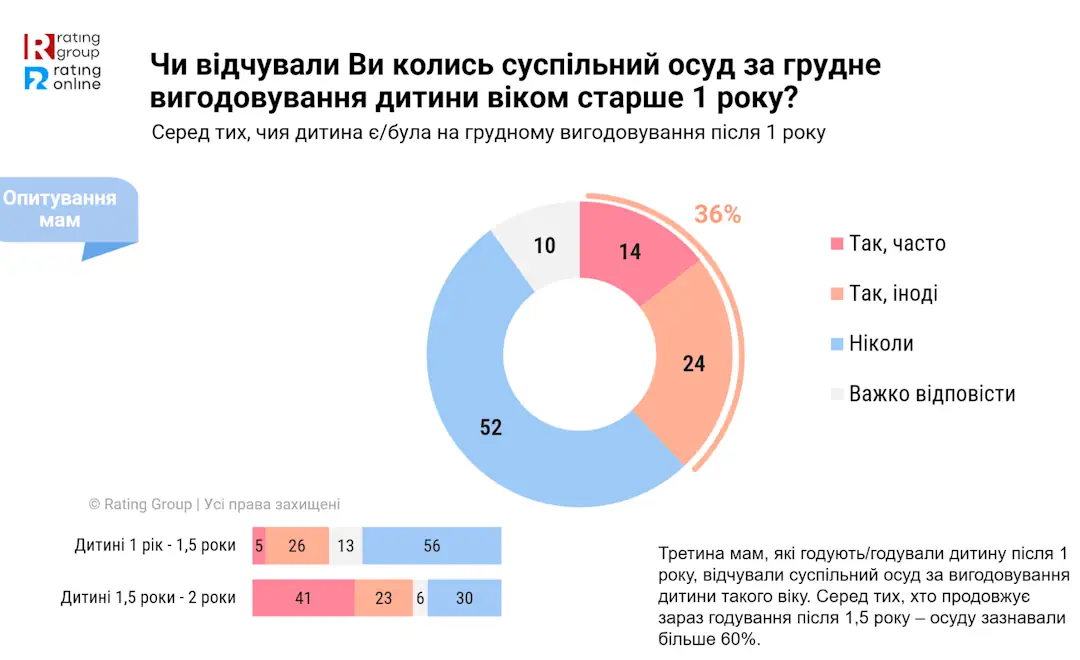
- Among mothers whose child was or is breastfed after 1 year, 36% felt public condemnation for it. And the longer they continue, the more condemnation they feel: for example, among those who continue feeding after 1.5 years, more than 60% have already experienced condemnation.
- Among the residents villages every fourth mother who breastfeeds after a year often faces condemnation for prolonged BF.
- The assessment of the normality of breastfeeding of a child aged 2 years, differs significantly between audiences .For mothers who are on BF, this is rather normal, especially among those who continue it on their own, but for mothers on mixed and mixed — it is rather not normal.
- Grandmothers of babies and women without children are the worst at breastfeeding at 2 years old.
- Among doctors, breastfeeding of a child aged 2 years is considered normal by almost 80%. A more positive attitude is among doctors who are guided by international recommendations or have passed a certification course on BF.
Attitude to breastfeeding in public places
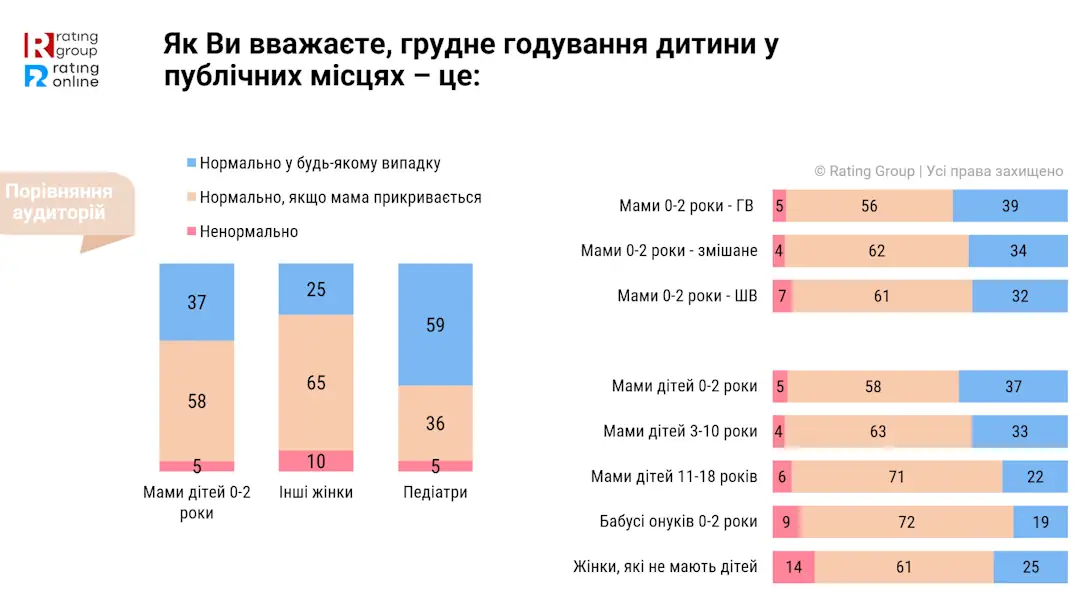
The attitude towards breastfeeding in public places is generally more acceptable, but with many “buts” — conditional, “if I don't see it”.
- Other women, including mothers, believe that breastfeeding in public places is normal, provided that the mother “covers up”. Moms who are themselves on BF are somewhat more loyal to this, but the difference is small.
- Grandmothers and women without children are most critical of this.
These trends are confirmed by our experiment. We told the respondents an imaginary situation about a mother who needs to feed her child in a public place. Then the respondents were asked to evaluate what the mother should do in this situation:
a) feed the baby here
whether b) look for another place to feed/return home?
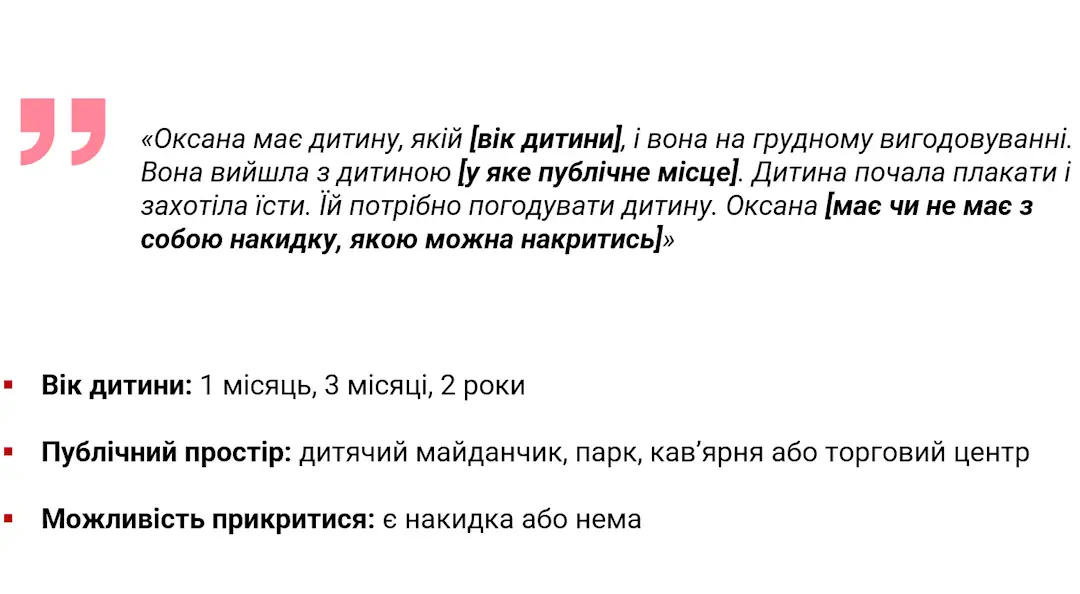
Factors that varied in situations: age of the child; place (playground, coffee shop, park, shopping center); presence or absence of a cape.
According to the results of the experiment:
- The factor of having a cape with which you can “cover up” is very influential: in its absence, among mothers, 24% advise the imaginary mother to go home, if there is a cloak - only 9%. Among other women, in the absence of mention of a cape, 42% are advised to go home, while if there is a cape, twice as much (23%).
- Among mothers there are no significant differences in location, but for other women it matters: most often they do not want to see a nursing mother in a coffee shop, restaurant. Also, mothers of older children do not really want to see a nursing mother on the playground. Relatively better attitude — if it is a park or shopping center. At the same time, if there is a cape, the impact of the feeding site is significantly reduced.
- The age of the child also matters for other women: for example About 40% of one- to two-year-old children believe that their mother should feed at home, while with a baby of several months it is less likely to be “sent home” (about 20%).
- In general, in the eyes of society, the most “comfortable” situation for feeding is when the baby is still small (3 months), there is a cape and this is, for example, a park.
- And the most stigmatized situation is if the mother is in a coffee shop and without a cape. In general, even here, most mothers themselves are ready to support breastfeeding, but not the rest of the population.
- Of course, mothers with their own experience of long-term HB (especially those who now continue to breastfeed) are the least critical of HB in public places in any situation.
Therefore, normalizing BF in public places is very important, including the attitude that “this is normal regardless of location”, “the cape may be an option but not a requirement”, and “even older children can be breastfed outside the home without shame”.
Combining BF with an active life
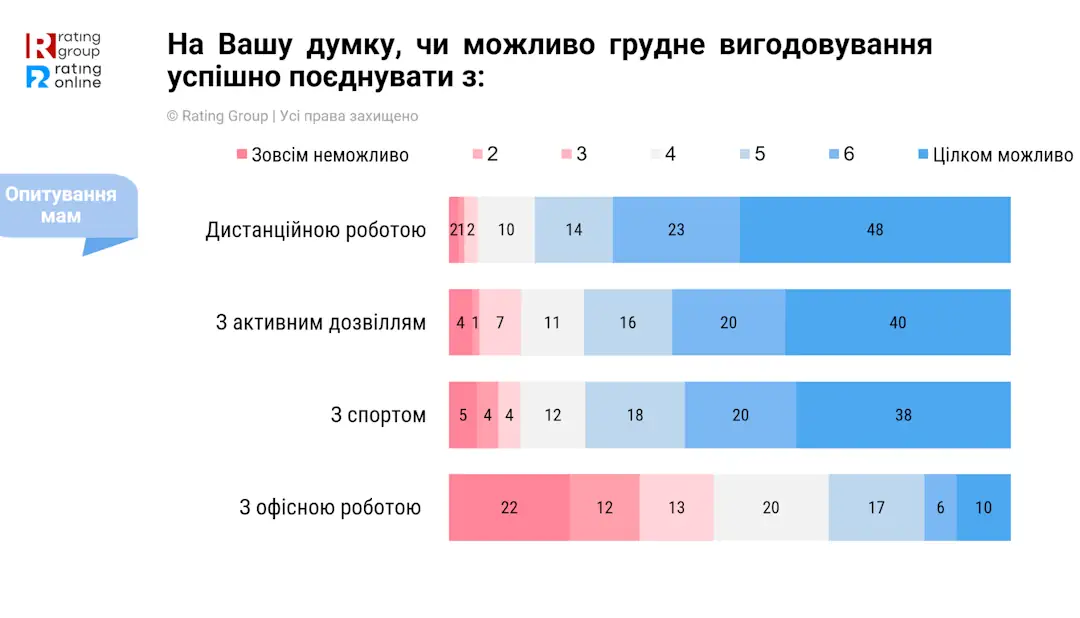
Moms mostly agree that breastfeeding can be successfully combined with leisure, sports and remote work, although mothers with BF have much more confidence in this.
- About 40% of breastfeeding mothers believe that feeding can even be combined with office work, while among mothers who use formula this share is twice as low. Breastfeeding mothers who already have part-time or hybrid work are the most confident that this is possible.
- Overall, the employment rate of mothers does not depend on the type of feeding their child receives: around 45% of surveyed mothers with children aged 0–2 are currently working full-time or part-time, and this показатель is almost the same across different feeding types. Mothers who practice mixed feeding are relatively more likely to have office-based jobs.
- Among women with office or semi-office work formats, about half report having the opportunity to breastfeed at work (availability of a mother-and-child room or a flexible schedule). However, among formula-feeding mothers working in offices, the majority indicate that they do not have such an opportunity.
Feeding experience
Help with feeding
- 65% received assistance from maternity staff in setting up BF, 27% - did not receive.
- 42% received advice on breastfeeding outside the maternity hospital: among them 40% — from a private consultant (more often in large cities); 35% from a family doctor; 34% — consulted with relatives (more often in villages); 18% - a public nurse.
- 72% felt support from loved ones, relatives in the process of establishing breastfeeding. The most important thing for them was the support of the husband— 55%, already in second place — parents (23%), sisters (7%). 18% did not feel support from relatives.
Having support is very important to establish breastfeeding
Breastfeeding rate depending on the availability of support:
- Among those who had skin-to-skin contact within the first hour after birth, the breastfeeding rate is 65% (vs. 49% among those who did not).
- Among those who received help from maternity staff, the breastfeeding rate is 66% (vs. 54% among those who did not receive help).
- Among those who felt support from relatives: 67% (vs. 48% among those without such support).
- Among those primarily supported by partners: 69% (vs. 56% among those supported by parents).
Feeding difficulties
- In general, the main challenges related to breastfeeding were experienced both by mothers who switched to formula and those who continued breastfeeding. These include physical pain, improper latch, emotional fatigue, and overall physical exhaustion.
- Mothers who switched to formula after the first month more often report emotional exhaustion, stress, and inability to constantly stay with the child.
- Regarding personal comfort, breastfeeding mothers were most concerned about milk leakage (37%), inconvenience of feeding outside the home (31%), and the need to constantly be with the child (26%).
- Around 20% were also concerned about milk let-down (sweating), inconvenience of night feedings, the need for special clothing, and the baby scratching during feeding.
- Diet, body changes, or breast sensitivity were less significant concerns for breastfeeding mothers. However, among those who switched to formula by personal choice, concerns about diet and body shape were more prominent.
Completion of feeding
- Nearly 60% stop breastfeeding before the child reaches 1.5 years (among those who breastfed). About a quarter stop between 1.5 and 1 year 11 months. Only 17% continue until age 2 or later.
- Mothers who stopped breastfeeding before 1.5 years often mention night feedings and sleep deprivation as the biggest difficulties. They also more frequently report emotional fatigue.
- Overall, reasons for stopping before age 2 include personal choice, discomfort, and exhaustion. Less frequently mentioned are the child refusing or being “old enough” (usually referring to children older than 1.5 years).
- Among those who stopped before one year, key reasons also include personal discomfort and the desire for the child to be more independent.
Switching to formula
- 42% started using formula from the first days in the maternity hospital, and another 40% did so within the first three months.
- 79% described the decision to switch to formula as forced, while 14% said it was their personal choice. However, 53% made the decision independently, while only 36% did so on the advice of a pediatrician (12% on advice from others). Those who followed medical advice more often mention concerns about the child’s weight.
- The main reasons for switching to formula were the feeling that the child is hungry (40%) and insufficient milk supply (40%). Secondary reasons include latch problems, concerns about weight gain, emotional exhaustion, and stress. Medical contraindications are rarely cited.
- At the same time, pediatricians note that, alongside lack of milk, a common reason is also the mother’s personal choice.
- For working mothers, in addition to insufficient lactation, returning to work and inability to stay constantly with the child is also a reason.
- Mothers who switched by personal choice cite personal discomfort, emotional exhaustion, and physical pain during feeding. Difficulties feeding outside the home are among the main limitations. They are also more concerned about milk leakage, attachment to the child, and dietary restrictions.
Doctors’ survey – breastfeeding practices
- 43% of doctors (family doctors and pediatricians working with newborns) frequently encounter cases where infants switch to formula within the first 6 months. This is reported more often by doctors in public practice.
- 21% of doctors rely on national guidelines for introducing formula, 34% on international recommendations, and 41% make decisions individually. Younger doctors and those in private practice are more likely to follow international recommendations.
- 24% of doctors have completed certification courses on lactation, 51% attended short trainings, and 52% studied independently. Full certification is more common among doctors in regional centers, younger doctors, and pediatricians.
- One in ten doctors considers breastfeeding a two-year-old child abnormal. 57% say it is completely normal, 21% rather normal, 11% undecided, and 12% rather abnormal.
- The more knowledgeable doctors are about breastfeeding, the more positively they assess feeding up to two years (73% “completely normal” among those with certification vs. 47% among those self-taught). Doctors who follow international guidelines are also more likely to consider it normal (65% vs. 44% among those using national protocols).
- 52% of doctors recommend breastfeeding for at least 2 years (40% up to 2 years, 12% up to 3 years). 42% recommend shorter durations. Doctors with lactation training more often recommend breastfeeding for at least 2 years.
- When parents consider switching to formula, about half of doctors insist on maintaining breastfeeding, while the other half suggest continuing but also provide guidance on formula. Older and more experienced doctors are more likely to insist on maintaining breastfeeding.
- Doctors generally recommend switching to formula in cases of medical contraindications or insufficient weight gain (around 60%). Secondary reasons (around 40%) include insufficient milk supply or inability of the mother to stay constantly with the child. Less frequently (10–15%) they recommend switching due to latch problems or breast pain.
When the mother complains of insufficient milk:
- most doctors (80-90%) observe the weight gain of the child, ask about attachment and feeding regimen, attachment technique;
- 75% also observe the further behavior of the child and the frequency of feedings;
- 58% examine the mother at the reception;
- 19% refer their mother to a lactation consultation.
Doctors with lactation training are more likely to examine mothers and refer them to specialists. More experienced doctors also tend to conduct such examinations more often.
About Family 360° technology
The Rating Group team launched the technology Family 360° for family surveys, where the child and his environment are in the center, a survey is conducted by parents, family members, in some cases - teachers, doctors, psychologists, etc. In this study, the focus was on interviewing mothers of babies, as well as their environment, including pediatricians.
The Rating Group is one of the largest research institutions in Ukraine, which has been on the market since 2008. The company is registered in Ukraine and has significant experience in conducting sociological surveys in Ukraine and abroad. The group includes: Sociological Group Rating, Research Lab Rating Lab, Rating Online platform and Rating Call Center.

In the third issue of “Common Contours,” we compare how gender (in)equality is perceived in Ukraine and the EU.
We asked respondents to assess who is treated better in Ukraine across different areas of life: men, women, or everyone equally. The areas include
- healthcare institutions,
- educational institutions (schools, universities),
- mass media,
- the workplace,
- advertising,
- politics.
We remind you that “Common Contours” is a survey exploring Ukraine in a European context, where we mirror questions and compare data from our own surveys of Ukrainians with data from other surveys conducted in EU countries, candidate countries, and other European countries. In this issue, we compare data from our own research with Eurobarometer data — a series of official EU surveys conducted by the European Commission and the European Parliament.
Note: Eurobarometer data belongs directly to the EU, and we are grateful for open access to it.
Perceptions of gender (in)equality

- Equality is most visible in healthcare institutions, educational institutions, and the media (around 70% of respondents said that men and women are treated equally in these areas).
- A majority also believe that equality exists in the workplace (62%) and in advertising (57%).
- At the same time, respondents perceive the greatest inequality in politics: slightly more than one-third report equal treatment, while nearly half (47%) say that men are treated better in politics. In this context, there are also notable differences in responses between men and women.
When comparing perceptions of who is treated better in society:
- women are perceived to be treated relatively better in advertising (26% vs. 5% who say men are treated better), in schools and universities (17% vs. 8%), and in healthcare institutions (14% vs. 10%).
- men are more often seen as receiving better treatment in politics (47% say men are favored vs. only 6% for women) and, to some extent, in the workplace (17% vs. 14%).
Comparison between Ukraine and EU countries
- Ukrainians and respondents from the 27 EU countries share a high level of optimism regarding equality in healthcare and education: around 70% in both Ukraine and the EU on average say that men and women are treated equally in these areas. Similarly, in both Ukraine and the EU, more than half of respondents report equal treatment in advertising.
- At the same time, Ukrainians are significantly more optimistic about equality in the workplace and in the media. For example, in Ukraine, nearly two-thirds of respondents say that men and women are treated equally at work, whereas in EU countries this view is held by about 40% on average (and around half of respondents in the EU believe that men are treated better at work).
- As for politics, views in Ukraine and the EU are fairly similar. In both cases, more than one-third of respondents report equality, but more often respondents point to an advantage for men (47% in Ukraine and 54% in EU countries).
Breakdown by sectors
Healthcare institutions
- 70% of Ukrainians believe that men and women are treated equally in healthcare institutions, while 14% report a preference in favor of women.
- Men are noticeably more likely than women to say that women are treated better in healthcare. For example, one in five men aged 36–50 holds this view, compared to one in ten women in the same age group.
- Ukraine’s indicators are close to the EU average: the share of those who report equal treatment is nearly identical (around 70%). At the same time, Ukrainians are more likely than the EU average to report a preference for women (14% vs. 9% in the EU) and less likely to report better treatment of men (10% vs. 19%).
Schools and universities
- Nearly 70% of respondents in Ukraine say that men and women are treated equally in educational institutions. 17% report better treatment of women, while 8% say men are treated better.
- In this context, women are more likely than men to say that treatment is equal. Men are significantly more likely than women to report that women are treated better in education. For example, among men aged 18–35, 29% say that women are treated better in educational institutions, compared to 9% of women in the same age group. Similarly, 29% of men aged 36–50 share this view, compared to 14% of women in that age group.
- Ukraine’s indicators are similar to those of the EU: the share reporting equal treatment is nearly the same (around two-thirds). However, Ukrainians are more likely to report better treatment of women in education (17% vs. 9% in the EU) and less likely to report better treatment of men (8% vs. 20% in the EU).
Media
- In the context of media, 68% of respondents in Ukraine say that men and women are treated equally. Another 13% report more positive treatment of women, while 11% say men are treated better.
- There are no major differences between how men and women respond to this question overall. However, some differences appear in the older age group (51+): men are more likely to report better treatment of women (17% vs. 7% among women), while women are more likely to report better treatment of men (17% vs. 6% among men).
- Ukrainians assess equality in the media more optimistically than respondents in EU countries on average. While about two-thirds in Ukraine report equal treatment, this figure is 54% in the EU. In addition, 11% in Ukraine say men are treated better, compared to an EU average of 31% — nearly three times higher.
Workplace
- Two-thirds of Ukrainians believe that men and women are treated equally at work (62%). 17% say that men are treated better, while 14% believe that women receive better treatment in this sphere.
- The largest differences in responses are observed among younger respondents (aged 18–35). Young men and women tend to report preferences in favor of each other. For example, among young men, 23% believe that women are treated better at work (compared to 5% of women in the same age group). Among young women, in turn, 23% say that men are treated better (compared to 12% of young men).
- In Ukraine, significantly more respondents report equality at work than in EU countries (62% vs. 40%). Conversely, in EU countries, respondents are much more likely to say that men are favored in the workplace (51% vs. 17% in Ukraine) and less likely to report better treatment of women (6% vs. 14% in Ukraine).
Advertising
- Regarding advertising, 57% of respondents in Ukraine say that men and women are treated equally. A quarter of respondents (26%) report better treatment of women, while only 5% believe that men are treated better. Notably, 12% answered “don’t know.”
- The largest differences in responses are observed between men and women aged 36–50. Among men in this group, 45% say treatment is equal, while nearly the same share (44%) say women are treated better. In contrast, women aged 36–50 mostly report equal treatment (66%), with 16% noting better treatment of women.
- In the context of advertising, Ukrainians again report equal treatment more often than respondents in the EU on average (68% vs. 54%). Meanwhile, in the EU, respondents are three times more likely than in Ukraine to say that men are treated better in advertising (31% vs. 11% in Ukraine).
Politics
- Around one-third of Ukrainians (37%) believe that men and women are treated equally in politics. However, a relative majority (47%) say that men are treated better. Only 6% report better treatment of women, while another 10% are undecided.
- While men and women in other age groups show relatively similar response patterns, significant differences appear among younger respondents (aged 18–35). Among young women, only one-third believe that treatment is equal, while a majority (61%) say that men are favored. Young men see the situation differently: half (52%) report equal treatment, while 40% say men are favored.
- Assessments in Ukraine and the EU are broadly similar on this issue: in both cases, about one-third report equal treatment, while 47% in Ukraine and 54% in the EU on average say that men are treated better.
Rating Group is one of the largest research institutions in Ukraine, operating since 2008. The company is registered in Ukraine and has extensive experience in conducting sociological surveys both domestically and internationally. The group includes: Sociological Group Rating, the research laboratory Rating Lab, the platform Rating Online, and the Rating Call Center.

To what extent are Ukrainian youth involved in volunteering and public activity in general? What areas are she most interested in and what are the barriers to participation?
Fall 2025 Rating Group (Sociological group “Rating”) asked about this more than 2 thousand Ukrainians aged 14-35 in Ukraine (as well as 600 representatives of Ukrainian youth in the countries of the European Union). Below are key findings in the context of civic participation of young people in Ukraine.
These findings are part of a large combined study “Impact of War on Youth in Ukraine 2025”, conducted by the Rating Group on the initiative of the Ministry of Youth and Sports of Ukraine and the support of the United Nations Development Programme (UNDP) in Ukraine and the Government of Denmark. The research project demonstrates how Ukrainian youth feel and change during a full-scale war.
Level of involvement in volunteering

- More than half of young people in Ukraine have experience of volunteering during a full-scale invasion (53%): 27% volunteered before the full-scale invasion and continued after it, while 26% joined just after February 24, 2022.
- Most often, young people in Ukraine who have volunteered are involved on their own initiative (55%), through relatives, friends and acquaintances (42%) or through an educational institution (11%).
- We also asked young people who not are engaged in volunteering, about barriers to participation. Most often in the list denote lack of free time (56%), skills and experience (24%) information (14%), interest or motivation (13%), and in some cases distrust of initiatives (8%).
The level of involvement in public activity
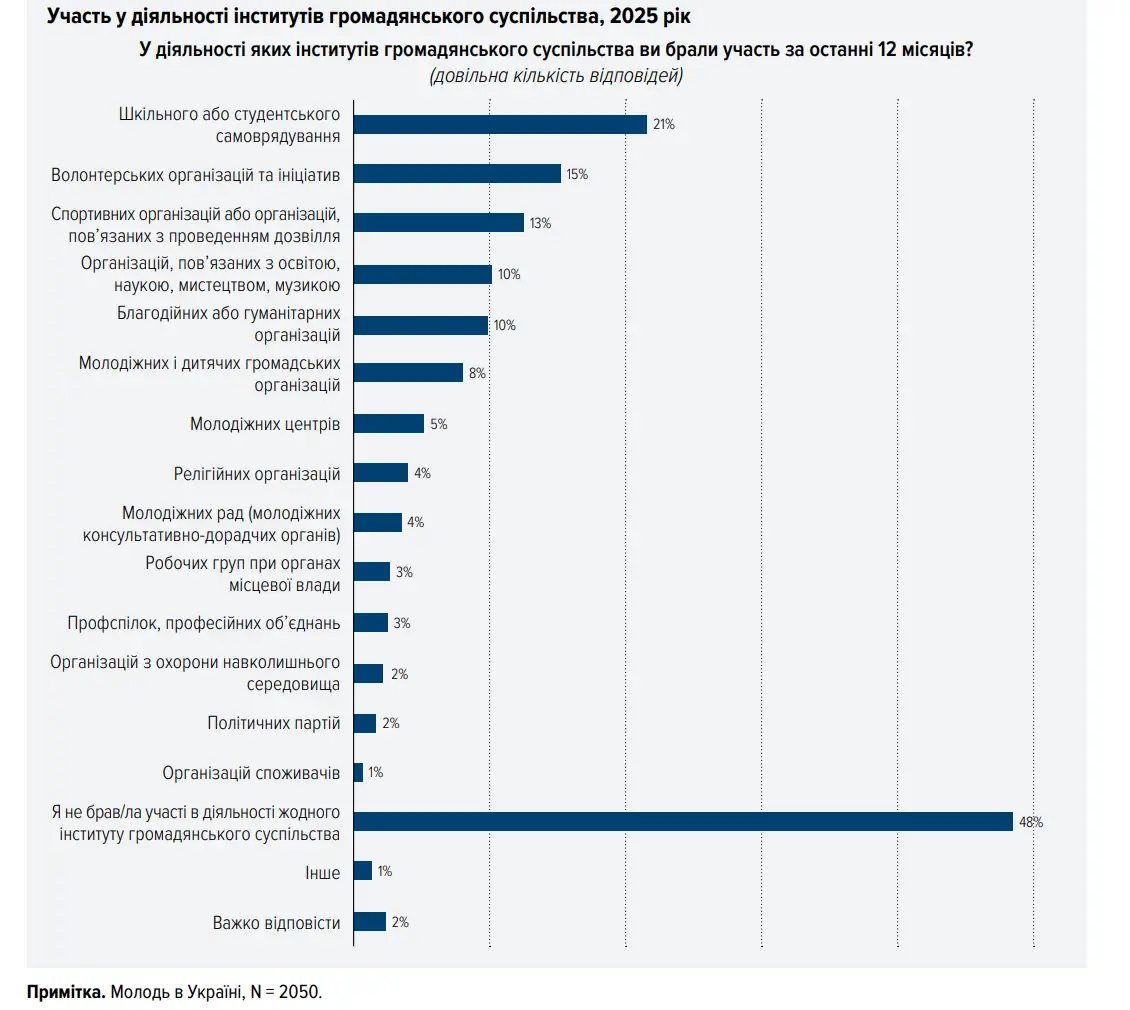
- The vast majority of young people in Ukraine (about 80%) trust public and volunteer associations. At the same time, the indicator of personal participation in civil society institutions is divided roughly in half: 48% of young people directly noted that they had not participated in the last 12 months at the time of the survey.
- 21% of young people participated in school or student self-government, 13-15% - in sports or volunteer organizations, about 10% - in educational, cultural, scientific or charitable organizations.
- 8% of young people said they would most like to work in the public sector.
- Three quarters of young respondents (77%) are ready to participate in community recovery processes. However, more than half (54%) do not feel able to personally influence changes in the community, 44% do.
- Most often, young people who do not feel the levers of influence in the life of the community explain this by lack of knowledge and experience (33%), the idea that their opinion will not change anything (30%), a lack of understanding of how they can influence (30%), lack of visible examples of positive change (16%), distrust of decision-making processes (14%).
Youth centers
- A relative majority of young people in Ukraine state that there is a youth center in their community (45%), whereas a third say that there is no such center in the community, and another 19% answered “it is difficult to answer”.
- Among those young people who noted the presence of a youth center in the community, 17% visit the centers once a month or more often.
- In general, almost half of young people visit youth centers at least occasionally.
Areas of activity of interest to young people

- The most interest among young people is the participation formats related to development and gaining new experiences: for example, traineeships (27%) and youth exchanges within Ukraine (25%).
- In addition, 20% of young people are interested in art and cultural projects, 18% - public events (festivals, forums), 18 - educational events (trainings, etc.), 16% - discussion clubs and debates.
Rating Group is one of the largest research institutions in Ukraine, which has been on the market since 2008. The company is registered in Ukraine and has significant experience in conducting sociological surveys in Ukraine and abroad. The group includes: Sociological Group Rating, Research Lab Rating Lab, Rating Online platform and Rating Call Center.

Despite war fatigue and growing economic concerns, Ukrainians maintain a democratic orientation, a high level of trust in key security institutions, and support for the European course. This is evidenced by a survey conducted by the Sociological Group "Rating" for the Westminster Foundation for Democracy (January 2026).
The study covered topics such as the democratic resilience of Ukrainian society during wartime, trust in state and public institutions, support for European and Euro-Atlantic integration, attitudes towards elections during martial law, assessments of public administration effectiveness, the role of veterans in socio-political life, and the impact of war and economic difficulties on public sentiment.
Key findings:
- Ukrainians maintain a clear pro-European course: the majority supports EU and NATO membership, and is ready to back complex reforms related to European integration, even despite a possible temporary decline in living standards.
- Security and public institutions enjoy the highest public trust - primarily the Armed Forces of Ukraine, volunteer initiatives, and veteran communities.
- Despite supporting democracy as a model for state development, Ukrainians are cautious about holding national elections during the war, although local elections are viewed somewhat more positively.
- There is a growing demand in society for effective public administration, transparency, and accountability of authorities. The majority critically assesses the efficiency of public funds utilization.
- The war significantly impacts public sentiment: Ukrainians speak of fatigue, economic difficulties, and psychological exhaustion, yet this does not translate into abandoning the state's democratic course.
- Young people demonstrate more open views on political participation and the modernization of democratic processes — specifically, they more frequently support holding elections during wartime and have a more positive attitude towards electronic voting.
Rating Group is one of Ukraine's largest research institutions, operating since 2008. The company is registered in Ukraine and has significant experience conducting sociological surveys both within Ukraine and abroad. The group includes: Sociological Group Rating, Rating Lab research laboratory, Rating Online platform, and Rating Call Center.

How do gender stereotypes differ between Ukraine and EU countries? Find out in the second issue of the “Shared Contours” research series.
We remind you that “Shared Contours” is a survey exploring Ukraine in a European context, where we mirror questions and compare data from our own surveys of Ukrainians with data from other surveys conducted in EU countries, candidate countries, and other European countries. In this issue, we compare data from our own research with Eurobarometer data — a series of official EU surveys conducted by the European Commission and the European Parliament.
Note: Eurobarometer data belongs directly to the EU, and we are grateful for open access to it.
Key findings
We asked respondents to express their views on five statements about men and women drawn from the Eurobarometer survey.
"The most important role of a woman is to take care of the home and family"
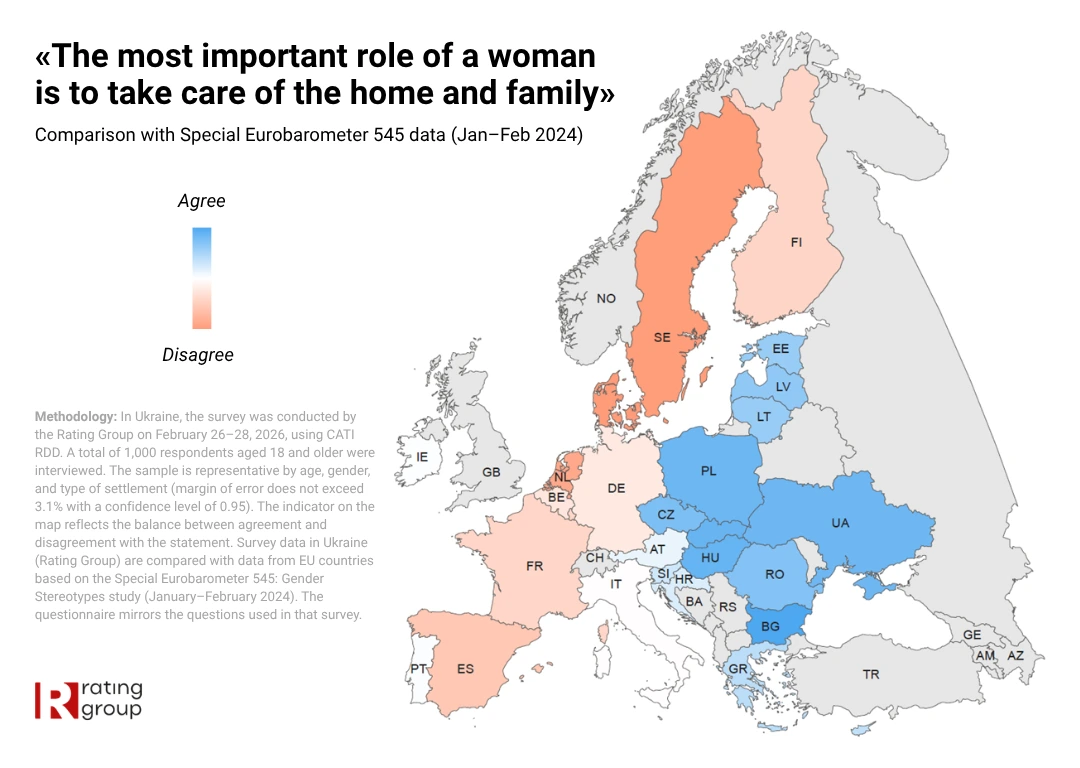
- 66% of Ukrainian respondents agree with this statement, while one-third disagree.
- In this context, the views of Ukrainians align with the general trend observed in Eastern Europe. However, Ukrainians support this statement less than respondents in countries such as Slovakia (75%), Bulgaria (74%), and Hungary (71%).
- At the same time, Ukrainians agree with this stereotype significantly more than EU citizens on average (42%).
"Overall, family life suffers when the mother works full-time"
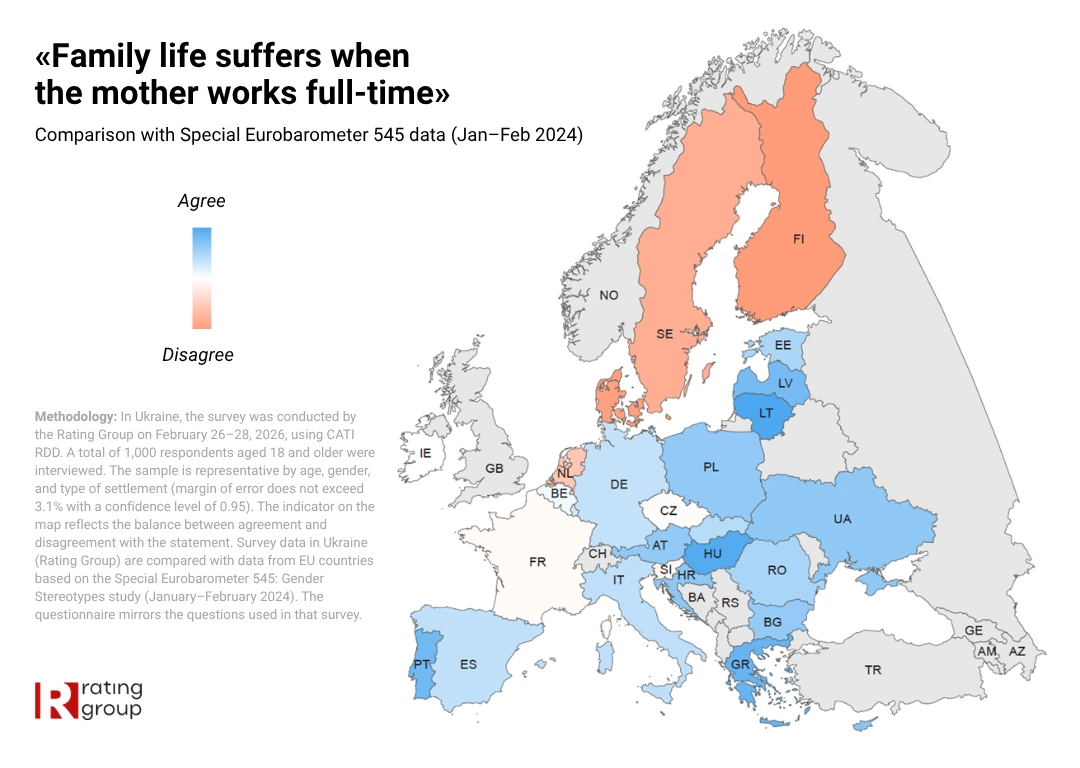
- The statement is supported by a majority of respondents in Ukraine (59%), while more than one-third (38%) disagree.
- Overall, this is a case where Northern European countries tend to stand out — there, the stereotype is supported significantly less. At the same time, on average in the EU, this idea is still more often supported (51%).
- Thus, overall, the views of Ukrainians in this context are comparable to the EU average.
"The most important role of a man is to earn money"
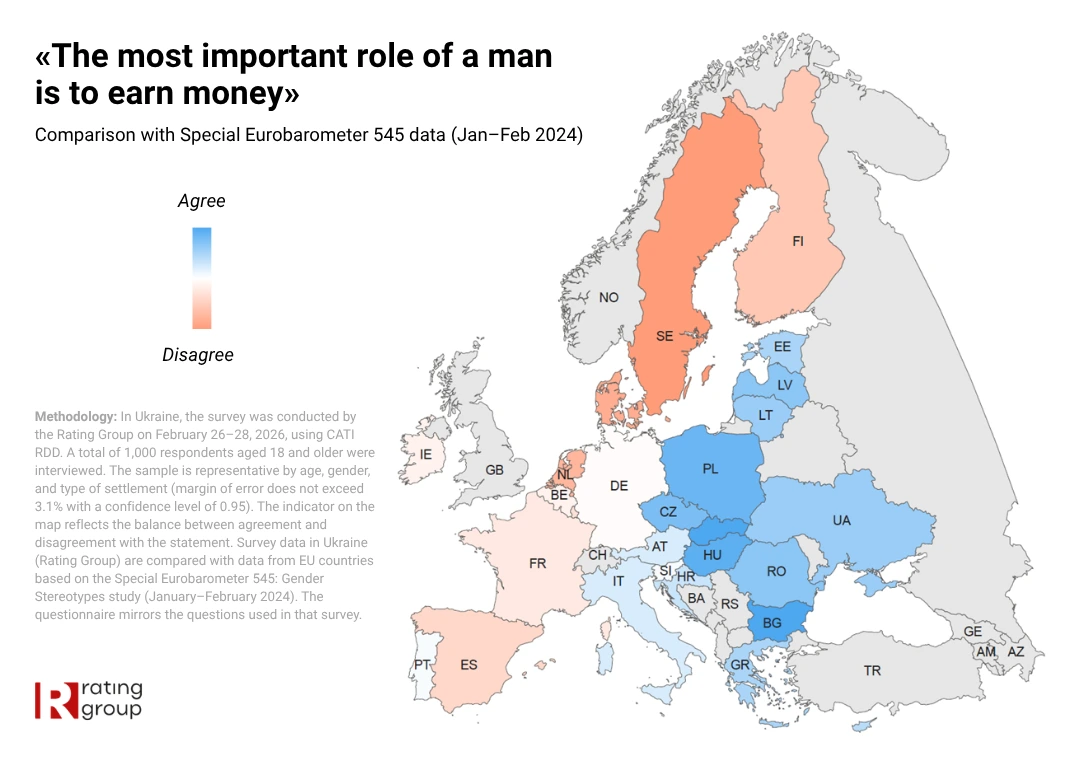
- Opinions on this statement in Ukraine are fairly divided: more than half agree (58%), while 40% do not support it.
- In this regard, Ukrainian society is close to countries such as Romania (60% agree) and the Baltic states (Latvia — 60%, Lithuania — 57%, Estonia — 55%).
- On average, across the 27 EU countries, 42% support this statement, meaning Ukraine appears more conservative in this respect.
"Women are not ambitious enough to hold top leadership positions in organizations"
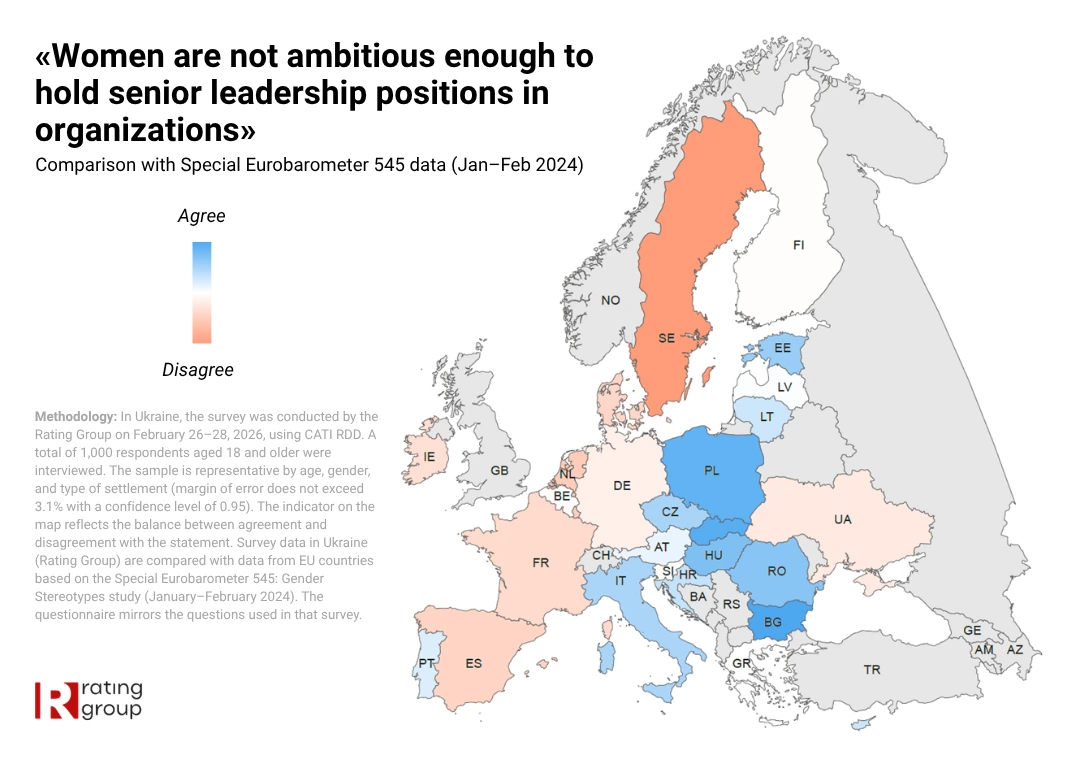
- An overwhelming majority of Ukrainians (81%) disagree with this career-related stereotype.
- In fact, in terms of disagreement with this statement, Ukraine exceeds the average level across EU countries and nearly all Eastern European countries. For comparison, 56% disagree in Poland and 61% in Hungary.
- This is essentially a case where Ukrainians reject stereotypes even more strongly than EU citizens on average (where 74% disagree with the statement).
"Overall, men are by nature less competent than women at performing household duties"
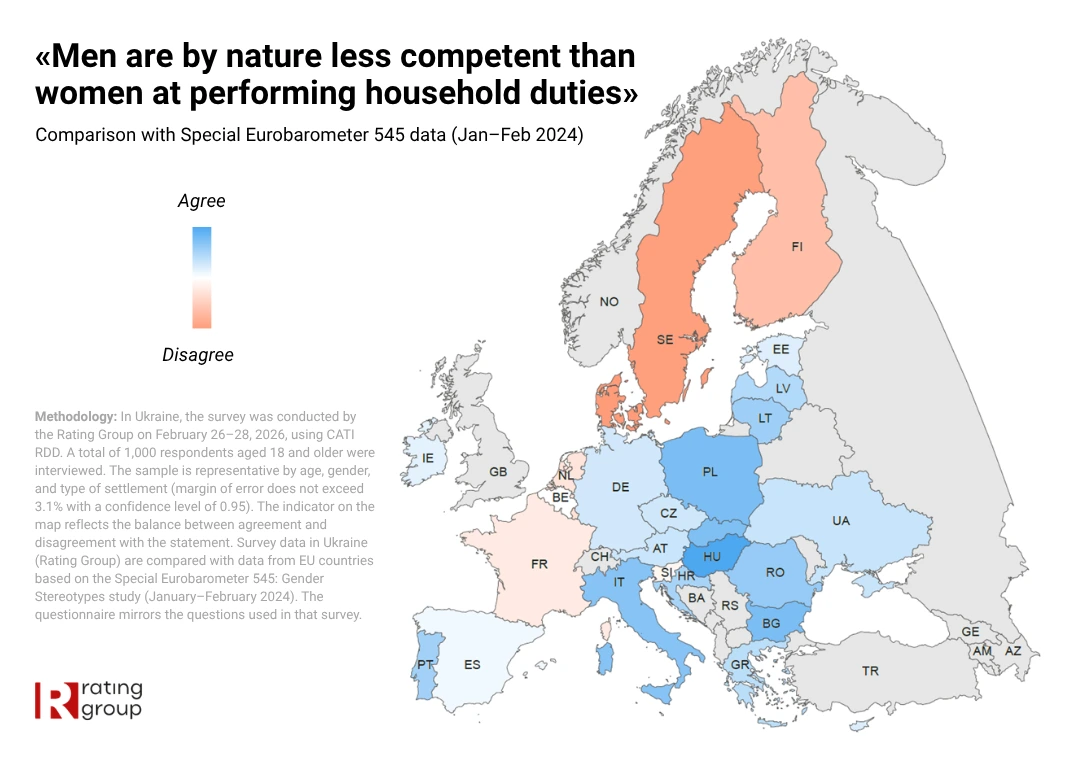
- Here, opinions among Ukrainians are almost evenly split: 49% support the statement, while 48% do not.
- Respondents in Ukraine are less likely to support this stereotype than their neighbors in Hungary (84% support), Poland (64%), and Slovakia (63%), as well as respondents in countries such as Italy (63%) and Bulgaria (61%).
- Overall, the distribution of opinions in Ukraine is very close to the EU average. The only notable difference is that, on average, fewer people in EU countries fully agree with the stereotype (15% compared to 20% in Ukraine).
Summary: The Eastern European trend and rejection of evaluating professional abilities based on gender
- Ukrainians generally do not support the idea that men or women are less capable of performing certain tasks (women in professional roles, men in household roles). This reflects a rejection of the notion that personal abilities depend on gender.
- At the same time, respondents in Ukraine tend to support a more traditional division of roles: men as breadwinners and women as caregivers responsible for the home and family.
- Less conservative views are more common among younger respondents aged 18–35, particularly among women.
- Overall, Ukrainian views on these gender issues are more conservative than those observed in Central, Northern, Western, and Southern Europe.
- Ukraine reflects broader trends typical of Eastern European countries, although in some cases Ukrainians are even less prone to gender stereotypes than neighboring societies. For example, the statement about women lacking ambition for leadership positions is rejected much more strongly in Ukraine than in Poland or Hungary.
Rating Group is one of the largest research institutions in Ukraine, operating since 2008. The company is registered in Ukraine and has extensive experience in conducting sociological surveys both domestically and internationally. The group includes: Sociological Group Rating, the research laboratory Rating Lab, the platform Rating Online, and the Rating Call Center.

What kind of self-realization do young Ukrainians seek? In which fields do they want to work, and how do they set their priorities?
In autumn 2025, Rating Group (Sociological Group “Rating”) surveyed more than 2,000 Ukrainians aged 14–35 in Ukraine, as well as 600 representatives of Ukrainian youth in European Union countries. Below we present the key findings of the quantitative phase in the context of professional self-realization.
These findings are part of a large-scale mixed-method study, “The Impact of War on Youth in Ukraine 2025,” conducted by Rating Group at the initiative of the Ministry of Youth and Sports of Ukraine, with the support of the United Nations Development Programme (UNDP) in Ukraine and the Government of Denmark. The research project highlights how Ukrainian youth feel and how they are changing during the full-scale war.
Priorities of young people over the next 5 years
Financial independence and self-realization are the key personal goals of young Ukrainians for the next five years.
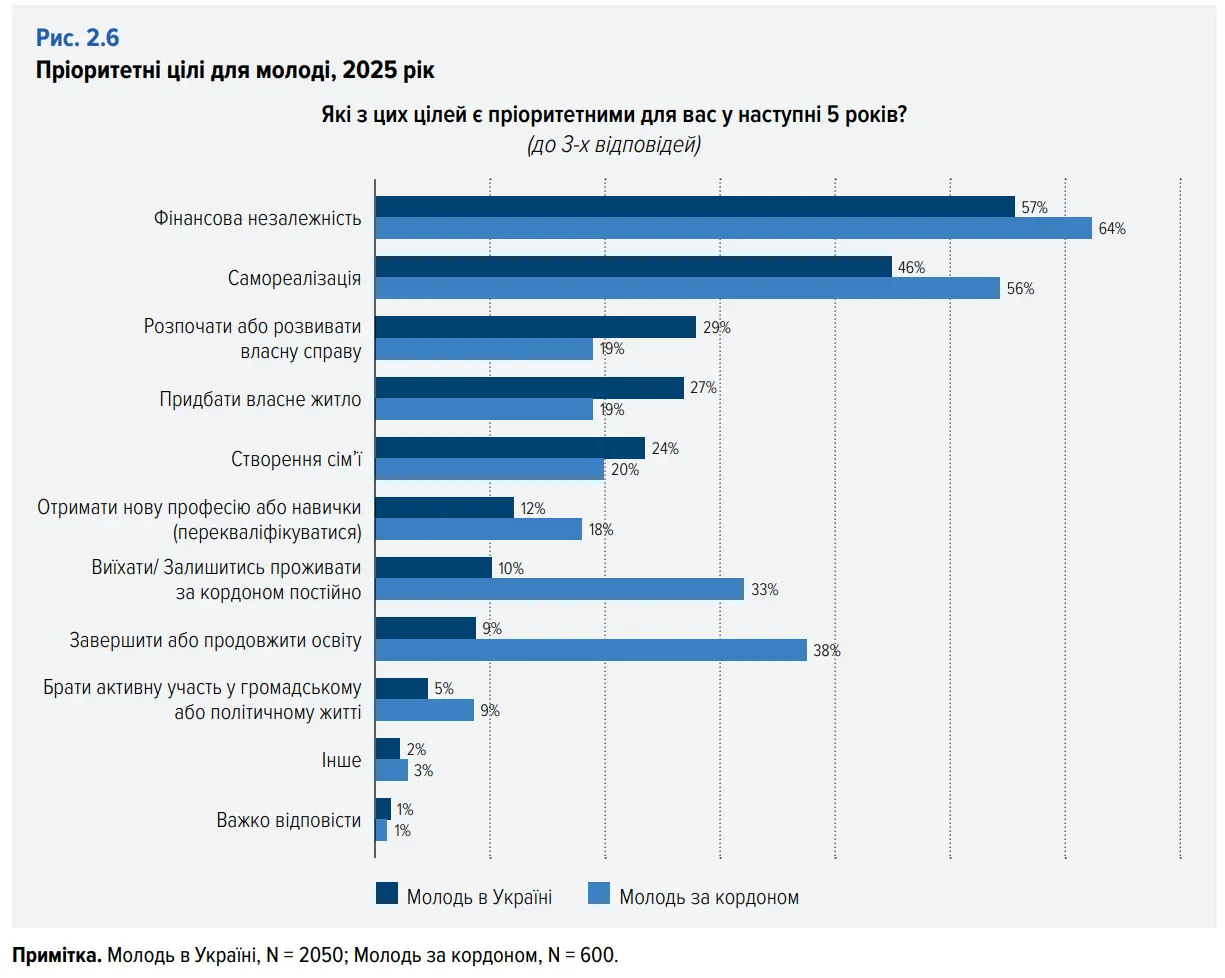
- The main personal priorities are financial independence (57% in Ukraine and 64% abroad) and self-realization (46% and 56%, respectively). In Ukraine, financial independence is more often emphasized by respondents aged 14–19.
- Young people in Ukraine are more likely to aspire to start their own business (29% compared to 19% among Ukrainian youth in the EU) and to purchase housing (27% compared to 19%).
- It is also expected that respondents aged 20–24 (37%) and 25–29 (30%) are more likely to plan starting a family within the next five years.
- Ukrainian youth abroad often mention the goal of settling abroad (33%), which aligns with plans to complete or continue their education (28%).
Where do they want to work?
Own business, IT, creative professions, and law are the most popular career paths among Ukrainian youth.
- Two-thirds of surveyed young people in Ukraine want to work in the private sector.
- Meanwhile, one in five respondents mentions the public sector, and 8% the civic sector.
- When asked to choose three most desirable professions, young people in Ukraine most often named entrepreneur (30%). Other popular choices include software specialist (17%), designer (18%), lawyer (15%), creative professions (14%), and manager in a commercial company (13%). Military service as a profession attracts 12% of respondents.
- Youth abroad are noticeably more likely to choose the following professions: entrepreneur (38%), software and computer technology specialist (28%), and creative professions (27%). At the same time, a quarter of respondents abroad (27%) selected the option “other profession” (compared to 7% in Ukraine).
Skills young people want to develop
Young people in Ukraine tend to focus more on digital literacy, while Ukrainian youth in the EU place greater emphasis on soft skills, resilience, and entrepreneurial abilities.
We asked respondents to select up to five skills they would like to develop in order to achieve their future plans.
- Among youth in Ukraine, the highest demand is for developing stress resilience and computer literacy (each selected by more than one-third of respondents). Around a quarter also highlighted the importance of creativity, entrepreneurial skills, and critical thinking.
- Youth abroad generally selected more options in this question. They place relatively greater emphasis on stress resilience (44% vs. 36% in Ukraine), entrepreneurial skills (37% vs. 23%), productivity (33% vs. 11%), as well as communication skills, adaptability, leadership, and social inclusion.
- Overall, youth abroad are more oriented toward soft skills related to adaptation and social interaction, while youth in Ukraine are relatively more focused on digital competencies (35% vs. 25% abroad).
Rating Group is one of the largest research institutions in Ukraine, operating since 2008. The company is registered in Ukraine and has extensive experience in conducting sociological research both domestically and internationally. The group includes the Sociological Group “Rating,” the research laboratory Rating Lab, the Rating Online platform, and the Rating Call Center.

Восени 2025 Rating Group (Соціологічна група "Рейтинг") розпитала про це понад 2 тисячі українців віком 14-35 років в Україні (а також 600 представників української молоді в країнах Європейського Союзу) у рамках великого комбінованого дослідження "Вплив війни на молодь в Україні 2025"
Дослідження проводилося Rating Group за ініціативи Міністерства молоді та спорту України й підтримки Програми розвитку ООН (ПРООН, UNDP) в Україні та Уряду Данії. Проєкт демонструє те, як почувається та як змінюється українська молодь під час повномасштабної війни.

Rating Group is launching a special research project titled “Common Contours.” This is a survey exploring Ukraine in a European context, where we mirror questions and compare data from our own surveys of Ukrainians with data from other surveys conducted in EU countries, candidate countries, and other European countries.
In the first release of “Shared Contours,” discover how Ukrainians perceive the European Union compared to other European countries. This time, we compare data from our own research with Eurobarometer data — a series of official EU surveys conducted by the European Commission and the European Parliament.
Note: Eurobarometer data belongs directly to the EU, and we are grateful for open access to it.
Trust in the EU as an institution
A majority of Ukrainians trust the EU as an institution, with the level of trust being slightly higher than in some EU countries.
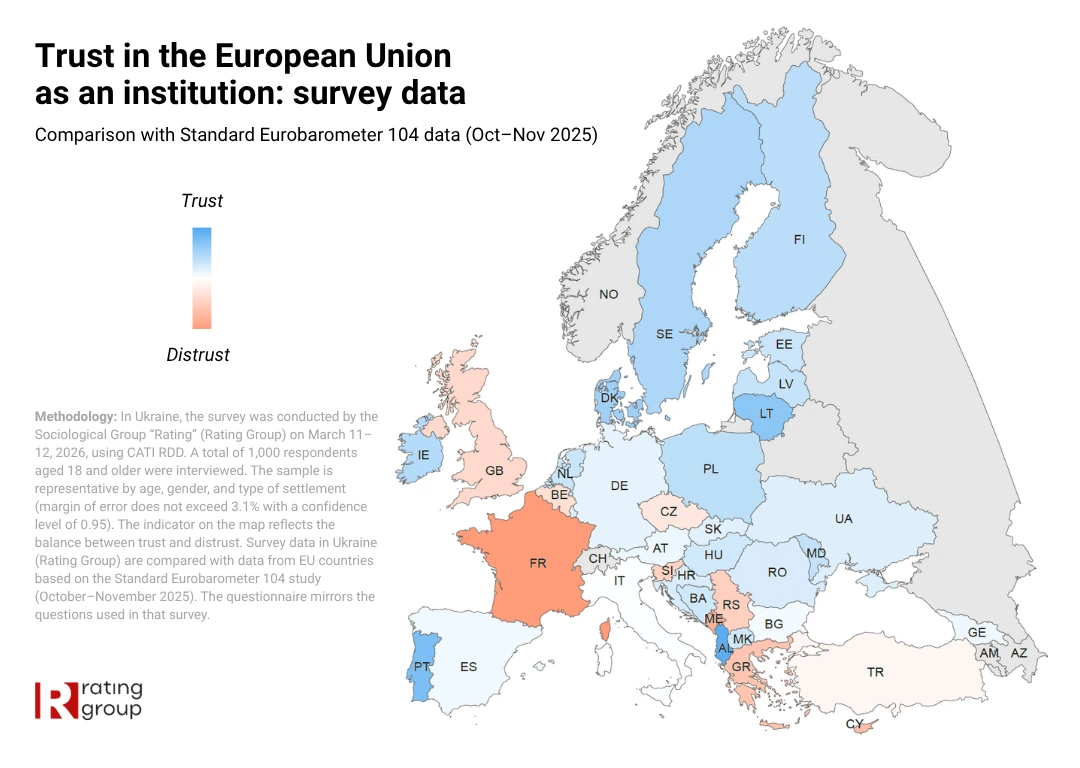
- A majority of Ukrainians trust the EU as an institution (53%), while 41% do not trust it, and another 6% remain undecided.
- In Ukraine, the level of trust in the EU is slightly higher than the average across EU countries themselves (48%).
- In particular, Ukrainians express higher levels of trust in the EU than citizens of several Western, Central, and Southern European countries, including France, Cyprus, Greece, Slovenia, Belgium, the Czech Republic, and Bulgaria.
- Among candidate countries, similar levels of trust in the EU are observed in Moldova (55%) and Bosnia and Herzegovina (56%).
Perceptions of the EU’s future
In the context of war, Ukrainians demonstrate cautious optimism about the future of the EU, along with slightly higher levels of skepticism compared to other candidate countries.
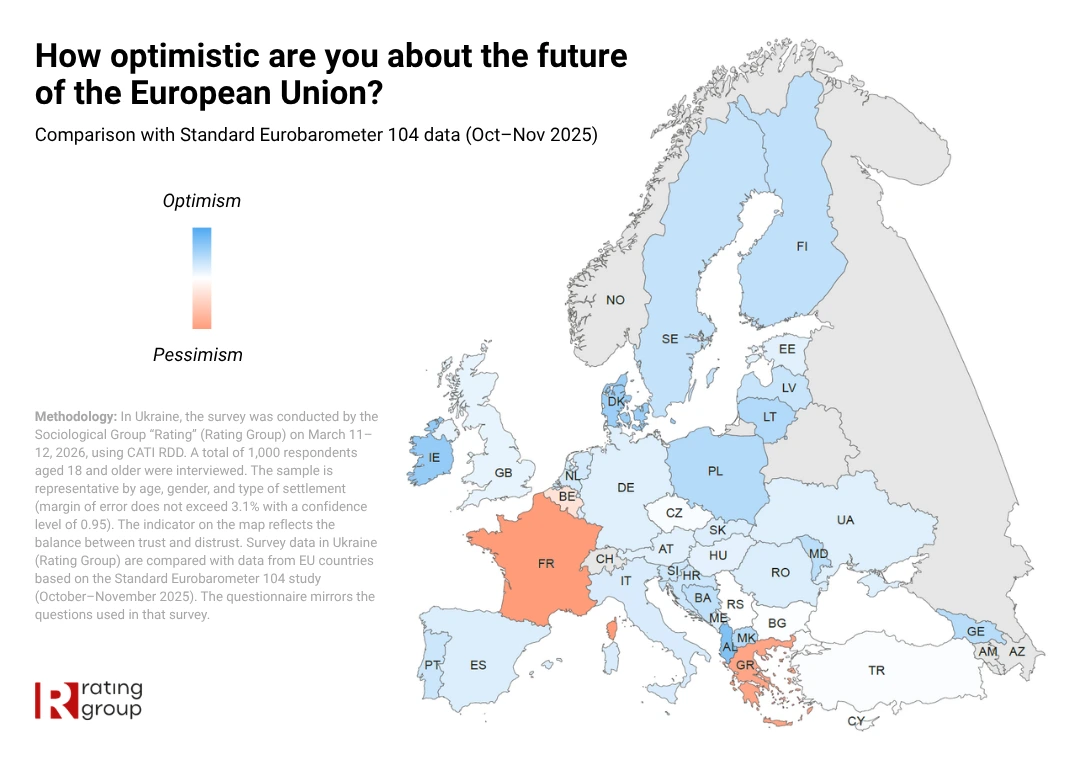
- More than half of respondents in Ukraine are optimistic about the future of the European Union (54%). At the same time, one-third of respondents (35%) hold a pessimistic view, while another 12% remain undecided.
- On average, across EU countries, 59% of respondents are optimistic, while 38% are pessimistic. In terms of the balance between positive and negative perceptions, Ukraine is fairly close to the overall European trend.
- However, Ukraine has a relatively high share of “don’t know” responses compared to most European countries (where this figure typically ranges between 1–5%).
- Among EU candidate countries, Ukraine demonstrates a relatively more restrained outlook. For example, in neighboring Moldova, 64% of respondents express optimistic views.
Emotional perception of the EU
Ukrainians follow the broader European trend of predominantly positive and neutral attitudes toward the EU.
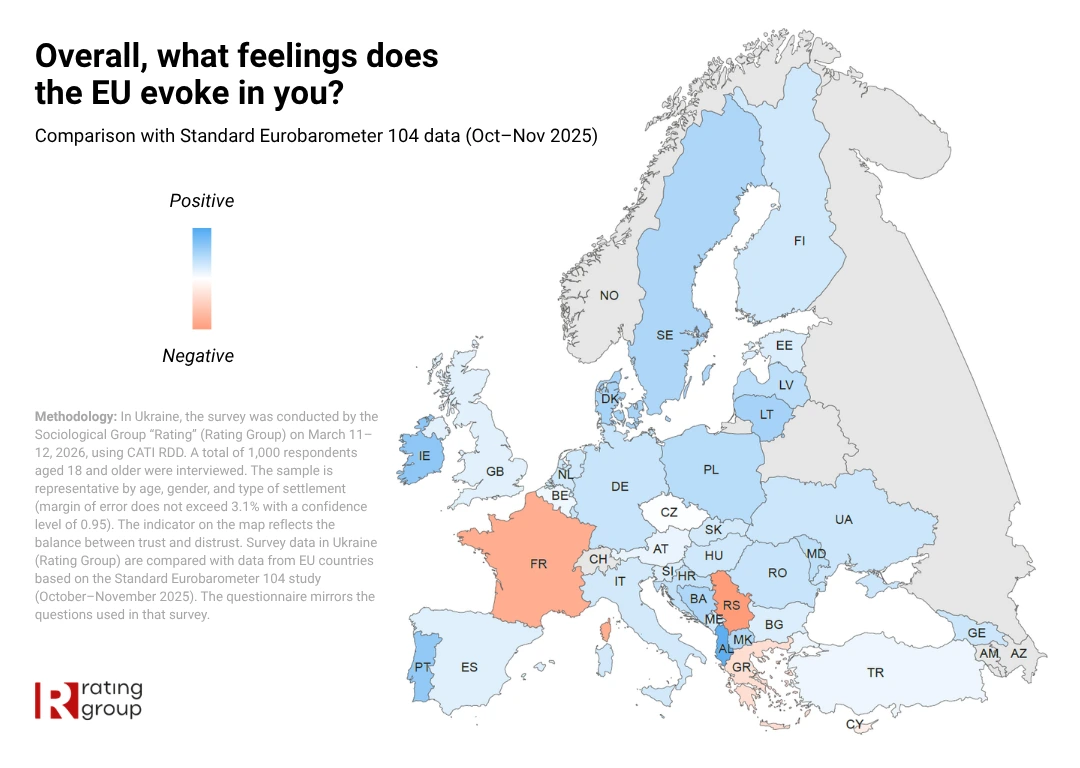
- A relative majority of Ukrainians have neutral feelings toward the EU (46%), while 40% express positive attitudes. Every tenth respondent reports a negative perception.
- In EU countries, on average, 38% report neutral feelings, 42% positive, and 19% negative. This means that in Ukraine there is a higher share of neutral perceptions, but also noticeably lower levels of negative sentiment toward the EU compared to many member states.
- Overall, in terms of the balance between positive and negative perceptions, Ukrainians align with the broader European trend.
- Compared to non-EU countries, perceptions of the EU in Ukraine are more positive than, for example, in Serbia (34%), Georgia (36%), or the United Kingdom (37% positive, but also 20% negative).
Rating Group is one of the largest research institutions in Ukraine, operating since 2008. The company is registered in Ukraine and has extensive experience in conducting sociological surveys both domestically and internationally. The group includes: Sociological Group Rating, the research laboratory Rating Lab, the platform Rating Online, and the Rating Call Center.

February 21 – March 3, 2026 the Sociological Group Rating (Rating Group) conducted a survey among residents of Zakarpattia region regarding their perceptions of the overall situation in the region and specific aspects of economic development.
Assessment of the overall situation
- Opinions on the state of affairs in Zakarpattia region are divided: 45% say things are moving in the right direction, 42% believe they are moving in the wrong direction, while another 13% are undecided.
- Views on the region’s economic growth also differ: half of respondents do not notice any improvement, while 45% believe there is improvement, and 5% are undecided.
- Younger people aged 18–35, more affluent groups, and residents of Uzhhorod tend to be more optimistic about the overall economic situation and growth in the region.
Attitudes toward relocation initiatives to Zakarpattia
- An absolute majority of respondents have a positive attitude toward initiatives to relocate infrastructure from other regions to Zakarpattia to support its development.
- Thus, 74% support the relocation of higher education institutions to Zakarpattia region. Another 18% are neutral, while 6% are negative.
- As for the relocation of enterprises to the region, 68% view it positively, 18% are neutral, and 9% have a negative attitude.
Attitudes toward selected economic initiatives
- The construction of wind power plants in the mountains for electricity generation in the region is also supported by a majority of respondents (68%), while 24% are opposed. The initiative is more popular among residents of villages and other cities, and less supported in Uzhhorod.
- A majority also supports the construction of hydroelectric power plants on rivers (63%), while every fourth respondent (29%) opposes it.
Rating Group is one of the largest research institutions in Ukraine, operating in the market since 2008. The company is registered in Ukraine and has extensive experience in conducting sociological surveys both in Ukraine and abroad. The group includes: Sociological Group Rating, the research laboratory Rating Lab, the platform Rating Online, and the Rating Call Center.

Do Ukrainians notice inequality between men and women? Which gender stereotypes are still widespread, and which have already faded? Are Ukrainians today supporters of a traditional division of gender roles within the family or a couple?
Ultimately, how has Ukrainian society changed in this regard over the past decade?
To explore these questions, at the end of February 2026 Rating Group and the research laboratory Rating Lab surveyed Ukrainians on issues of gender (in)equality, stereotypes, and perceptions of relationships within families and couples. The results are presented in a dynamic perspective, comparing the findings with similar studies conducted in 2015 and 2021.
"Our longitudinal research indicates a gradual transformation of gender perceptions in Ukraine: gender equality is perceived more strongly, traditional stereotypes are weakening, and partnership-based models are becoming more acceptable, especially among young people, who tend to be more progressive and egalitarian,” summarizes Marianna Tkalych, CEO of Rating Lab, Professor, Doctor of Psychological Sciences.
Perception of inequality
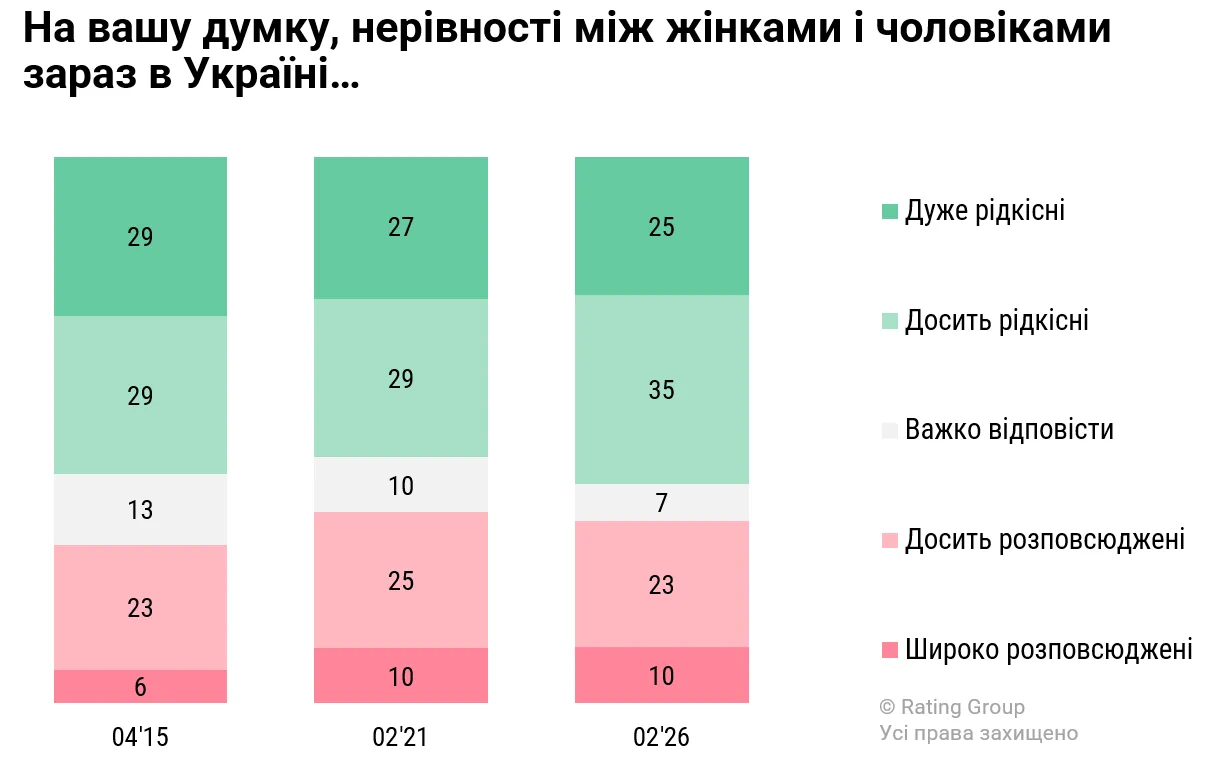
Most Ukrainians consider gender inequality to be a relatively rare phenomenon in the country, and this perception has not changed significantly over the past decade.
- 60% of respondents say inequality between men and women is generally rare in Ukraine. About one third hold the opposite view, while 7% find it difficult to answer.
- Over the last ten years, there have been no major shifts in overall perceptions of this issue.
- However, pessimism has increased among young men aged 18–35: in 2021, 30% of them believed inequality was widespread, whereas today 41% do.
- At the same time, young women aged 18–35 have become somewhat more optimistic: in 2021, 42% in this group believed inequality was widespread, whereas today this share has declined to about one third.
Gender stereotypes
Prejudice regarding men and women is gradually declining in Ukrainian society, with young people increasingly rejecting traditional stereotypes.
Respondents were asked whether they agree or disagree with several gender stereotypes that were previously widespread.
The majority reject almost all of them. The only exception is the belief that a man should fully provide for his family, supported by 69% of respondents.
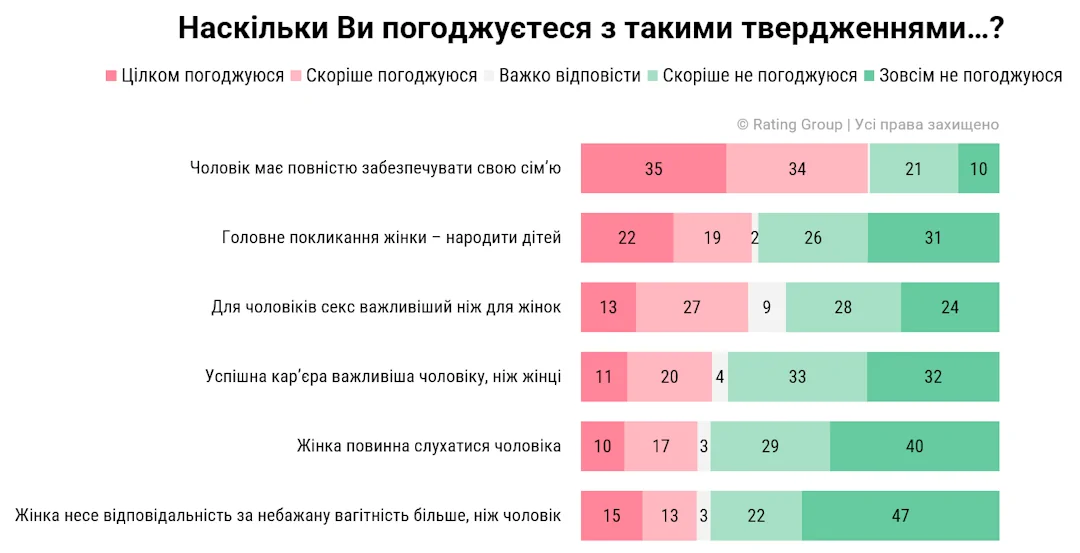
At the same time, all of these stereotypes have become less widespread over the past five years. The most notable declines are in the ideas that a successful career is more important for men and that a woman should obey her husband.
“A man should fully provide for his family”
- This is the only stereotype supported by a majority across all gender and age groups.
- Relatively fewer young women (60%) agree with this statement compared to older women (66%) and men overall (72–74%).
- Support for this idea has gradually decreased over time: the average index on a scale from 1 (“strongly disagree”) to 4 (“strongly agree”) declined from 3.3 in 2015 to 2.9 in 2026.
“A woman’s main calling is to have children", “A successful career is more important for a man than for a woman”
- Most Ukrainians reject these stereotypes. 57% oppose the first statement, while 65% oppose the second.
- Young people stand out particularly strongly in this regard. For example, 75% of young men and 85% of young women aged 18–35 reject the idea that motherhood is a woman’s primary calling.
- By contrast, among respondents aged 51+, the majority still support this idea (54% of women and 59% of men).
“Sex is more important for men than for women”
- Opinions are more evenly divided on this issue. A slight majority (52%) do not support the statement, while 40% agree with it, and 9% are undecided.
- Again, younger respondents are more likely to reject this stereotype: two thirds of men aged 18–35 and 60% of women in the same age group disagree with it.
“A woman should obey her husband", “Women bear more responsibility for unwanted pregnancy than men”
- These stereotypes are rejected by 69% of respondents.
- The shift over time is also significant. The index for the statement “a woman should obey her husband” decreased from 2.8 in 2015 to 2.0 in 2026.
- Similarly, the index for the statement “women bear more responsibility for unwanted pregnancy than men” fell from 2.4 in 2015 to 2.0 today.
Roles in the family and in relationships
В In Ukrainian families and couples, elements of the traditional division of roles still remain. Women are more often responsible for cooking (60%) and household chores (48%), while men are more often seen as earning the main income (68%).
These questions were asked of respondents who currently have or previously had a partner.
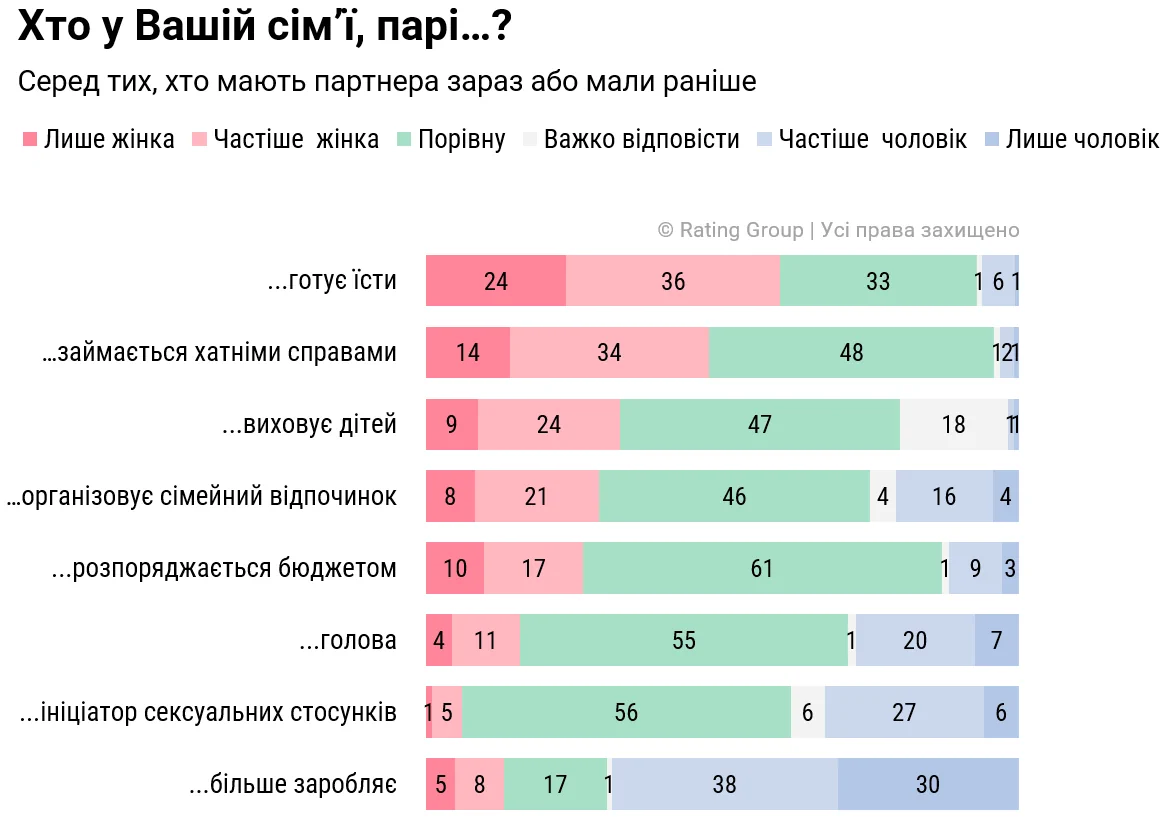
- The responsibilities most often shared equally are managing the family budget (61%), initiating sexual relations (56%), leading the family (55%), child-rearing responsibilities (48%), and organizing leisure activities (46%).
- At the same time, when comparing who is perceived as more responsible — the man or the woman — respondents tend to attribute cooking, household chores, child-rearing, organizing family leisure, and managing the family budget relatively more to women. Men, in turn, are more often associated not only with earning income, but also with family leadership and initiating sexual relations.
- In the dynamic perspective, we observe that cooking, child-rearing, and family leadership are roles gradually shifting toward a partnership-based format, meaning they are increasingly shared equally. However, the role of earning income continues to be delegated primarily to men.
- Young people are significantly less inclined to support traditional models and instead prefer a more egalitarian (equal) distribution of roles. The main exception again concerns income: 80% of men aged 18–35 believe this responsibility should lie with men, and 74% of women in the same age group share this view.
Rating Group is one of the largest research institutions in Ukraine and has been operating on the market since 2008. The company is registered in Ukraine and has extensive experience conducting sociological surveys both in Ukraine and abroad. The group includes Sociological Group Rating, the Rating Lab research laboratory, the Rating Online platform, and the Rating Call Center.

Більшість українців виступає проти блокування Telegram в Україні, але підтримує активніший контроль з боку правоохоронних органів
Про це свідчать результати нового всеукраїнського опитування Соціологічної групи Рейтинг (Rating Group).
Нещодавно в публічному просторі поновилася дискусія щодо блокування (обмеження) роботи месенджера Telegram. Тож наприкінці лютого 2026 Rating Group запитала в українців, що вони думають з цього приводу.
Користування Telegram
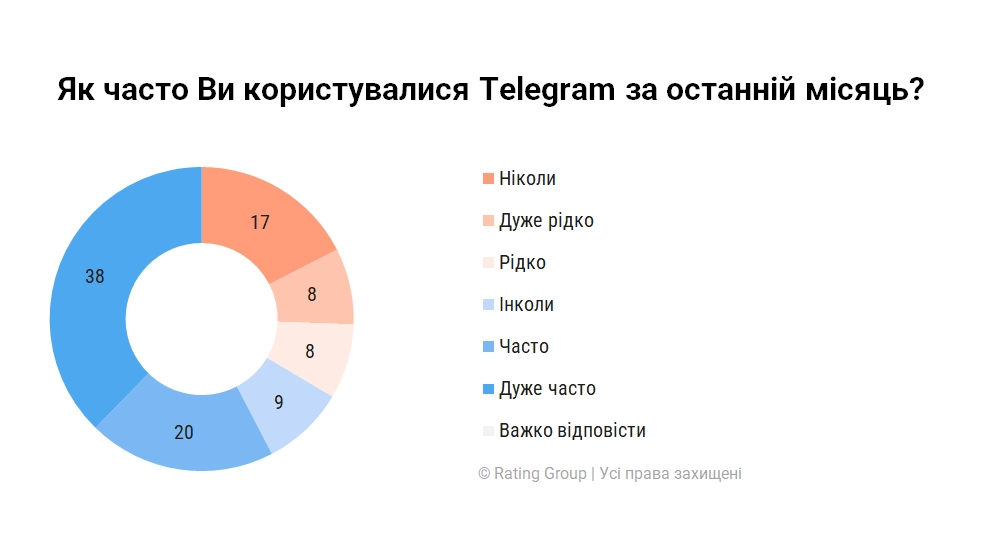
- Загалом 67% українців є більш-менш активними користувачами Telegram.
- Частіше ним користуються молодші респонденти, мешканці Києва й обласних центрів, громадяни з вищим рівнем доходів.
Оцінка безпечності месенджера
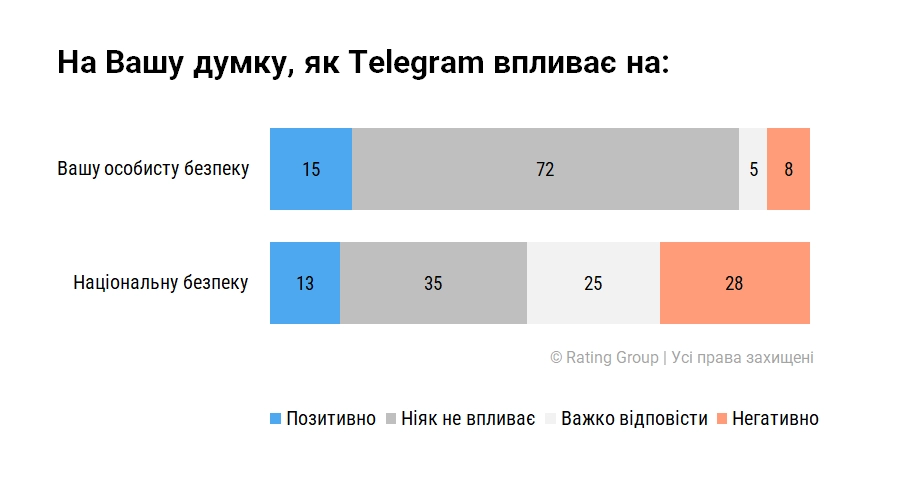
Більшість не бачить загрози для себе особисто, але відносно частіше визнають про ризики для національної безпеки
- Абсолютна більшість респондентів (72%) вважає, що Telegram ніяк не впливає на їхню особисту безпеку. Лише 8% вважають, що користування месенджером негативно впливає на особисту безпеку, а 15% - що позитивно.
- Щодо впливу на національну безпеку думки респондентів розходяться. Близько третини висловлюють думку, що ніякого впливу нема, а ще чверть вагається з відповіддю.
- Водночас, кожен 4-й респондент (28%) вважає, що Telegram негативно впливає на національну безпеку.
Ставлення до обмеження Telegram
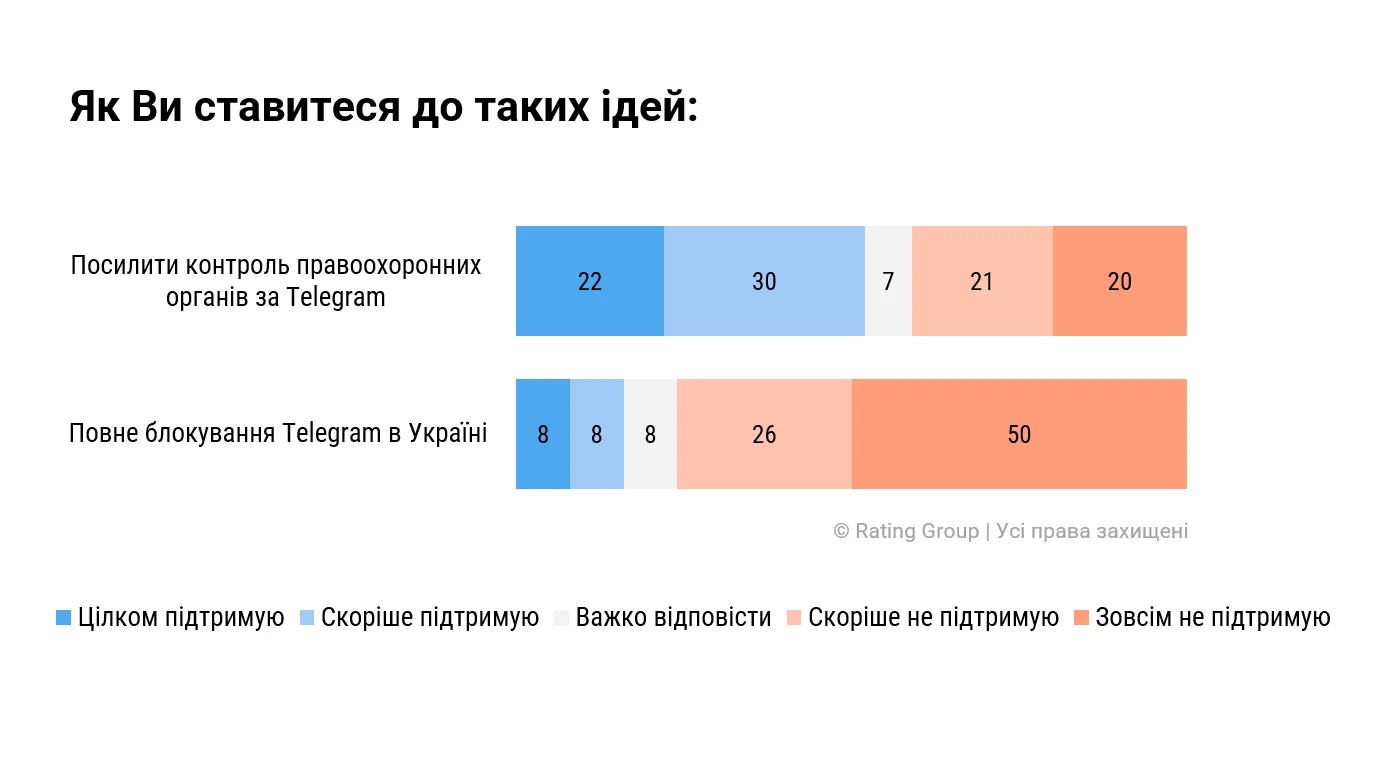
- 76% респондентів виступають проти повного блокування Telegram в Україні. Натомість підтримують таку ідею 16%.
- З іншого боку, більшість опитаних підтримують посилення контролю правоохоронних органів над месенджером, а 41% проти цього.
Rating Group — одна з найбільших дослідницьких інституцій України, яка на ринку з 2008 року. Компанія зареєстрована в Україні та має значний досвід проведення соціологічних опитувань в Україні та за кордоном. До групи входять: Соціологічна група Рейтинг, дослідницька лабораторія Rating Lab, платформа Rating Online та Rating Call Center.

Українці здебільшого вважають переїзд громадян за кордон проблемою для країни, а от до приїзду іноземців ставляться відносно позитивно
У випуску №3 дослідження End of Year Survey розповідаємо більше про те, як українці ставляться до міграції, і порівнюємо це з суспільними поглядами в інших країнах Європи.
End of Year Survey (EoY) - це глобальне щорічне опитування міжнародної соціологічної асоціації Gallup International про майбутнє, щастя й очікування населення різних країн. У 2025 році опитано 64,097 респондентів у 61 країні світу. В Україні опитування EoY вже третій рік поспіль проводить Соціологічна група "Рейтинг" (Rating Group).
Ставлення до виїзду з країни
.webp)
- Абсолютна більшість українців (63%) вважають, що переїзд громадян за кордон шкодить Україні, тоді як лише 11% бачать у цьому користь.
- Відносно менш критично налаштовані молодші респонденти віком 18-35.
- Загалом Україна входить до топ-10 країн Європи з найбільш негативним сприйняттям еміграції.
Ставлення до приїзду людей з інших країн
.webp)
Українці помірно позитивно ставляться до приїзду людей з інших країн
- Найчастіше (37%) респонденти вважають, що це приносить Україні користь, тоді як 27% говорять про шкоду. Також значна частина (28%) займає нейтральну позицію.
- Більш позитивне ставлення мають молодші респонденти, молоді жінки - ще частіше (59%), ніж молоді чоловіки (41%). Серед регіонів найбільш позитивним ставленням вирізняється Київ - там 50% говорять про користь від імміграції до України.
- Ставлення українців до імміграції є співставним або навіть дещо позитивнішим, ніж у багатьох інших країнах Європи.
Rating Group — одна з найбільших дослідницьких інституцій України, яка на ринку з 2008 року. Компанія зареєстрована в Україні та має значний досвід проведення соціологічних опитувань в Україні та за кордоном. До групи входять: Соціологічна група Рейтинг, дослідницька лабораторія Rating Lab, платформа Rating Online та Rating Call Center.

In August 2025, Sociological Group “Rating” (Rating Group) interviewed 2000 young Ukrainians and Ukrainian women to understand their needs and attitudes. The study was conducted on the initiative of the Ministry of Youth and Sports of Ukraine.
Youth moods: cautious optimism
Despite the difficult circumstances of the war, the majority of Ukrainian youth are moderately optimistic about the future of the country.
- 52% of young people are optimistic about Ukraine's future, and 41% are pessimistic.
- Regarding personal life: about three quarters of young people are satisfied with their lives.
- 38% believe their family's economic situation will remain unchanged, a third expect improvement, and 19% predict a worsening.
- At the same time, 43% say that in the last year the economic situation of his family has not changed, while about 40% have felt its deterioration.
The biggest threats: economy and security
Among the key risks for the country that concern young people the most are:
- rising prices and inflation (41%)
- economic crisis (37%)
- increased shelling (32%)
- further occupation of territories (27%)
- Conflicts in society (21%)
Values and priorities
- In the system of personal priorities, young people are most often mentioned: health (59%), children (33%), a happy family (32%), a sense of security and confidence in the future (29%).
- When young people talk about the most important priorities today, the issues of war and the future of the state dominate: Ukraine's victory in the war (44%), family and loved ones (41%), Ukraine's recovery (39%), own health (37%).
Problems of young families
According to the respondents, young families today are faced primarily with the following difficulties:
- financial problems (76%)
- psychological stress (39%)
- lack of affordable housing (33%)
- difficulties with employment (30%).
Youth policy: key expectations
- The most relevant areas of the state youth policy are education and vocational training (47%), psychological support (33%), career development and employment (26%), housing provision (19%).
- At the same time, young people believe that public policy lacks primarily financing (53%), real opportunities for self-realization (43%), and involvement of young people in decision-making (33%).
Geopolitical orientations
- 74% support Ukraine's accession to the EU
- 71% support joining NATO
Rating Group is one of the largest research institutions in Ukraine, which has been on the market since 2008. The company is registered in Ukraine and has significant experience in conducting sociological surveys in Ukraine and abroad. The group includes: Sociological Group Rating, Research Lab Rating Lab, Rating Online platform and Rating Call Center.